
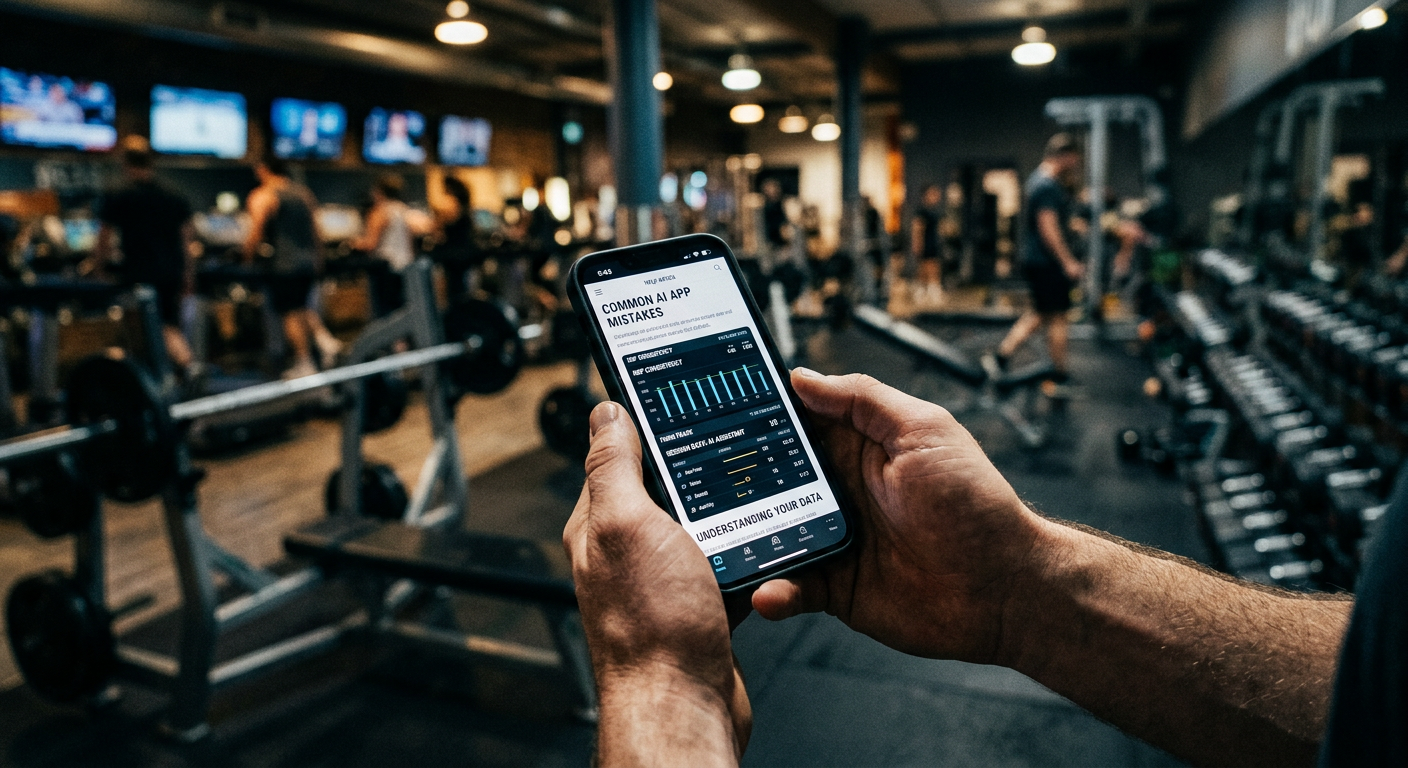


If you've ever felt like you're spinning your wheels at the gym without seeing real, measurable progress, you've landed in the right place. Workout tracking is the single most powerful tool in your fitness arsenal-the critical difference between merely exercising and actively training with purpose. Think of it as the secret map to your fitness goals, and let our friendly sloth mascot remind you that slow, steady, and recorded progress wins the race every time.
What "Workout Tracking" actually means
Workout tracking is the systematic process of recording quantitative and qualitative data from your training sessions. It's not just jotting down a few numbers; it's a deliberate practice of collecting information to guide future decisions. This data transforms your fitness journey from a series of random workouts into an intelligent, structured program designed for continuous improvement. Simply put, exercising is moving your body; training is moving your body with a long-term, data-driven plan.
At its core, tracking provides objective feedback. Instead of guessing if you're getting stronger, you'll know. You can see precisely what you lifted last week, last month, and last year. This historical record is the foundation of progressive overload, the fundamental principle of all physical adaptation. Without a log, you are essentially flying blind, hoping for progress instead of engineering it.

The science behind it
The effectiveness of workout tracking is rooted in fundamental principles of exercise physiology. The most critical concept is Progressive Overload. To build muscle (hypertrophy) and strength, you must consistently expose your musculoskeletal system to a greater stimulus than it's accustomed to. This forces adaptation. Tracking is the only reliable method to ensure this overload is happening systematically, whether by increasing weight, reps, sets, or improving form.
This process is explained by the General Adaptation Syndrome (GAS), which has three stages - alarm (the stress of a workout), resistance (the body adapting and getting stronger), and exhaustion (overtraining). A detailed workout log helps you manage this cycle perfectly. It allows you to apply enough stress to trigger the resistance phase without pushing so far that you hit the exhaustion phase, which can lead to injury, burnout, and stalled progress.
Mechanically, the primary driver for muscle growth is mechanical tension. This is the force your muscles generate when contracting against resistance. By tracking and progressively increasing the load and volume of your lifts, you ensure that you are creating sufficient mechanical tension over time. Furthermore, tracking variables like rest periods helps you target specific energy systems-short rests for the glycolytic system common in bodybuilding, and longer rests for the ATP-PC system crucial for strength athletes.
Key benefits
Consistent tracking offers tangible advantages that compound over time. It shifts your focus from short-term effort to long-term achievement, providing a clear and objective path forward.
| Benefit | Mechanism | Realistic Timeline |
|---|---|---|
| Guarantees Progressive Overload | Provides a clear record of past performance, allowing you to make small, calculated increases in weight, reps, or sets. | Progress visible in your log within 1-2 weeks. |
| Increases Motivation & Accountability | Creates a positive feedback loop; seeing objective proof of your progress (e.g., a 5 lb PR) is a powerful motivator to stay consistent. | Psychological boost felt after the first few logged workouts. |
| Prevents & Breaks Through Plateaus | Data reveals when progress stalls, allowing for strategic changes to variables like exercise selection, volume, or intensity. | Identify and begin addressing a plateau within 2-3 weeks of it starting. |
| Optimizes Recovery & Prevents Injury | Logging metrics like RPE (Rate of Perceived Exertion) and sleep quality helps identify signs of overtraining before they become a problem. | Can correlate fatigue with performance within 4-6 weeks. |
| Builds a Stronger Mind-Muscle Connection | The act of focusing on and recording each rep enhances concentration and awareness of the target muscle working. | Noticeable improvement in exercise feel and control in 3-4 weeks. |
| Informs Nutritional Strategy | Performance data can be cross-referenced with your nutrition log to see how dietary changes impact strength and energy levels. | Clear patterns can emerge after 1-2 months of dual tracking. |
| Saves Time & Mental Energy in the Gym | A pre-planned, tracked workout eliminates indecision, allowing you to walk in, execute the plan, and get out efficiently. | Immediately. Your first tracked workout will feel more focused. |
Common mistakes to avoid
Effective tracking is about quality, not just quantity. Avoid these common pitfalls to ensure your log is a tool for progress, not just a collection of numbers.
- • Inconsistent Logging - you only log on "good days" or forget half your workout.
- • Fix - log each set immediately after you complete it using your phone or notebook.
- • Tracking Only Weight & Reps - you miss other key variables that drive progress.
- • Fix - also record sets, rest periods, and a subjective intensity metric like RPE or RIR (Reps in Reserve).
- • Letting the Log Dictate Form - you add weight to "beat the logbook" even if your form breaks down.
- • Fix - prioritize perfect form above all else; only count reps that meet your quality standard.
- • Never Reviewing the Data - you collect data but never use it to make decisions.
- • Fix - schedule 5 minutes at the end of each week to review your log and plan next week's progressions.
- • Ignoring Qualitative Data - you don't note how you felt, your energy levels, or sleep from the night before.
- • Fix - add a simple "Notes" section to each workout entry for context on your performance.
- • Analysis Paralysis - you track so many variables that it becomes overwhelming and stressful.
- • Fix - start with the basics (Exercise, Weight, Sets, Reps) and only add more metrics as you get comfortable.
- • Program Hopping - you change your entire routine the moment you see one bad workout in the log.
- • Fix - stick to a program for at least 4-6 weeks to gather enough data to make an informed change.
Programming guide
Your logbook is only as good as the program it's tracking. A well-structured program uses sets, reps, and frequency to target specific goals and manages progression with clear, simple rules.
- • Sets and Reps - rep ranges generally align with specific goals. For strength, focus on 3-5 sets of 1-5 reps. For muscle growth (hypertrophy), aim for 3-4 sets of 6-12 reps. For muscular endurance, work with 2-3 sets of 15+ reps. Most effective programs will incorporate a mix of these ranges.
- • Frequency - this refers to how often you train a muscle group per week. Research shows that training a muscle group 2-3 times per week is often superior for hypertrophy compared to the traditional once-a-week "body part split."
- • Progression - the simplest and most effective rule is the Double Progression Method. First, aim to increase the number of reps you can perform with a given weight. Once you hit the top end of your target rep range for all sets (e.g., 3 sets of 12 reps), you then increase the weight by the smallest possible increment for the next session and start back at the lower end of the rep range (e.g., 3 sets of 8 reps with the new, heavier weight).
Here are some general weekly volume guidelines based on experience level. Volume is measured here as the total number of hard-working sets per major muscle group per week.
| Experience Level | Weekly Sets Per Muscle Group |
|---|---|
| Beginner (0-1 years) | 10-12 sets |
| Intermediate (1-3 years) | 12-18 sets |
| Advanced (3+ years) | 18-22+ sets |
Best exercises / techniques
While all exercises benefit from tracking, some are particularly important to log due to their systemic impact and potential for long-term loading.
- • Barbell Squat, Bench Press, Deadlift, Overhead Press - these compound movements are the bedrock of strength. Tracking them is non-negotiable as they allow for micro-progressions in weight over years, leading to massive strength gains.
- • Pull-ups / Chin-ups - tracking total reps or added weight is crucial for measuring back and bicep strength progression. You can progress from bands to bodyweight to weighted variations.
- • Dumbbell Rows - a key horizontal pulling movement. Tracking allows you to ensure both sides of your body are progressing symmetrically and you're adding weight or reps over time.
- • AMRAP (As Many Reps As Possible) Sets - often used as the last set of an exercise, tracking the number of reps you achieve on an AMRAP set is a fantastic way to measure performance and auto-regulate intensity.
- • Tempo Training (e.g., 3-1-1-0): Logging tempo ensures you are controlling the eccentric (lowering) phase of the lift, a key driver of muscle damage and growth. Tracking keeps you honest with the prescribed speed.
Sample week template
This template uses an Upper/Lower split, a highly effective structure that allows you to hit each muscle group twice a week with adequate recovery. The first half of the week focuses on heavier, lower-rep strength work, while the second half targets higher-rep hypertrophy work.
| Day | Focus | Volume | Notes |
|---|---|---|---|
| Monday | Upper Body Strength | 12-16 total sets | Focus on big compound lifts. RPE 8-9 on top sets. |
| Tuesday | Lower Body Strength | 10-14 total sets | Heavy squats or deadlifts as the main movement. RPE 8-9. |
| Wednesday | Active Recovery / Rest | N/A | Light cardio, stretching, or a brisk walk. Focus on mobility. |
| Thursday | Upper Body Hypertrophy | 15-20 total sets | Higher reps (8-15), shorter rest periods. Focus on mind-muscle connection. |
| Friday | Lower Body Hypertrophy | 14-18 total sets | Include isolation work like leg extensions and hamstring curls. |
| Saturday | Rest / Light Activity | N/A | Allow the body to fully recover and adapt from the week's training. |
| Sunday | Rest / Prep | N/A | Plan your workouts for the upcoming week based on your log. |
Create Your Workout Plan by Voice - Free, No Signup
Just tell our AI what you want - your goals, schedule, equipment - and get a personalized plan in seconds. No forms, no hassle. Just speak.

Recovery, nutrition & sleep
Your progress in the gym is only realized if your recovery is on point. You don't build muscle in the gym; you build it while you rest and recover. Tracking your workouts is step one, but supporting that work with smart lifestyle choices is step two.
- • Nutrition - fuel your body for performance and repair. For muscle growth, a protein intake of 1.6-2.2 grams per kilogram (or about 0.7-1.0 g per pound) of body weight is the evidence-based target. Don't neglect carbs for energy and healthy fats for hormone function.
- • Hydration - even slight dehydration can significantly impair performance. Aim for 3-4 liters of water per day, increasing that amount based on activity levels and climate. Monitor your urine color-it should be a pale yellow.
- • Sleep - this is the most potent recovery tool you have. During deep sleep, your body releases growth hormone and focuses on tissue repair. Aim for 7-9 hours of quality, uninterrupted sleep per night. Tracking sleep with a wearable can provide useful insights that correlate with your gym performance.
Equipment & alternatives
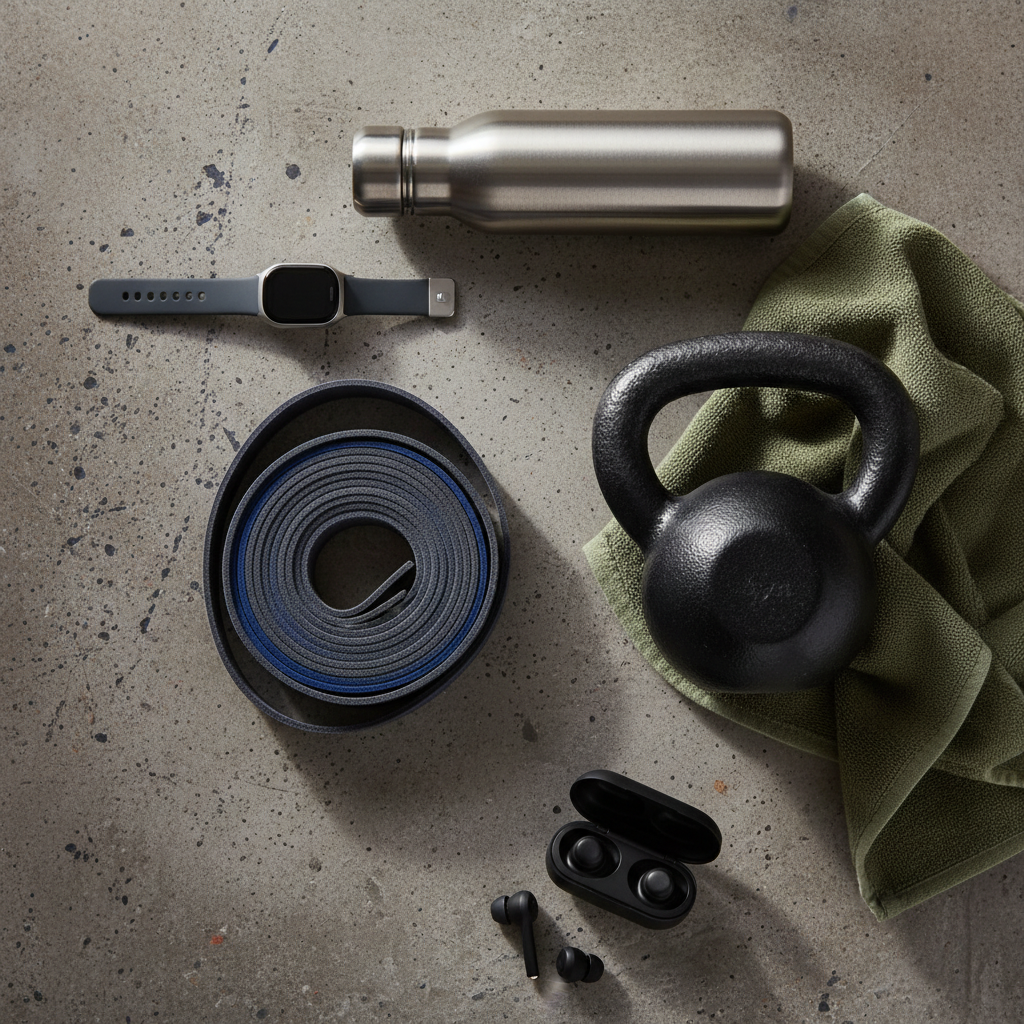
Choosing a tracking method comes down to personal preference and convenience. The best tool is the one you will use most consistently.
| Equipment | Cost | Pro | Con |
|---|---|---|---|
| Digital App (Fullbody AI) | Monthly/Yearly Subscription | AI-driven progressions, automatic calculations, charts, exercise library, workout planner. | Can be a distraction during workouts; requires a charged phone. |
| Pen & Paper Notebook | $ | Simple, tactile, no distractions, highly customizable. | Easily lost or damaged, requires manual calculation, difficult to search history. |
| Spreadsheet (Google Sheets/Excel) | Free | Infinitely customizable, powerful data analysis and charting tools. | Requires setup time and discipline to maintain; cumbersome to use on a phone. |
| Gym Whiteboard | $$ (One-time) | Great for a home gym, allows for a clear view of the day's entire workout. | Not portable, history is erased after each session unless you take a photo. |
Seeing how others track and structure their workouts can provide valuable insights. These videos offer practical tutorials and beginner-friendly workouts that emphasize the importance of logging your progress.
FAQ
Q: What's more important to track: weight or reps?
Both are critically important, as they are the two main variables in the Double Progression method. Initially, focus on increasing reps with good form. Once you hit your rep target, increasing the weight becomes the priority. They work together to ensure you are always progressing.
Q: Should I log my warm-up sets?
It's generally not necessary to log every detail of your warm-up sets. The purpose of a warm-up is to prepare your body for the working sets. Focus on meticulously tracking your "working sets"-the challenging sets that actually stimulate adaptation.
Q: I forgot to log a workout. What should I do?
Don't stress. Try to fill it in from memory as best you can as soon as you remember. If you can't recall the specifics, just make a note that you completed the workout and focus on tracking your next session perfectly. One missed entry won't derail your progress; chronic inconsistency will.
Q: What is RPE and should I use it?
RPE stands for Rate of Perceived Exertion, typically on a 1-10 scale where 10 is maximum effort. It's a fantastic tool for auto-regulating your training. Logging your RPE for your top sets gives you a subjective measure of intensity, which helps you know when to push harder and when to pull back.
Q: How do I track workouts with variable resistance, like bands?
For resistance bands, consistency is key. You can log the color/level of the band (e.g., "red band") and the number of reps. To progress, you can increase reps, use a thicker band, or combine bands. The goal is the same - making the exercise harder over time.
Q: Can I track cardio and conditioning too?
Absolutely! For steady-state cardio, you can track duration, distance, pace, and heart rate. For interval training (HIIT), you can log the work/rest intervals, the number of rounds, and the intensity (e.g., speed on the treadmill or resistance on the bike).
Q: How long should I follow a program before changing it based on my log?
You should stick with a well-designed program for at least 4-8 weeks. This gives your body enough time to adapt and for you to gather sufficient data. If your log shows you are consistently adding weight or reps to your key lifts for multiple weeks, the program is working-don't change it!
Bottom line
Workout tracking is the single most impactful habit you can adopt to guarantee long-term fitness progress. It transforms aimless exercise into intelligent training, providing the data, motivation, and accountability needed to break through any plateau. It's the difference between hoping for results and actively building them, one recorded set at a time.
Ready to stop guessing and start progressing? Let Fullbody AI handle the hard work. Our AI workout planner not only builds your perfect, science-backed program but also makes tracking effortless. It logs your performance, visualizes your progress, and tells you exactly what to do next to get stronger. Try Fullbody AI today and unlock the power of data-driven training.