

Welcome to the ultimate guide for weight loss on the Fullbody AI blog. We know the journey can feel overwhelming, but like our wise sloth mascot, we believe in a smart, steady, and sustainable approach. Let go of the quick fixes and embrace a science-backed strategy that builds a leaner, stronger, and healthier you for life.
What "Weight Loss" actually means - clear definition + why it matters
When most people say "weight loss," they mean they want to lose fat. This is a critical distinction. The number on the scale represents a total of everything-muscle, bone, water, organs, and fat. Aggressive, poorly planned diets and exercise can cause you to lose precious muscle and water, which is counterproductive and unhealthy.
True progress lies in improving your body composition - decreasing your body fat percentage while maintaining or even increasing your lean muscle mass. This is why you should focus on "fat loss," not just weight loss. A body with more muscle is metabolically more active, stronger, and looks more toned and defined at the same weight than a body with less muscle. This is the foundation of a lasting transformation.

The science behind it - physiology / mechanics / energy systems
The fundamental principle of fat loss is creating a consistent energy deficit, meaning you expend more calories than you consume. Exercise is a powerful tool to increase your energy expenditure. Your Total Daily Energy Expenditure (TDEE) is made up of four key components.
First is your Basal Metabolic Rate (BMR), the calories your body burns at rest just to stay alive. Second is the Thermic Effect of Food (TEF), the energy used to digest and process food. Third is Exercise Activity Thermogenesis (EAT), which are the calories burned during structured workouts. The final piece is Non-Exercise Activity Thermogenesis (NEAT)-the energy you burn from all other daily movements, like walking, fidgeting, or taking the stairs.
Resistance training is the superstar for boosting your BMR long-term. By building more lean muscle, you literally increase the size of your body's metabolic engine, burning more calories 24/7. High-Intensity Interval Training (HIIT) is exceptionally effective for EAT and also triggers significant Excess Post-exercise Oxygen Consumption (EPOC), or the "afterburn effect," elevating your metabolism for hours after your workout is finished.
Key benefits - 5-8 specific, measurable benefits in a Markdown table
Beyond aesthetics, a structured fat loss program yields powerful health benefits. These are not abstract concepts-they are measurable improvements in how your body functions.
| Benefit | Mechanism | Realistic Timeline |
|---|---|---|
| Improved Insulin Sensitivity | Muscle acts like a glucose sponge, pulling sugar from the blood, reducing the burden on your pancreas. | 2-4 weeks |
| Increased Basal Metabolic Rate | More lean muscle mass requires more energy (calories) to maintain, even at rest. | 8-12 weeks |
| Lowered Visceral Fat | A combination of caloric deficit and exercise mobilizes and burns this dangerous fat around your organs. | 4-12 weeks |
| Reduced Blood Pressure | Improved blood vessel elasticity, better heart function, and weight reduction lower the pressure on arteries. | 4-8 weeks |
| Better Joint Health | Stronger muscles provide better support and stability for joints, reducing pain and risk of injury. | 6-10 weeks |
| Enhanced Mood & Energy | Exercise releases endorphins, reduces stress hormones like cortisol, and improves mitochondrial function. | Immediate to 2 weeks |
Common mistakes to avoid - bulleted list of 6-10 mistakes with 1-line fix each
Progress often stalls due to a few common but avoidable errors. Sidestep these pitfalls to ensure your path remains smooth and steady.
- • Relying on cardio alone - you burn calories, but you're not building a faster metabolism.
- • Fix - prioritize resistance training 2-4 times per week to build and maintain muscle.
- • Cutting calories too drastically - this tanks your metabolism, energy, and leads to muscle loss.
- • Fix - aim for a moderate, sustainable daily deficit of 300-500 calories below your maintenance.
- • Ignoring Non-Exercise Activity (NEAT): Sitting all day outside of your workout negates much of your effort.
- • Fix - target 7,000-10,000 steps per day by incorporating more walking and movement.
- • "Eating back" your exercise calories - fitness trackers overestimate burn, and this can erase your calorie deficit.
- • Fix - fuel your body with nutritious food; don't view exercise as a license to eat junk food.
- • An all-or-nothing mindset - skipping one workout and letting it derail your entire week.
- • Fix - consistency over perfection. A good week is better than one perfect day followed by none.
- • Fearing heavy weights - lifting light weights for high reps has its place, but strength is key.
- • Fix - focus on progressive overload-gradually getting stronger in key lifts over time.
- • Sacrificing sleep for workouts - lack of sleep wrecks hormones that control hunger and fat storage.
- • Fix - protect your schedule to ensure you get 7-9 hours of quality sleep per night.
- • Focusing only on the scale - weight fluctuates daily due to water, food, and hormones, hiding real progress.
- • Fix - track progress with measurements, progress photos, and how your clothes fit.
Programming guide - sets, reps, frequency, progression rules
A great weight loss program is a blend of strength and cardiovascular training. The goal of strength training is to build or preserve muscle, while cardio helps increase the calorie deficit and improve heart health.
For strength, focus on compound movements. Aim for 3-5 sets of 8-15 repetitions per exercise. You should be working hard, ending each set 1-3 reps shy of failure (an RPE of 7-9). The key to long-term success is progressive overload - each week, try to add a little weight, an extra rep, or an extra set.
For cardio, use a mix of High-Intensity Interval Training (HIIT) and Low-Intensity Steady State (LISS). Perform HIIT 1-2 times per week (e.g., 30 seconds all-out, 60 seconds rest, repeat 8-10 times). Use LISS 2-3 times per week, maintaining a conversational pace for 30-45 minutes. LISS is great for burning fat and aids recovery without being too stressful on the body.
| Experience Level | Total Weekly Strength Sets | Weekly Cardio (minutes) |
|---|---|---|
| Beginner | 40-70 sets | 90-120 minutes (mostly LISS) |
| Intermediate | 70-100 sets | 120-180 minutes (LISS + HIIT) |
| Advanced | 100-140+ sets | 150-200+ minutes (LISS + HIIT) |
Best exercises / techniques - list with 1–2 sentence "why" for each
Focus on exercises that give you the most bang for your buck by using multiple muscle groups and burning more calories.
- • Goblet Squats - this is a fantastic, accessible way to learn squat mechanics. It builds serious leg and glute muscle mass while challenging your core.
- • Romanian Deadlifts (RDLs): RDLs target the entire posterior chain (glutes and hamstrings), which are powerful, calorie-hungry muscles essential for a strong physique.
- • Push-ups - a timeless upper-body and core builder. They can be scaled from knee push-ups to advanced variations, making them perfect for any fitness level.
- • Dumbbell Rows - these build a strong, thick back, which improves posture and balances out all the pushing movements. A strong back is the centerpiece of a powerful physique.
- • Kettlebell Swings - the ultimate blend of strength and cardio. Swings are a low-impact, high-output movement that torches calories and builds explosive power in your hips.
- • Farmer's Walks - simply pick up heavy weights and walk. This exercise builds crushing grip strength, a rock-solid core, and is a surprisingly effective conditioning tool.
- • Burpees - the full-body conditioning classic. They require no equipment and skyrocket your heart rate, making them a perfect finisher or HIIT component.
Sample week template - Markdown table with Day | Focus | Volume | Notes
This template blends strength, cardio, and recovery to create a sustainable and effective weekly schedule. Adjust the specific exercises and volumes based on your experience level and the Fullbody AI plan.
| Day | Focus | Volume | Notes |
|---|---|---|---|
| 1 | Full-Body Strength A | 5 exercises, 3 sets of 8-12 reps | Focus on a squat variation, a push, and a pull. |
| 2 | LISS Cardio + Core | 30-45 minutes cardio + 10 min core | Keep cardio at a conversational pace. Core work can be planks, leg raises. |
| 3 | Full-Body Strength B | 5 exercises, 3 sets of 10-15 reps | Focus on a hinge (like RDLs), a vertical push, and a vertical pull. |
| 4 | Active Recovery | 30-60 minute walk | The goal is light movement to promote blood flow and healing. No stress. |
| 5 | HIIT + Finisher | 15-20 minutes | Example: 10 rounds of 30s bike sprint, 60s slow pedal. Finish with Farmer's Walks. |
| 6 | LISS or Recreation | 45-60 minutes | Go for a hike, play a sport, or do some steady-state cardio. Keep it fun. |
| 7 | Full Rest | 0 | Your body rebuilds and gets stronger on rest days. Do not skip them. |
Create Your Workout Plan by Voice - Free, No Signup
Just tell our AI what you want - your goals, schedule, equipment - and get a personalized plan in seconds. No forms, no hassle. Just speak.
Recovery, nutrition & sleep - practical numbers
Your results are earned in the gym but revealed through your lifestyle outside of it. You cannot out-train a poor diet or a lack of sleep.
Nutrition - maintain that 300-500 calorie deficit. Prioritize protein to preserve muscle, aiming for 1.6-2.2 grams per kilogram of your target body weight. Drink plenty of water-around 3-4 liters per day-as it's crucial for metabolism and performance. Fill the rest of your plate with whole foods - fruits, vegetables, and high-fiber carbohydrates.
Sleep - this is non-negotiable. Aim for 7-9 hours of quality sleep per night. Poor sleep increases the stress hormone cortisol (which encourages fat storage) and disrupts the hunger hormones ghrelin and leptin, making you hungrier and less satisfied.
Recovery - listen to your body. Schedule an active recovery day each week with light activities like walking or stretching. Consider a "deload" week every 4-8 weeks, where you reduce your training volume and intensity to allow for full systemic recovery.
Equipment & alternatives - table comparing options
You don't need a commercial gym to get amazing results. Here's a look at your options.
| Equipment | Cost | Pro | Con |
|---|---|---|---|
| Bodyweight | Free | Available anywhere, builds functional strength. | Harder to progressively overload lower body. |
| Resistance Bands | Low | Portable, versatile for assistance and resistance. | Limited peak resistance for heavy lifts. |
| Dumbbells | Moderate | Excellent for unilateral work, huge exercise variety. | A full set can be expensive and bulky. |
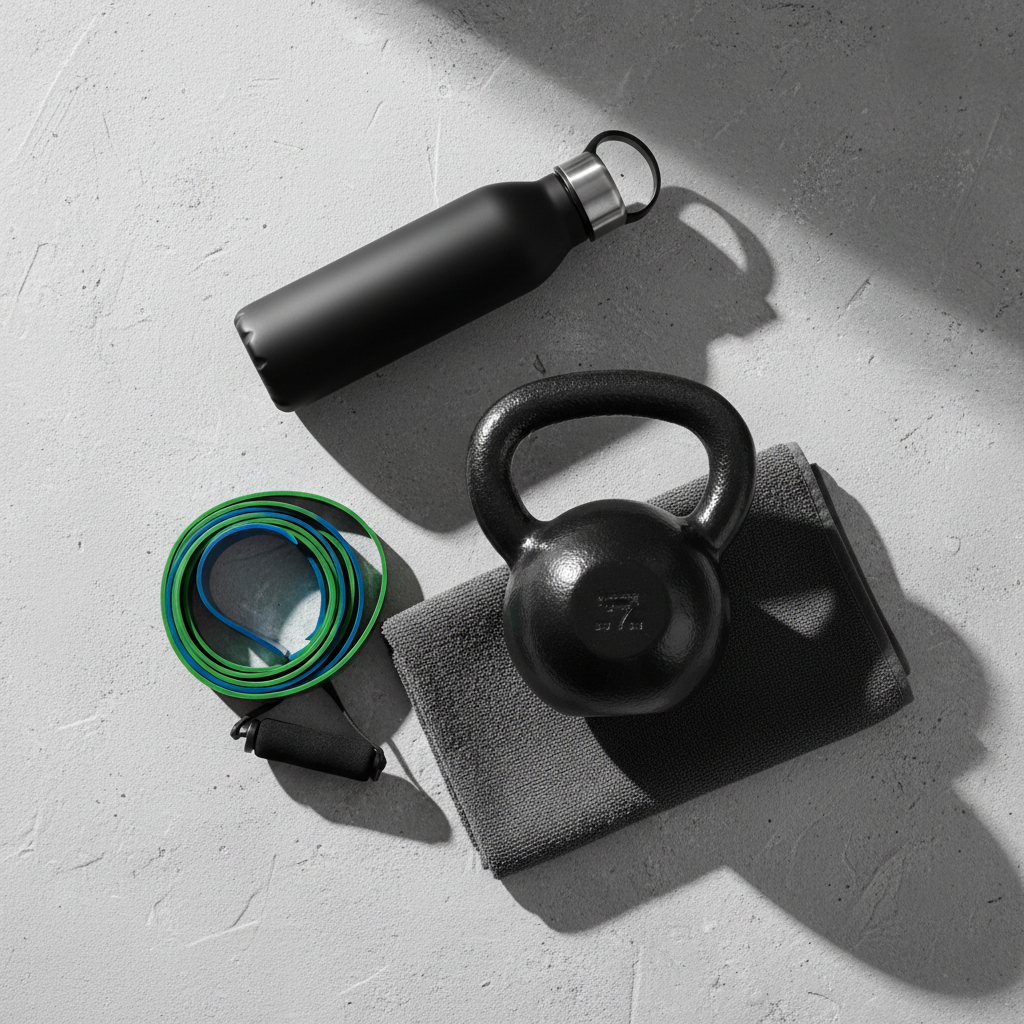
| Kettlebells | Moderate | Perfect for ballistic movements (swings) and flows. | Can have a steeper learning curve for some. |
| Barbell & Plates | High | The gold standard for maximal strength and progressive overload. | Requires space, expensive, needs safety knowledge. |

Seeing proper form is key. These videos will help you master the fundamental techniques and get started with effective workouts.
FAQ - 6-8 real questions with 2-4 sentence answers each
Q: How much weight can I realistically lose per week?
A - a safe, sustainable rate of fat loss is 0.5-1% of your body weight per week. Losing faster than this often means you're losing muscle and water, which you want to avoid. Slow and steady, like our sloth mascot, truly wins the race.
Q: Do I absolutely need to do cardio to lose weight?
A - you don't, as fat loss is ultimately dictated by a calorie deficit. However, cardio is a highly effective tool for increasing your calorie expenditure, improving your heart health, and boosting your work capacity, so it is strongly recommended.
Q: Will lifting heavy weights make me look "bulky"?
A - this is a common myth, particularly among women. Building significant muscle mass is a slow, difficult process that requires a large calorie surplus. For fat loss, lifting weights in a calorie deficit will help you preserve the muscle you have, leading to a leaner, more toned look, not a bulky one.
Q: What's better for fat loss: HIIT or LISS cardio?
A - both are great tools. HIIT is more time-efficient and creates a larger "afterburn" effect, while LISS is less stressful on the body and great for recovery and burning fat directly. The best programs, like those from Fullbody AI, intelligently incorporate both.
Q: Can I spot-reduce belly fat?
A - unfortunately, no. Your body loses fat systemically from all over, and your genetics determine where it comes off first and last. The only way to lose belly fat is to reduce your overall body fat percentage through a consistent calorie deficit and a solid training plan.
Q: How important is diet compared to exercise for weight loss?
A - they are a team, but diet is the driver of the calorie deficit. It's far easier to not eat 500 calories than it is to burn 500 calories through exercise. Exercise is what reshapes your body, boosts your metabolism long-term, and improves your health.
Q: The number on the scale isn't moving, what gives?
A - don't panic! If you're strength training, you may be building muscle while losing fat, a process called body recomposition. The scale can't see this. Pay attention to other metrics like progress photos, how your clothes fit, and your body measurements.
Bottom line - confident closing paragraph
Losing weight and keeping it off is not about finding a magic workout or a secret food. It's about consistently applying the fundamental principles - create an energy deficit through smart nutrition, build and maintain muscle with resistance training, and improve your metabolic health with a mix of cardio. It takes work, but the path is clear, and the results are life-changing. Instead of guessing, let us handle the programming. The Fullbody AI workout planner builds you a personalized, progressive plan so you can focus on what matters most-showing up and doing the work. Let's get stronger, together.