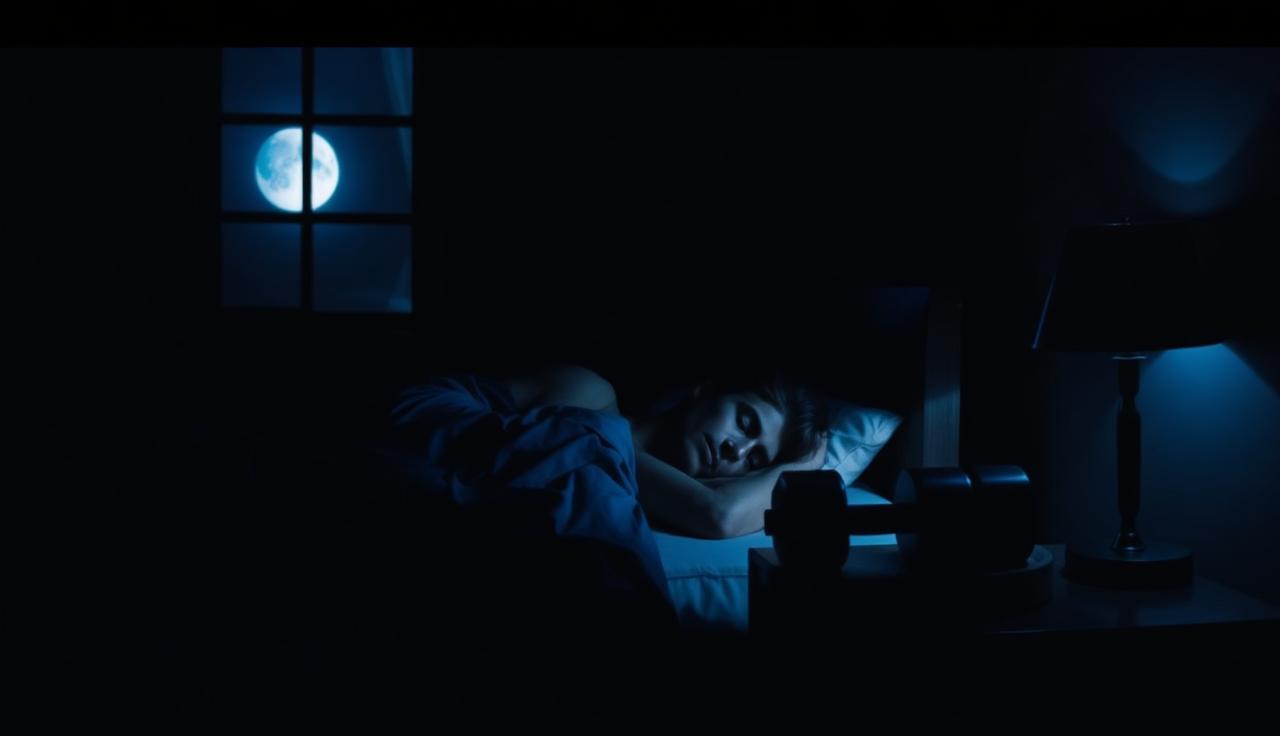
Welcome to the "Sleep" tag archives at Fullbody AI, your ultimate resource for mastering the most underrated pillar of fitness. We move beyond the simple advice of "get eight hours" and dive deep into the science of how strategic rest fuels your progress. Even our mascot, the famously relaxed sloth, knows that true strength isn't just built in the gym-it's forged during quality slumber, turning your nights into a powerful engine for muscle growth and peak performance.
What "Sleep" actually means - clear definition + why it matters
In the context of fitness, "sleep" is not merely a passive state of rest; it is an active, highly-regulated physiological process essential for recovery, adaptation, and growth. It's the biological program your body runs to repair tissue, consolidate memories, regulate hormones, and replenish energy stores. Without it, the physical stress from training accumulates without the corresponding adaptation, leading to plateaus, burnout, and injury.
Think of your workout as placing an order for a stronger body, and sleep as the overnight delivery service that actually builds and delivers the results. It's the non-negotiable link between effort and outcome. Neglecting sleep is like buying expensive car parts but never scheduling time with the mechanic to install them.
The science behind it - physiology / mechanics / energy systems
Sleep is governed by a complex interplay of your circadian rhythm (your internal 24-hour clock) and sleep pressure (the build-up of adenosine in your brain). It's structured in cycles, each lasting about 90 minutes. A full night's sleep consists of 4-6 of these cycles.
Each cycle moves through different stages. The most critical for athletes are Non-Rapid Eye Movement (NREM) Stage 3, also known as deep sleep or slow-wave sleep, and Rapid Eye Movement (REM) sleep. During NREM Stage 3, your pituitary gland releases up to 70% of its daily Human Growth Hormone (HGH). This powerful hormone is the primary driver of muscle protein synthesis-the process of repairing micro-tears in your muscle fibers and rebuilding them stronger.
Simultaneously, cortisol-a catabolic (breakdown) stress hormone-is at its lowest level. This creates a highly anabolic environment, maximizing your body's ability to build tissue. Your body also uses this time to replenish muscle glycogen, the stored form of carbohydrates that fuels high-intensity exercise. Inadequate sleep disrupts this delicate hormonal balance, spiking cortisol and blunting HGH, effectively putting the brakes on your progress. REM sleep is crucial for cognitive recovery, motor pattern learning (locking in that new squat technique), and psychological restoration.
Key benefits - 5-8 specific, measurable benefits in a Markdown table
| Benefit | Mechanism | Realistic Timeline |
|---|---|---|
| Enhanced Muscle Growth | Increased HGH and testosterone secretion during NREM deep sleep maximizes muscle protein synthesis. | 4-8 weeks of consistent, quality sleep paired with training. |
| Improved Motor Learning | REM sleep consolidates procedural memories, helping to lock in new movement patterns and improve lifting technique. | Noticeable improvements in form and coordination within 1-2 weeks. |
| Increased Power Output | Full replenishment of muscle glycogen stores and central nervous system (CNS) recovery allows for maximal force production. | Immediate (after just one good night's sleep). |
| Reduced Injury Risk | Improved reaction time, cognitive function, and tissue repair reduces the likelihood of form breakdown and overuse injuries. | Consistent benefit that builds over weeks; risk increases after just one night of poor sleep. |
| Hormonal Optimization | Lowers cortisol levels and optimizes the testosterone-to-cortisol ratio, creating an anabolic internal environment. | Hormonal balance improves within 1-2 weeks of consistent sleep. |
| Better Body Composition | Regulates appetite hormones (ghrelin and leptin), reducing cravings for high-calorie foods and improving metabolic health. | Tangible changes in appetite and food choices within days. |
| Boosted Immune Function | Production of cytokines and T-cells, critical for fighting off infection, is highest during sleep. | Fewer sick days noticeable within a single training season. |
Common mistakes to avoid - bulleted list of 6-10 mistakes with 1-line fix each
- • Inconsistent Sleep Schedule - going to bed and waking up at wildly different times, especially on weekends.
- • Fix - set a consistent wake-up time every single day, including weekends, to anchor your circadian rhythm.
- • Evening Screen Time - exposing your eyes to blue light from phones, tablets, and TVs within 1-2 hours of bed.
- • Fix - establish a screen-free "wind-down" period 60-90 minutes before bed; enable blue-light filters if you must use a device.
- • Late-Night Caffeine - consuming coffee, tea, or pre-workout supplements too close to bedtime (caffeine's half-life is ~5-6 hours).
- • Fix - set a firm caffeine cut-off time, typically no later than 2 PM for most people.
- • Using Alcohol as a Sleep Aid - while alcohol can induce drowsiness, it severely disrupts REM sleep and overall sleep architecture.
- • Fix - avoid alcohol within 3 hours of bedtime to allow it to metabolize before you sleep.
- • A Suboptimal Bedroom Environment - a room that is too hot, too bright, or too noisy.
- • Fix - aim for a cave-like environment - cool (18-20°C / 65-68°F), completely dark, and quiet.
- • Eating a Large Meal Right Before Bed - this can cause indigestion and elevate core body temperature, interfering with sleep onset.
- • Fix - finish your last large meal 2-3 hours before your scheduled bedtime.
- • Exercising Too Intensely, Too Late - a high-intensity workout can leave your nervous system too stimulated for sleep.
- • Fix - schedule intense training for earlier in the day; if you must train at night, focus on lower-intensity work or finish with a long cool-down.
- • Ignoring a Wind-Down Routine - going from 100 mph to 0 without giving your brain and body time to transition.
- • Fix - create a repeatable 30-60 minute routine of relaxing activities like reading, light stretching, or journaling.
Programming guide - sets, reps, frequency, progression rules
Treating sleep like a trainable skill is the fastest way to improve it. Here, we'll use training terminology to structure your approach.
- • Frequency - non-negotiable. The goal is 7 nights per week.
- • Sets - think of one full 90-minute sleep cycle as one "set." Your goal is to complete 4-6 sets per night (totaling 6 to 9 hours).
- • Reps - the quality of each set. Aim for maximal "reps" of deep and REM sleep, which is achieved through excellent sleep hygiene.
- • Progressive Overload - you don't jump from 5 hours to 8 overnight. Start by solidifying your wake-up time. Once that's consistent for a week, work on setting a consistent bedtime. Then, begin layering in sleep hygiene techniques one by one (e.g., Week 1 - no screens. Week 2 - add a cool room. Week 3 - add a pre-bed mobility routine).
| Experience Level | Description | Weekly Volume (Target Hours/Night) |
|---|---|---|
| Beginner | Inconsistent schedule, poor sleep hygiene, often gets less than 7 hours. | Aim for a consistent 7 hours per night. The main goal is schedule adherence. |
| Intermediate | Has a mostly consistent schedule but hygiene could be better (e.g., still uses phone in bed). | Dial in 7.5-8 hours per night. The focus is on optimizing the sleep environment. |
| Advanced | Highly consistent schedule and good hygiene. Looking to optimize for peak performance or heavy training blocks. | Target 8-9+ hours per night. Focus is on advanced techniques and managing training stress. |
Best exercises / techniques - list with 1–2 sentence "why" for each
- • The 10-3-2-1 Rule - a simple mnemonic for timing your pre-bed activities.
- • Why: 10 hours before bed - no more caffeine. 3 hours before bed - no more food or alcohol. 2 hours before bed - no more work. 1 hour before bed - no more screens. This systematically removes the most common sleep disruptors.
- • The Blackout Protocol - making your bedroom as dark as humanly possible.
- • Why - even tiny amounts of light can be detected by your skin and retina, suppressing melatonin production and disrupting sleep cycles. Use blackout curtains, tape over LEDs, and wear an eye mask.
- • Temperature Drop - taking a warm shower or bath 60-90 minutes before bed.
- • Why - the warm water raises your body temperature, and the subsequent rapid cool-down when you get out mimics a natural metabolic signal that it's time to sleep.
- • Strategic Napping (The "Nappuccino"): A 20-25 minute nap taken in the early afternoon.
- • Why - this duration prevents you from entering deep sleep, so you wake up refreshed without grogginess (sleep inertia). For an extra boost, drink a coffee right before you nap; the caffeine will kick in just as you're waking up.
- • Mindful Body Scan - lying in bed and sequentially bringing awareness to each part of your body.
- • Why - this mindfulness technique helps quiet a racing mind and releases physical tension, making it easier to fall asleep, especially on high-stress days.
- • Consistent Wake-Up Exposure to Light - getting 10-15 minutes of direct sunlight exposure within 30 minutes of waking.
- • Why - morning sunlight is the most powerful signal for anchoring your circadian rhythm, which makes it easier to fall asleep later that night.
Sample week template - Markdown table
| Day | Focus | Volume | Notes |
|---|---|---|---|
| Monday | Anchor the Week | 7.5 Hours | Wake up at your target time no matter what. Get 10 mins of morning sun. |
| Tuesday | Wind-Down Routine | 7.5 Hours | Start your 60-minute screen-free wind-down. Read a physical book. |
| Wednesday | Temperature Control | 8 Hours | Ensure room is cool (18-20°C / 65-68°F) before getting into bed. |
| Thursday | Nutrition Timing | 8 Hours | Finish your last meal at least 3 hours before bedtime. No late-night snacks. |
| Friday | Resist the Lie-In | 7.5 Hours | Wake up at your normal weekday time. Avoid alcohol to protect sleep quality. |
| Saturday | Active Recovery | 8.5 Hours | Wake up at your normal time. A light walk or stretch is great, but no intense training. |
| Sunday | Prepare for the Week | 8.5 Hours | Plan your week ahead to reduce Sunday night anxiety. Stick to your wind-down routine. |