
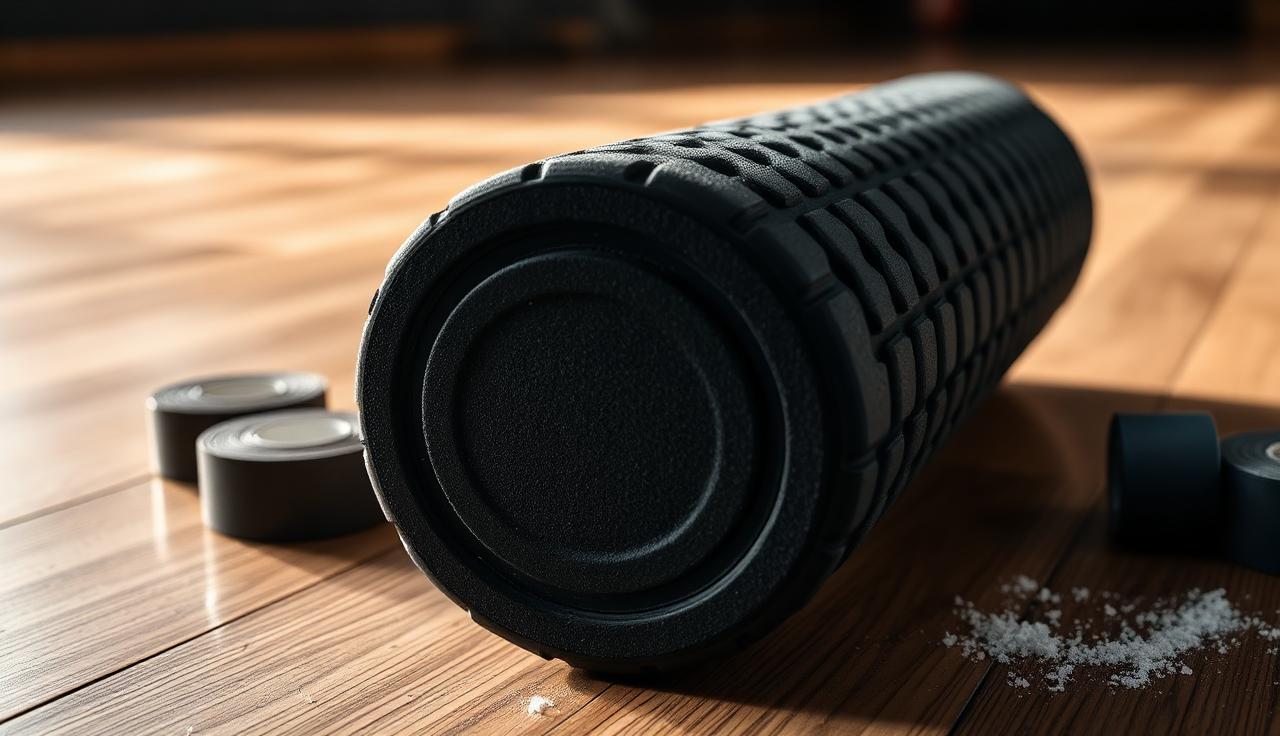

Welcome to the ultimate guide for unlocking fluid, pain-free movement. Think of mobility not just as flexibility, but as your body's ability to actively control its joints through their full range of motion with strength and stability. This distinction is the secret to building a resilient, high-performing body that lasts a lifetime.
What "Mobility" actually means - clear definition + why it matters
Mobility is strength in motion. While flexibility refers to the passive range of motion a joint has - think of a coach pushing your leg up into a hamstring stretch - mobility is your ability to get it there yourself and control it. It's the usable, active range of motion that your nervous system owns. Without this control, a wide range of motion is not only useless, it can be dangerous.
This matters because almost every athletic movement, from a deep squat to throwing a ball, requires controlled joint articulation. Poor mobility creates compensation patterns where other parts of your body take over, leading to inefficient movement and, eventually, injury. By improving mobility, you're teaching your brain and body to work together, creating a foundation for safer, stronger, and more efficient performance in everything you do.

The science behind it - physiology / mechanics / energy systems
Mobility training is a direct conversation with your nervous system. Your brain's primary job is to keep you safe, and it will restrict movement into ranges it perceives as unstable or unknown. Mobility drills, particularly slow and controlled ones like Controlled Articular Rotations (CARs), send signals to the brain that these end-ranges are safe to access. This process improves proprioception-your body's awareness of its position in space-and enhances motor control.
On a physiological level, this movement stimulates the production of synovial fluid, a viscous substance that lubricates your joints and nourishes the articular cartilage. Think of it as changing the oil in your car's engine. This process reduces friction, improves joint health, and can help mitigate the effects of arthritis. The slow, controlled nature of most mobility work primarily uses the aerobic energy system, making it low-fatigue and easy to recover from, which is why it can be done daily.
Key benefits - 5-8 specific, measurable benefits in a Markdown table
| Benefit | Mechanism | Realistic Timeline |
|---|---|---|
| Reduced Injury Risk | Improves tissue tolerance and motor control, preventing joints from being forced into unstable positions. | Noticeable in 4-6 weeks; significant ongoing. |
| Improved Squat/Deadlift Depth | Increases active range of motion in the hips, ankles, and thoracic spine, allowing for better form. | Visible improvement in 2-4 weeks. |
| Better Overhead Position | Enhances thoracic spine extension and shoulder external rotation for safer presses and overhead lifts. | Tangible change in 3-5 weeks. |
| Decreased Daily Aches & Pains | Lubricates joints and corrects postural imbalances from sedentary work, reducing chronic stiffness. | Relief can be felt within 1-2 weeks. |
| Enhanced Athletic Performance | Creates more efficient movement patterns, allowing for greater force production and skill expression. | Measurable performance gains in 8-12 weeks. |
| Accelerated Recovery | Promotes blood flow to working tissues and down-regulates the nervous system post-workout. | Immediate post-session feeling; systemic improvement over weeks. |
| Increased Body Awareness | Strengthens the mind-muscle connection and improves proprioception, leading to more intentional movement. | Develops progressively from the first session. |
Common mistakes to avoid - bulleted list of 6-10 mistakes with 1-line fix each
- • Moving too quickly or using momentum. Fix - move as slowly as possible to force muscular control and neurological adaptation.
- • Pushing into sharp pain. Fix - work in a pain-free range only; a stretch is okay, a pinch or sharp pain is not.
- • Holding your breath. Fix - breathe slowly and diaphragmatically throughout the entire movement to stay relaxed.
- • Compensating with other body parts. Fix - isolate the target joint by bracing your core and keeping the rest of your body still.
- • Only stretching what feels tight. Fix - address the entire joint complex; tightness is often a symptom of weakness elsewhere.
- • Treating it like a passive static stretch. Fix - actively radiate tension through your muscles to create stability and control.
- • Being inconsistent. Fix - aim for 5-10 minutes daily rather than one long session per week.
- • Skipping the warm-up. Fix - even for a mobility session, a few minutes of light movement prepares the joints.

Programming guide - sets, reps, frequency, progression rules
Effective mobility programming is about quality and consistency, not intensity. For most drills like CARs, think in terms of reps. For positional holds or flows, think in terms of time.
- • Sets & Reps - aim for 1-3 sets of 3-5 slow, controlled reps per side for dynamic drills. For holds, work up to 30-60 seconds.
- • Frequency - daily practice is ideal. A 5-10 minute morning routine or pre-workout warm-up is more effective than a single 60-minute session once a week.
- • Progression - the primary driver of progress is improving the quality of the movement. First, expand your pain-free range of motion. Next, increase the tension and control within that range. Finally, you can add very light weight (e.g., a 1kg plate) to challenge the nervous system further, a technique known as loaded stretching.
| Experience Level | Weekly Volume Goal | Sample Distribution |
|---|---|---|
| Beginner | 30-60 minutes / week | 5-10 mins daily OR 15 mins before 3x weekly workouts. |
| Intermediate | 60-90 minutes / week | 10 mins daily warm-up + one 20-30 min dedicated session. |
| Advanced | 90-120+ minutes / week | 10-15 mins daily + two 30 min dedicated sessions. |
Best exercises / techniques - list with 1–2 sentence "why" for each
- • Controlled Articular Rotations (CARs): The gold standard. These involve moving a single joint through its largest, pain-free circle, which assesses, maintains, and improves joint health and control.
- • 90/90 Hip Switches - fantastic for improving both internal and external rotation of the hip. This is crucial for squat depth, athletic movement, and reducing low back stress.
- • Quadruped Thoracic Rotations - directly targets the thoracic spine (mid-back). Improving mobility here can unlock better shoulder health and overhead positioning.
- • Ankle Dorsiflexion PAILs/RAILs - a form of PNF stretching to improve the ankle's ability to bend. This is a game-changer for anyone struggling to hit depth in their squats without their heels lifting.
- • Scapular CARs - isolates the shoulder blade to teach it how to move independently of the rib cage and arm. This is fundamental for preventing shoulder impingement.
- • Couch Stretch - a potent stretch for the hip flexors and quads. It helps undo the negative effects of sitting and improves hip extension for running and lifting.
Sample week template - Markdown table with Day | Focus | Volume | Notes
| Day | Focus | Volume | Notes |
|---|---|---|---|
| Monday | Lower Body Strength | 10-15 min Warm-up | Focus on Hip CARs, 90/90s, and Ankle Dorsiflexion drills. |
| Tuesday | Upper Body Strength | 10-15 min Warm-up | Focus on Thoracic Rotations, Scapular CARs, and Shoulder CARs. |
| Wednesday | Active Recovery | 20-30 min Flow | Full-body CARs routine, plus some light breathing work. |
| Thursday | Lower Body Strength | 10-15 min Warm-up | Repeat Monday's routine, trying to improve range or control. |
| Friday | Upper Body Strength | 10-15 min Warm-up | Repeat Tuesday's routine, focusing on quality of movement. |
| Saturday | Active Recovery / Sport | 10 min Pre-activity | Full-body dynamic warm-up to prepare for the day's activity. |
| Sunday | Rest | 5 min Morning | Gentle, full-body CARs to promote blood flow and start the day. |