

If you're looking to torch calories, skyrocket your cardiovascular endurance, and get brutally effective workouts without spending hours in the gym, you've come to the right place. High-Intensity Interval Training (HIIT) is one of the most powerful tools in fitness, and this guide is your complete roadmap. Let's dive in and learn how to train smarter, not just harder.
What "HIIT" actually means - clear definition + why it matters
High-Intensity Interval Training (HIIT) is a training protocol characterized by short bursts of all-out, 100% effort exercise followed by brief periods of rest or low-intensity recovery. The key is the intensity. True HIIT isn't just a tough circuit; it's pushing your body to its absolute anaerobic limit during the work intervals. Think of a full-out sprint, not a comfortable jog.
This distinction matters because the intensity is the catalyst for the profound physiological changes that make HIIT so effective. By repeatedly pushing into the anaerobic zone (where your body can't supply enough oxygen to the muscles), you trigger a cascade of metabolic and cardiovascular adaptations. This makes it an incredibly time-efficient way to improve fitness, as the adaptations per minute of exercise are significantly higher than with traditional steady-state cardio.

The science behind it - physiology / mechanics / energy systems
To understand HIIT, you need to understand your body's energy systems. For brief, explosive movements, your body uses the anaerobic systems - the ATP-PC system (for the first ~10 seconds) and the glycolytic system (up to ~90 seconds). These systems don't require oxygen but create metabolic byproducts like lactate, leading to that familiar muscle burn and fatigue.
HIIT intentionally overloads these anaerobic pathways. During the high-intensity work interval, you rapidly deplete your immediate energy stores and accumulate metabolic waste. The recovery period then allows your aerobic system (which uses oxygen) to start clearing this waste and partially replenishing your anaerobic energy. This repeated cycle of debt and repayment is what makes HIIT so potent.
One of the most talked-about effects is Excess Post-exercise Oxygen Consumption (EPOC), or the "afterburn effect." After a true HIIT session, your body has to work hard to return to its normal resting state (homeostasis). This includes replenishing ATP, converting lactate back into usable fuel, and repairing muscle cells. This recovery process requires oxygen and burns extra calories for hours after you've stopped sweating, elevating your overall metabolic rate.
Key benefits - 5-8 specific, measurable benefits
| Benefit | Mechanism | Realistic Timeline |
|---|---|---|
| Improved VO2 Max | Increases heart's stroke volume and the body's ability to extract and use oxygen from the blood. | Noticeable improvement in 4-6 weeks. |
| Enhanced Fat Oxidation | Boosts levels of enzymes responsible for breaking down fat for energy and elevates post-workout metabolism (EPOC). | Visible body composition changes in 8-12 weeks (with proper diet). |
| Increased Insulin Sensitivity | Depletes muscle glycogen stores, prompting muscle cells to become more receptive to taking up glucose from the blood. | Acute improvements after a single session; chronic improvement in 2-4 weeks. |
| Time Efficiency | Achieves similar or superior cardiovascular benefits to steady-state cardio in a fraction of the time. | Immediate. A 15-minute HIIT session can be as effective as 45 minutes of jogging. |
| Mitochondrial Biogenesis | The stress of HIIT signals the body to create more mitochondria (the 'powerhouses' of your cells), improving energy production. | Cellular changes begin within weeks; performance benefits in 6-8 weeks. |
| Heart Health | Improves blood pressure, resting heart rate, and arterial flexibility by challenging the cardiovascular system. | Measurable blood pressure improvements in 8-12 weeks. |
Common mistakes to avoid - bulleted list of 6-10 mistakes
- • Going Too Long - a true HIIT session is unsustainable for more than 20-25 minutes. Fix - keep total workout time (excluding warm-up/cool-down) under 25 minutes.
- • Sacrificing Form for Speed - moving fast with bad form is a recipe for injury. Fix - master the exercise mechanics at a slow tempo before adding speed and intensity.
- • Skipping the Warm-Up - jumping into all-out sprints shocks your muscles and heart. Fix - always perform a 5-10 minute dynamic warm-up to increase blood flow and activate muscles.
- • Doing It Every Day - your body needs time to recover from the intense metabolic stress. Fix - limit HIIT sessions to 2-3 times per week on non-consecutive days.
- • Choosing Complex Exercises - complicated movements break down under fatigue. Fix - stick to simple, full-body exercises you can perform safely at high speed.
- • Passive Recovery Is Too Passive - lying down between intervals can cause blood to pool. Fix - keep moving during rest periods with light walking or pacing to aid recovery.
- • Not Going Hard Enough - the 'high-intensity' part is non-negotiable for results. Fix - aim for a 9/10 or 10/10 perceived effort during your work intervals.
- • Ignoring Your Cool-Down - abruptly stopping can cause dizziness. Fix - spend 5 minutes bringing your heart rate down gradually with light cardio and stretching.
Programming guide - sets, reps, frequency, progression rules
Effective HIIT programming balances intensity, volume, and recovery. Your work-to-rest ratio is a key variable. Common ratios include 1:2 (e.g., 30s work, 60s rest) for beginners, 1:1 (e.g., 30s work, 30s rest) for intermediates, and 2:1 (e.g., 30s work, 15s rest) for advanced athletes. The most famous is Tabata: 20 seconds of work and 10 seconds of rest for 8 rounds (a 2:1 ratio).
Progression is crucial. Don't do the same workout forever. To progress, you can:
- Increase Work Interval - move from 20 seconds to 30 seconds.
- Decrease Rest Interval - move from a 1:2 ratio to a 1:1 ratio.
- Increase Rounds - go from 6 rounds of an exercise to 8 rounds.
- Increase Session Frequency - move from 2 sessions per week to 3 (if recovery allows).
- • Assault Bike / Air Bike - the gold standard. It's a full-body movement that allows you to go all-out with minimal impact or technical breakdown.
- • Kettlebell Swings - builds explosive hip power and cardiovascular endurance. The ballistic nature is perfect for generating high output quickly.
- • Burpees - the quintessential bodyweight HIIT move. It's a full-body metabolic slam that requires no equipment and spikes your heart rate instantly.
- • Rower - a low-impact, full-body exercise that engages over 85% of your muscles, allowing for a massive cardiovascular response.
- • Sled Pushes/Pulls - develops raw power and conditioning with zero eccentric load, meaning less muscle soreness and faster recovery.
- • Battle Ropes - a fantastic upper-body-focused tool for HIIT. It builds shoulder and core endurance with minimal stress on the lower body joints.
- • Hill Sprints - the original HIIT. It forces maximal effort while the incline reduces impact forces compared to sprinting on flat ground.
- • Nutrition - intense training requires adequate fuel. To support muscle repair and glycogen replenishment, aim for 1.6-2.2 grams of protein per kilogram of body weight daily. Consume a meal with quality protein and carbohydrates within 1-2 hours post-workout to kickstart the recovery process.
- • Hydration - dehydration can crush performance and recovery. Aim for a baseline of 2-3 liters of water per day, plus an additional 500-1000 ml for every hour of intense exercise. Monitor urine color; it should be a pale yellow.
- • Sleep - this is where the magic happens. During deep sleep, your body releases growth hormone to repair damaged tissues. Aim for 7-9 hours of quality, uninterrupted sleep per night. It is the single most effective recovery tool you have.
| Experience Level | Sessions Per Week | Total Work Interval Time Per Session | Sample Work:Rest Ratio |
|---|---|---|---|
| Beginner | 1-2 | 5-10 minutes | 1:3 or 1:2 (e.g., 20s on, 60s off) |
| Intermediate | 2-3 | 10-15 minutes | 1:1 (e.g., 30s on, 30s off) |
| Advanced | 2-3 | 15-20 minutes | 2:1 (e.g., 40s on, 20s off) |
Best exercises / techniques - list with why for each
Sample week template - incorporating HIIT responsibly
This template balances HIIT with strength training and active recovery, which is crucial for long-term progress and injury prevention.
| Day | Focus | Volume | Notes |
|---|---|---|---|
| Monday | Full Body Strength A | 3-4 sets of 6-10 reps | Focus on compound lifts like squats, bench press, and rows. |
| Tuesday | HIIT Session 1 | 10 rounds of 30s on / 30s off | Use an Air Bike or Rower. Focus on max sustainable pace. |
| Wednesday | Active Recovery | 30-45 minutes | Light walk, stretching, or foam rolling. Promote blood flow. |
| Thursday | Full Body Strength B | 3-4 sets of 6-10 reps | Focus on deadlifts, overhead press, and pull-ups. |
| Friday | HIIT Session 2 | 8 rounds of 40s on / 20s off | Use a circuit: Kettlebell Swings, Burpees, Battle Ropes. |
| Saturday | LISS Cardio or Play | 45-60 minutes | Low-Intensity Steady-State cardio (hike, bike ride) or a sport. |
| Sunday | Full Rest | - | Rest, sleep, and nutrition are paramount for recovery. |
Create Your Workout Plan by Voice - Free, No Signup
Just tell our AI what you want - your goals, schedule, equipment - and get a personalized plan in seconds. No forms, no hassle. Just speak.

Recovery, nutrition & sleep - practical numbers
HIIT is highly demanding, making recovery non-negotiable. You don't get fitter during the workout; you get fitter when you recover from it. Prioritize these three pillars.
Equipment & alternatives - table comparing options
| Equipment | Cost | Pro | Con |
|---|---|---|---|
| Bodyweight | Free | Accessible anywhere, no cost. | Hard to progressively overload; can be high-impact. |
| Kettlebell | $ | Versatile, great for power development. | Requires learning proper technique to be safe. |
| Air Bike | $$$ | Full body, low-impact, infinitely scalable. | Expensive and takes up space. |
| Rower | $$$ | Full body, low-impact, great data tracking. | Technique can be tricky; requires space. |
| Jump Rope | $ | Inexpensive, portable, excellent for coordination. | High-impact, requires a learning curve. |
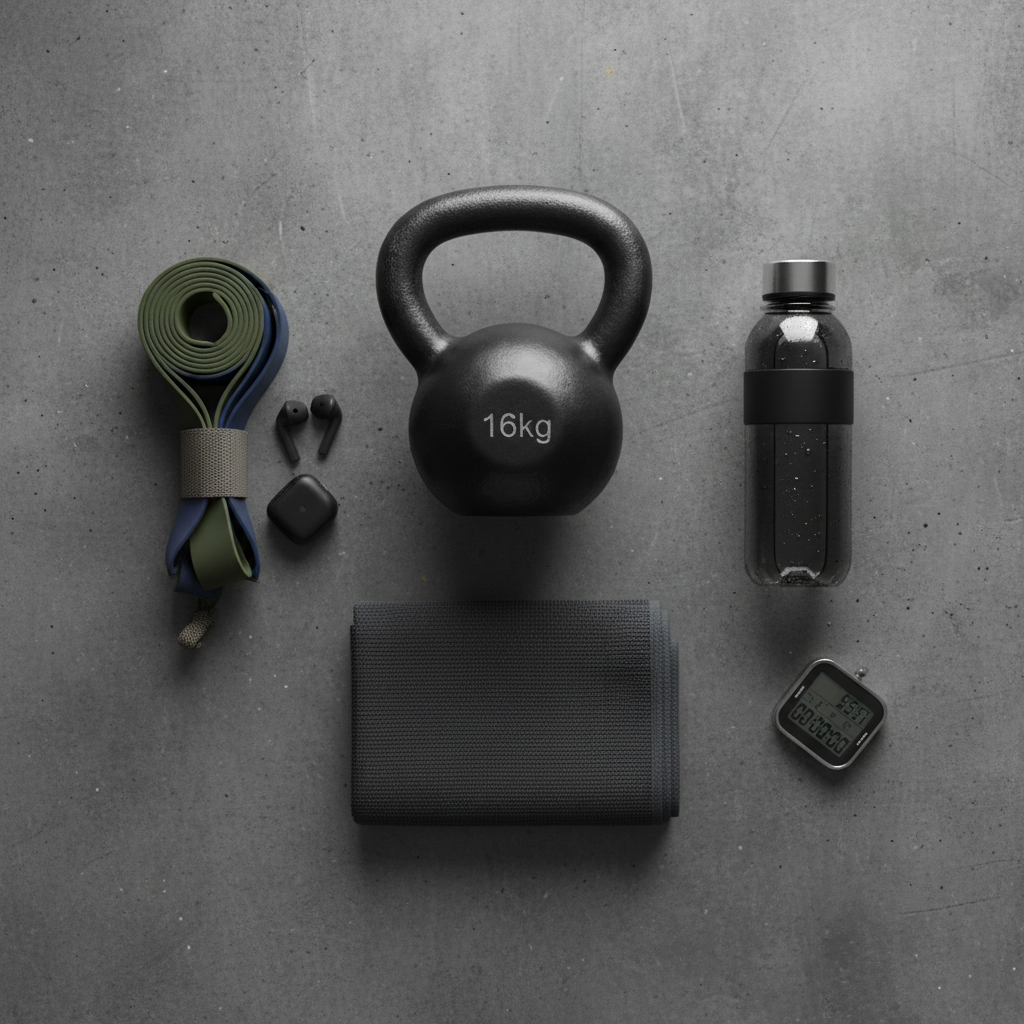
| Resistance Bands | $ | Portable, versatile for adding resistance. | Limited in the total load they can provide. |

FAQ - 6-8 real questions with answers
Q: Can I do HIIT every day to lose weight faster?
No, this is a common mistake that leads to overtraining, injury, and burnout. Your body needs at least 48 hours to recover from the intense metabolic stress of a true HIIT session. Stick to 2-3 sessions per week on non-consecutive days for the best results.
Q: Is HIIT or steady-state cardio (LISS) better for fat loss?
The best plan includes both. HIIT burns more calories per minute and creates a larger 'afterburn' effect (EPOC). LISS is less stressful on the body, can be done more frequently, and is great for building an aerobic base. A combination of 2-3 HIIT sessions and 1-2 LISS sessions per week is a powerful strategy.
Q: How long should a HIIT workout be?
A true HIIT session, excluding warm-up and cool-down, should be short and intense, typically lasting between 10 and 25 minutes. If you feel like you can go for 45 minutes, you likely aren't working at a high enough intensity during your 'on' intervals.
Q: Can I build muscle with HIIT?
HIIT can help preserve muscle during a fat loss phase and can even build some muscle, especially in beginners. However, its primary role is conditioning. For significant muscle growth (hypertrophy), dedicated resistance training with progressive overload is far superior.
Q: I'm a beginner. How should I start?
Start with one session per week using a forgiving work-to-rest ratio like 1:3 (e.g., 20 seconds of work, 60 seconds of rest). Choose a low-impact exercise like an exercise bike or rower. Focus on consistent effort and perfect form before increasing the intensity or duration.
Q: What's the difference between HIIT and circuit training?
While they can overlap, the key difference is intensity. Circuit training involves moving between several exercises with minimal rest, but the intensity is usually sub-maximal (you could do it for a while). True HIIT demands all-out, maximal effort that is completely unsustainable for more than a minute.
Q: My knees hurt. What are some low-impact HIIT exercises?
Absolutely. The air bike and rower are fantastic low-impact options. Other great choices include battle ropes, kettlebell swings (with proper form), sled pushes, and swimming sprints. Avoid high-impact exercises like burpees, box jumps, and high knees.
Bottom line
HIIT is an incredibly effective and time-efficient training method for boosting your cardiovascular fitness and metabolic rate. By understanding the science, avoiding common pitfalls, and programming it intelligently alongside strength training and proper recovery, you can unlock incredible results. Ready to stop guessing and start getting the most out of every minute? Let the Fullbody AI app build a personalized, progressive HIIT plan that evolves with you, ensuring you train smart, stay safe, and get fitter than ever-even our sloth mascot would approve of that efficiency.