You just crushed your last set, the endorphins are pumping, and all you want to do is hit the showers. But hold on-the most overlooked yet critical part of your workout is just beginning. Think of a cool-down not as an afterthought, but as the essential bridge between the stress of training and the science of recovery, setting you up for better gains and long-term health.
What "Cool-down" actually means - clear definition + why it matters
A cool-down is a structured period of low-intensity exercise and stretching performed immediately after a workout. Its primary purpose is to gradually transition your body from a state of high exertion back to its normal resting state. It’s not just about stretching; it's a deliberate physiological downshift for your entire system.
Imagine your body is a high-performance engine. You wouldn't redline it and then immediately shut it off. A cool-down is the equivalent of letting that engine idle and cool before parking it in the garage. This process helps your heart rate and blood pressure decline steadily, preventing the sudden drop that can cause dizziness or lightheadedness from blood pooling in your lower limbs.
More importantly, a proper cool-down signals to your nervous system that the "threat" (the intense workout) is over. This initiates the shift from a catabolic (breakdown) state to an anabolic (build-up) state, kick-starting the recovery and adaptation processes that are the entire point of training in the first place.
The science behind it - physiology / mechanics / energy systems
The magic of the cool-down happens at the physiological level. During intense exercise, your sympathetic nervous system-the "fight-or-flight" response-is in full command. Your heart rate is high, adrenaline is flowing, and blood is shunted to working muscles.
A cool-down facilitates the transition to the parasympathetic nervous system, known as the "rest-and-digest" system. This is crucial for recovery. Activating the parasympathetic state lowers the stress hormone cortisol, increases heart rate variability (HRV)-a key marker of recovery-and allows your body to focus on repair.
Mechanically, light movement like walking or cycling helps clear metabolic byproducts, such as lactate and hydrogen ions, from your muscles. While lactate itself doesn't cause muscle soreness (a common myth), this flushing action helps restore normal pH levels in the muscle tissue. Following this active recovery with static stretching allows you to work on muscular flexibility and joint range of motion when your muscles are warm and most pliable, reducing the risk of injury and improving long-term mobility.
Key benefits - 5-8 specific, measurable benefits in a Markdown table
| Benefit |
Mechanism |
Realistic Timeline |
| Improved Heart Rate Recovery |
Gradual reduction in intensity allows the cardiovascular system to return to baseline smoothly, avoiding blood pooling. |
Immediate (within 5-15 mins post-workout) |
| Enhanced Flexibility |
Static stretching on warm muscles increases muscle length and improves joint range of motion over time. |
Noticeable improvements in 4-8 weeks |
| Nervous System Regulation |
Actively shifts from sympathetic ("fight-or-flight") to parasympathetic ("rest-and-digest") state. |
Immediate (within the session) |
| Reduced Risk of Dizziness |
Prevents sudden drops in blood pressure (post-exercise hypotension) by maintaining venous return to the heart. |
Immediate (within 2-5 mins post-workout) |
| Aids in Managing DOMS |
Increased blood flow helps clear metabolic waste and deliver nutrients, potentially moderating muscle soreness. |
Effects felt 24-48 hours post-workout |
| Downregulates Stress Hormones |
Mindful breathing and gentle movement help lower elevated levels of cortisol and adrenaline post-exercise. |
Immediate and cumulative over time |
| Reinforces Mind-Muscle Connection |
Stretching and foam rolling provide a focused opportunity to connect with and assess the muscles you just trained. |
Immediate (within the session) |
Common mistakes to avoid - bulleted list of 6-10 mistakes with 1-line fix each
- • Skipping it entirely. The most common mistake.
Fix - schedule it like any other set; even 5 minutes is better than zero.
- • Stretching "cold". Static stretching should follow the active portion of the cool-down.
Fix - always perform 3-5 minutes of light cardio before holding any static stretches.
- • Ballistic (bouncing) stretches. This can trigger a muscle's stretch reflex and cause injury.
Fix - hold stretches in a static, stable position, easing into the stretch as the muscle relaxes.
- • Holding for too short a time. A 10-second hold does very little for lasting flexibility.
Fix - aim for a minimum of 30 seconds per stretch to allow muscle tissue to lengthen.
- • Pushing into pain. Stretching should feel like a gentle pull, not sharp pain.
Fix - back off to the point of mild tension and focus on breathing; never force a stretch.
- • Forgetting to breathe. Holding your breath creates tension throughout the body.
Fix - inhale to prepare, and exhale slowly as you deepen the stretch to promote relaxation.
- • Inconsistent effort. Doing a great cool-down once a month won't yield results.
Fix - make a 5-10 minute cool-down a non-negotiable part of every single workout routine.
- • Only stretching what's sore. Imbalances are created by only stretching tight areas.
Fix - follow a balanced routine that addresses all major muscle groups worked in your session.
Programming guide - sets, reps, frequency, progression rules
A cool-down isn't random; it can be programmed just like your main workout. The primary variables are duration and the number of stretches or techniques performed. Volume is typically measured in total time.
Frequency - a cool-down should be performed after every single training session. For dedicated mobility or flexibility work, you can schedule longer 20-30 minute sessions on rest days.
Sets & Reps (for stretching): Think of this as "holds" and "duration." A standard protocol is 1-2 holds per stretch, with each hold lasting 30-60 seconds. Focus on the quality of the stretch, not the quantity.
Progression - to progress, you can either increase the duration of your holds (e.g., from 30 to 45 seconds), add more stretches for a specific muscle group, or incorporate more advanced techniques like PNF stretching (contract-relax) once you have a solid foundation.
| Experience Level |
Total Cool-down Time |
Active Recovery |
Stretching/Mobility |
Frequency |
| Beginner |
5-10 minutes |
3-5 mins |
2-5 mins |
After every workout |
| Intermediate |
10-15 minutes |
5-7 mins |
5-8 mins |
After every workout |
| Advanced |
15-20+ minutes |
5-10 mins |
10+ mins |
After every workout |
Best exercises / techniques - list with 1–2 sentence "why" for each
- • Light Jog/Walk/Cycling - the ideal first step. This keeps blood circulating and allows your heart rate to decrease gradually, preventing the "crash" from stopping suddenly.
- • Cat-Cow Stretch - excellent for spinal mobility. It gently moves the spine through flexion and extension, relieving tension built up from bracing during lifts.
- • Pigeon Pose - a king among hip stretches. This targets the glutes and piriformis, which can become tight from squats, deadlifts, and even prolonged sitting.
- • Standing Quad Stretch - directly targets the large quadriceps muscles. This is essential after any lower-body day to restore length and reduce tightness in the front of the thigh.
- • Doorway Chest Stretch - opens up the pectoral muscles and front deltoids. This counteracts the internal rotation and tightness that can come from heavy pressing movements.
- • 90/90 Stretch - a fantastic active mobility drill for the hips. It works on both internal and external rotation, crucial for long-term hip health and squat depth.
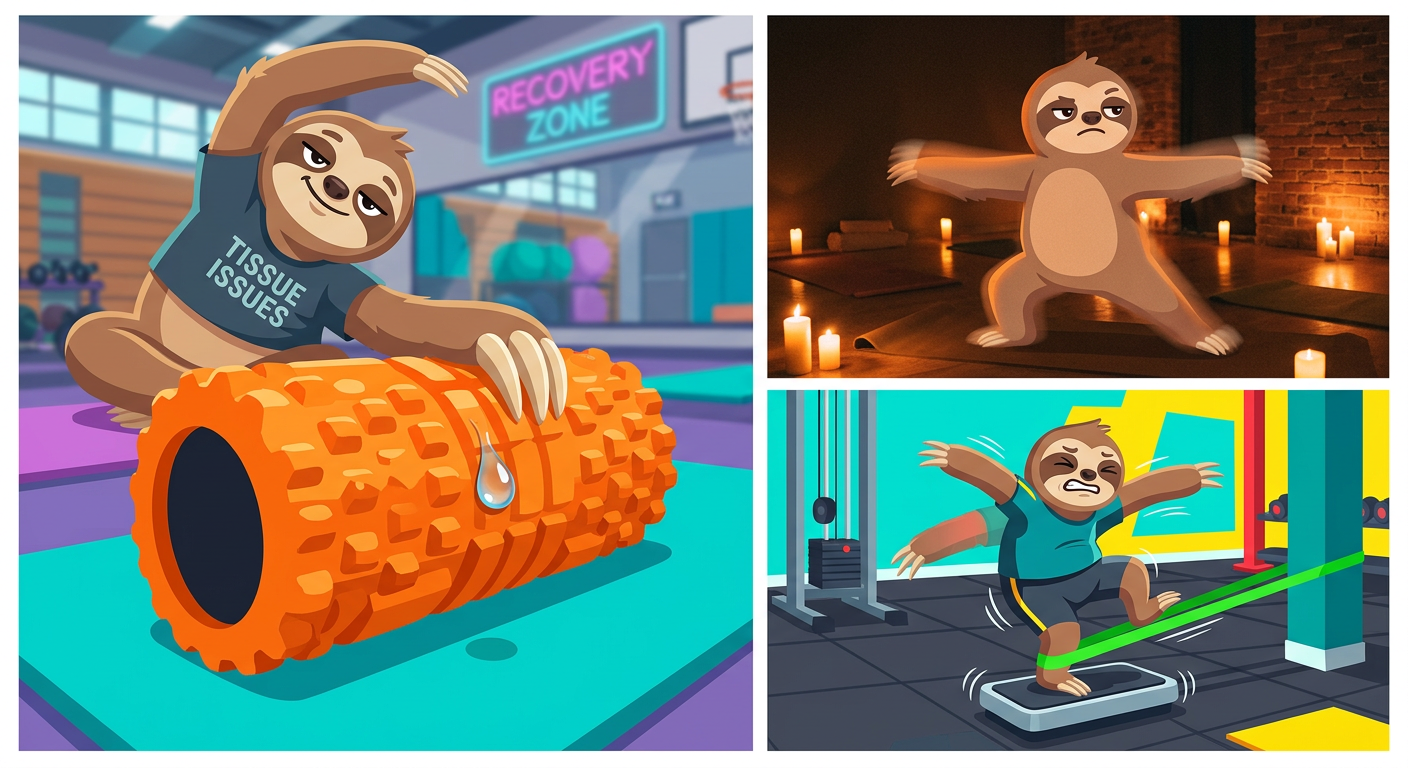
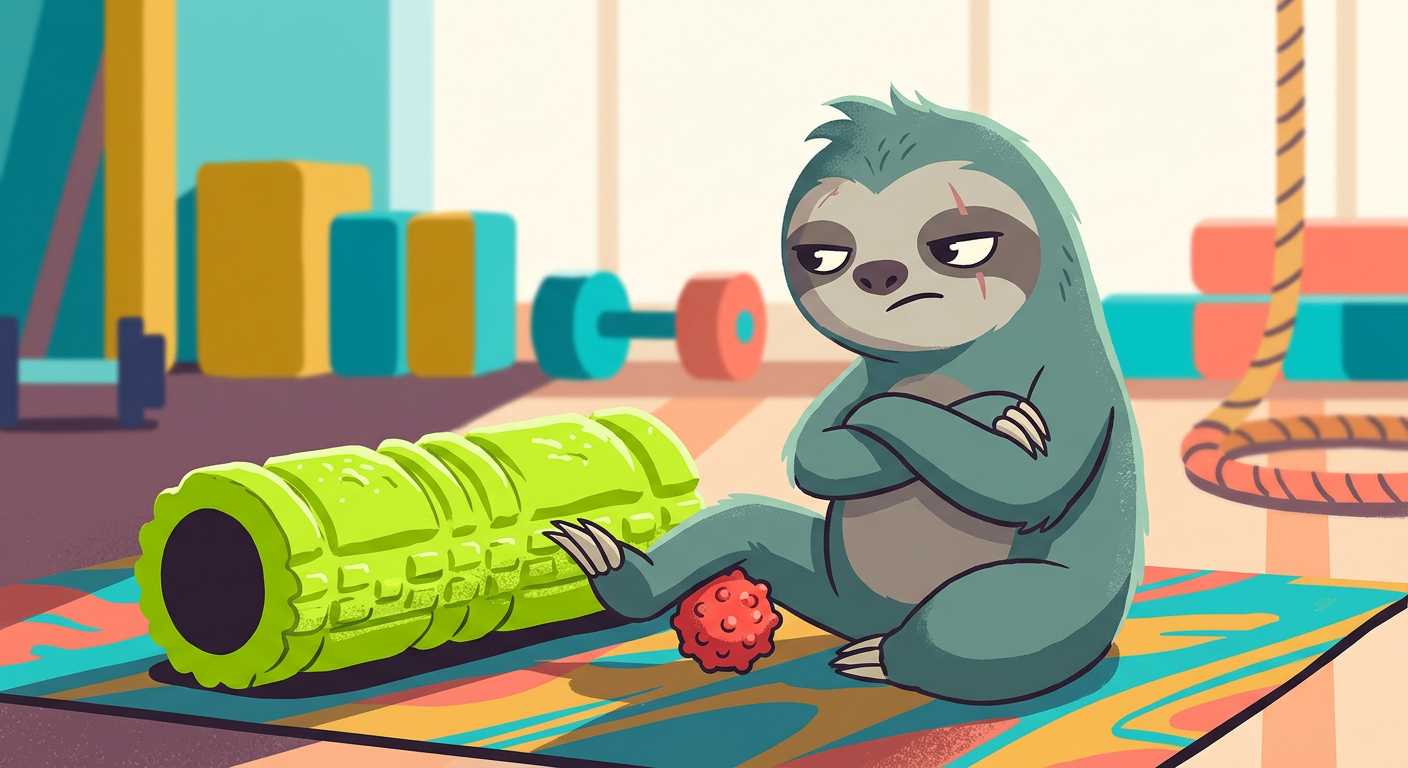
- • Foam Rolling (SMR): A form of self-myofascial release. It helps break up adhesions and reduce tension in muscles and the surrounding connective tissue (fascia).
- • Diaphragmatic Breathing - the ultimate nervous system reset. Lying on your back and taking slow, deep belly breaths is the fastest way to activate your parasympathetic response.
Sample week template - Markdown table with Day | Focus | Volume | Notes (7 rows)
| Day |
Focus |
Volume |
Notes |
| Monday |
Lower Body (Squat Focus) |
15 mins |
5 min walk. Focus on Pigeon Pose, Quad Stretch, and foam rolling the glutes and IT band. |
| Tuesday |
Upper Body (Push Focus) |
10 mins |
5 min bike. Emphasize Doorway Chest Stretch and Thread the Needle for thoracic mobility. |
| Wednesday |
Active Recovery |
20 mins |
No intense workout. 10 min light cardio followed by a full-body mobility and stretching flow. |
| Thursday |
Lower Body (Hinge Focus) |
15 mins |
5 min rower. Prioritize Hamstring Stretches, 90/90s, and foam rolling the hamstrings. |
| Friday |
Upper Body (Pull Focus) |
10 mins |
5 min elliptical. Focus on Lat Stretches, Cat-Cow, and releasing the upper back with a lacrosse ball. |
| Saturday |
Full Body Conditioning |
15 mins |
5 min light jog. Perform a full-body stretch routine covering all major muscle groups. |
| Sunday |
Full Rest |
5-10 mins |
Optional gentle stretching or breathing exercises before bed to promote relaxation. |
Recovery, nutrition & sleep - practical numbers (protein g/kg, sleep hours, hydration)
The cool-down is the start of recovery, but it's only one piece of the puzzle. To truly maximize your results, you must support your training with proper nutrition, hydration, and sleep. Think of these as non-negotiable fundamentals.
- • Protein - this is the building block for muscle repair. Aim for 1.6-2.2 grams of protein per kilogram of body weight per day (or about 0.7-1.0 g/lb). Distribute this intake across 3-5 meals to optimize muscle protein synthesis.
- • Hydration - dehydration can severely impair recovery and performance. As a rule, drink 2-3 liters of water per day, plus an additional 500-1000ml for every hour of intense exercise. A good strategy is to drink 125-150% of the body weight you lost during your workout.
- • Sleep - this is when the most potent anabolic hormones (like growth hormone) are released and muscle repair is at its peak. Aim for 7-9 hours of quality, uninterrupted sleep per night. Consistency in your sleep schedule is just as important as duration.
Equipment & alternatives - table comparing options (Equipment | Cost | Pro | Con)
| Equipment |
Cost |
Pro |
Con |
| Your Body |
Free |
Always available, versatile. |
Limited to unassisted stretches. |
| Foam Roller |
$15 - $50 |
Excellent for large muscle groups (quads, back). |
Can be bulky to transport. |
| Lacrosse/Massage Ball |
$5 - $20 |
Perfect for targeting specific trigger points (glutes, shoulders). |
Can be very intense for beginners. |
| Stretching Strap |
$10 - $25 |
Allows you to deepen stretches (hamstrings, shoulders). |
Requires some technique to use effectively. |
| Percussion Massager |
$100 - $500 |
Provides rapid percussion to release deep muscle tension. |
Expensive, requires charging. |
Sometimes seeing is believing. Use these video resources to perfect your technique and find guided routines to follow after your next workout.
FAQ - 6-8 real questions with 2-4 sentence answers each.
Q: Does a cool-down actually prevent muscle soreness (DOMS)?
A - not entirely, but it can help. The primary cause of Delayed Onset Muscle Soreness (DOMS) is microscopic muscle damage from training. While a cool-down can't prevent this, by increasing blood flow and shifting your body into a recovery state faster, it can help manage the severity and duration of the soreness you experience.
Q: What's the difference between a cool-down and a warm-up?
A - they are opposites in function. A warm-up prepares the body for exercise by gradually increasing heart rate and activating the nervous system (dynamic stretching). A cool-down does the reverse, safely bringing the body back to rest and focusing on restoring muscle length (static stretching).
Q: Can my cool-down also be my flexibility training?
A - yes, absolutely! The post-workout period is the ideal time to work on flexibility because your muscles are warm and receptive to stretching. Consistently using your cool-down to hold static stretches for 30+ seconds is one of the most effective ways to make lasting improvements in your range of motion.
Q: What if I'm extremely short on time?
A - something is always better than nothing. If you only have 3-5 minutes, prioritize a very brief active cool-down (like a 2-minute walk) followed by 2-3 key stretches targeting the main muscles you just worked. A 90-second cool-down is infinitely better than a zero-second one.
Q: Is it better to foam roll before or after stretching?
A - both can be effective, but a great sequence is: 1) light cardio, 2) foam rolling, 3) static stretching. Foam rolling first can help reduce muscle tension and release trigger points, which may allow you to get a deeper and more effective stretch afterward.
Q: Do I need to cool down after cardio like a long run?
A - yes, arguably even more so. After sustained cardiovascular exercise, your blood vessels are widely dilated. Stopping abruptly can cause a rapid drop in blood pressure as blood pools in your legs. A 5-10 minute walk is crucial to let your system return to normal gradually.
Q: Can I just sit in the sauna for my cool-down?
A - a sauna is a form of passive recovery, but it is not a substitute for an active cool-down. The heat can feel great and promote blood flow, but it doesn't accomplish the goal of gradually lowering your heart rate or actively lengthening muscle tissue. Use the sauna after you've completed a proper active cool-down and stretching routine.
Bottom line - confident closing paragraph that invites the reader to use the AI workout planner
Your cool-down is not an optional add-on; it is an integral part of an intelligent training plan. By dedicating just 5 to 15 minutes to this crucial practice, you accelerate recovery, improve flexibility, and ensure your body is ready for the next challenge. Stop treating the end of your workout as the finish line and start seeing it as your first step toward building a stronger, more resilient body. Ready to make every part of your workout count? Let the Fullbody AI planner build you a complete, personalized program that intelligently integrates warm-ups, workouts, and effective cool-downs, so you can focus on what matters - getting results.