

If you want the most direct route to a stronger, leaner, and more capable body, you've found it. Compound exercises are the backbone of smart, effective training, giving you the most bang for your buck in the gym. Like our mascot the sloth, we believe in maximum efficiency-and these multi-joint movements are the key to unlocking your potential.
What "Compound Exercises" actually means
A compound exercise is any movement that engages multiple muscle groups by moving two or more joints simultaneously. Think of a squat - your hip, knee, and ankle joints all move, recruiting your quads, glutes, hamstrings, and core in one integrated action. This is the opposite of an isolation exercise, like a bicep curl, which moves only the elbow joint to target a single muscle.
Why does this matter? Because your body is designed to work as a system, not a collection of individual parts. Compound exercises train muscles to work together, improving coordination, balance, and real-world strength. They are the most time-efficient way to stimulate a maximum amount of muscle fiber, making them the foundation of nearly every successful strength and conditioning program.
The science behind it
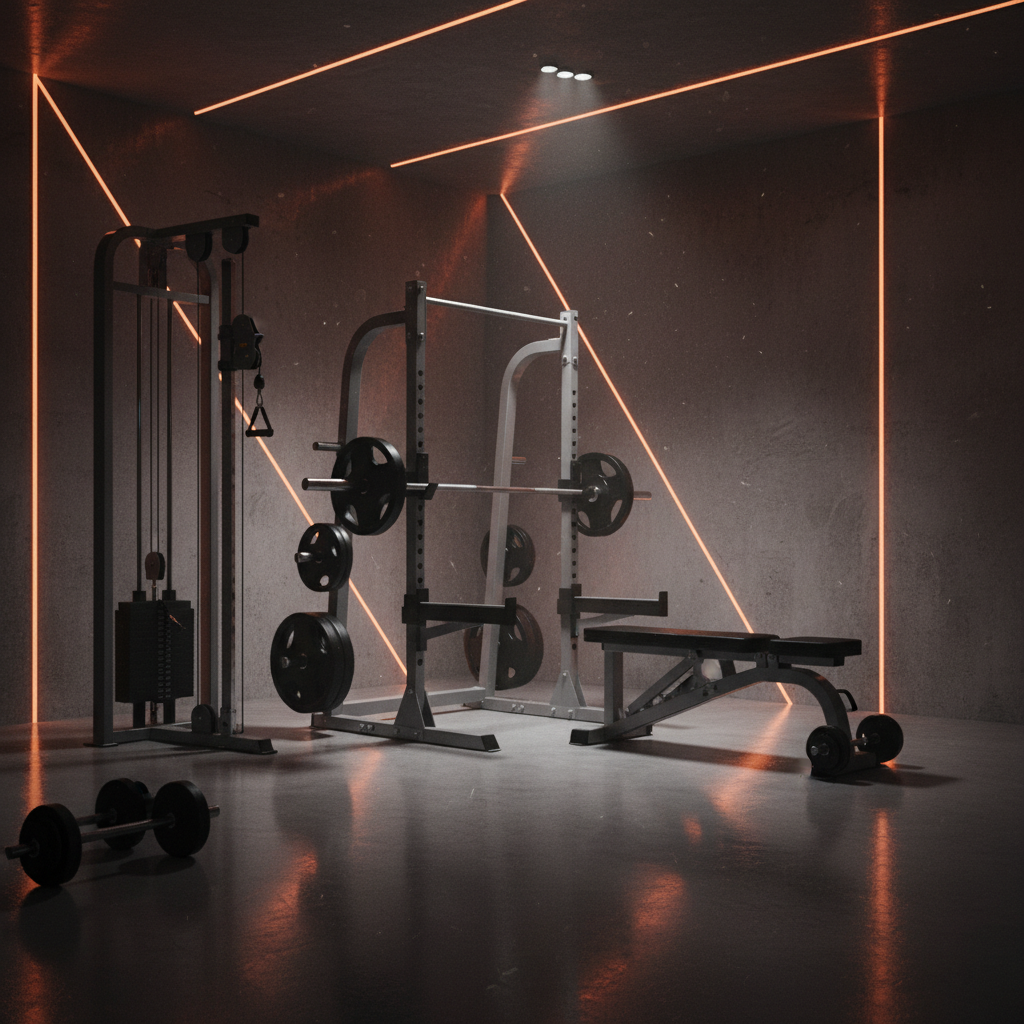
The profound effectiveness of compound exercises isn't gym folklore; it's rooted in fundamental human physiology. When you perform a heavy deadlift or a set of pull-ups, you're initiating a powerful cascade of responses throughout your body.
From a neuromuscular perspective, these movements demand high levels of intermuscular coordination. Your central nervous system must learn to fire multiple motor units across different muscle groups in a precise sequence. This improves neuromuscular efficiency, which is your brain's ability to recruit muscles. It's why you get stronger in the first few weeks of training even before significant muscle growth occurs-your body is simply getting better at using the muscle it already has.
Metabolically, compound exercises are incredibly demanding. Lifting heavy weights for multiple reps with large muscle groups creates a huge energy deficit. This not only burns a significant number of calories during the workout but also elevates your metabolism for hours afterward. This effect, known as Excess Post-exercise Oxygen Consumption (EPOC), means your body continues to burn calories at a higher rate as it works to recover and return to a state of homeostasis.
Finally, the systemic stress created by heavy compound lifting triggers a potent anabolic hormonal response. The body releases greater amounts of growth hormone and testosterone compared to isolation work. These hormones are critical messengers for signaling muscle protein synthesis, the process of repairing and rebuilding muscle fibers stronger than before.
Key benefits
| Benefit | Mechanism | Realistic Timeline |
|---|---|---|
| Time Efficiency | Activates multiple muscle groups with a single exercise, reducing total workout time. | Immediate |
| Increased Caloric Burn | Higher energy demand and EPOC leads to greater total energy expenditure. | Noticeable in 1-2 weeks |
| Enhanced Functional Strength | Mimics real-world movement patterns (push, pull, hinge, squat), improving daily life capacity. | Noticeable in 4-6 weeks |
| Greater Anabolic Response | Systemic stress stimulates a larger release of testosterone and growth hormone. | Contributes to significant muscle growth in 3-6 months |
| Improved Coordination | Trains the central nervous system to synchronize multiple muscle groups effectively. | Improvements felt in 2-4 weeks |
| Increased Bone Density | Heavy mechanical loading stimulates osteoblasts (bone-building cells), strengthening the skeleton. | Measurable changes in 6-12 months |
| Superior Core Strength | Requires constant core stabilization to protect the spine and transfer force. | Core stability improves in 4-8 weeks |
Common mistakes to avoid
- • Ego Lifting - using too much weight at the expense of proper form and range of motion.
- • Fix - select a weight that allows you to complete all reps with perfect technique; the muscle doesn't know the number on the plate.
- • Poor Form - rounding the back on deadlifts, not reaching depth on squats, or flaring elbows on bench press.
- • Fix - film yourself from the side to check your form or work with a qualified coach.
- • Neglecting Warm-ups - jumping straight into heavy sets without preparing the body.
- • Fix - perform 5-10 minutes of light cardio followed by dynamic stretches and lighter warm-up sets of your main lift.
- • Inconsistent Progression - sticking with the same weights and reps for months on end.
- • Fix - follow the principle of progressive overload by systematically trying to add a little weight or an extra rep over time.
- • Imbalanced Programming - focusing only on mirror muscles (e.g., all pressing, no pulling).
- • Fix - ensure your program has a balanced ratio of push-to-pull and squat-to-hinge movements.
- • Rushing Reps - using momentum to move the weight instead of controlled muscle contraction.
- • Fix - control the eccentric (lowering) phase of the lift for 2-3 seconds on each rep.
- • Poor Breathing/Bracing - not using your breath to create a stable core.
- • Fix - learn the Valsalva maneuver - take a deep breath into your belly and brace your core before initiating the lift.
Programming guide
Proper programming is essential for maximizing gains and minimizing injury risk. The core principle is progressive overload: consistently challenging your body to do more than it's used to. This can mean adding weight, performing more reps, or increasing the number of sets.
For strength, focus on lower rep ranges (3-6 reps) with heavier weight (around 80-90% of your one-rep max). For hypertrophy (muscle growth), a moderate rep range (6-12 reps) with challenging weight is ideal. A good rule of thumb for progression is to try and add 2.5-5 kg (5-10 lbs) to your main lifts once you can comfortably complete your target sets and reps with excellent form.
Frequency depends on your experience level and recovery capacity, but most people see great results hitting each major muscle group 2-3 times per week. Here's a general guideline for weekly volume on your primary compound exercises:
| Experience Level | Main Compound Lifts (Sets per week) | Total Heavy Compound Sets (per muscle group) |
|---|---|---|
| Beginner | 2-3 (e.g., Squat, Bench, Row) | 8-12 sets |
| Intermediate | 3-4 (e.g., Squat, Bench, Deadlift, OHP) | 12-18 sets |
| Advanced | 4-5+ (Includes variations and higher frequency) | 15-20+ sets |
Best exercises / techniques
These are the titans of the gym floor. Mastering them will build a powerful, athletic physique.
- • Barbell Back Squat - the undisputed king of lower body exercises. It builds powerful quads, glutes, and hamstrings while demanding immense core stability.
- • Conventional Deadlift - the ultimate test of full-body strength. It develops your entire posterior chain, back, and grip strength like nothing else.
- • Bench Press - the classic upper-body push exercise for building a strong chest, shoulders, and triceps.
- • Overhead Press (OHP): The best movement for building strong, stable, and well-rounded shoulders. It also requires significant core and upper back engagement.
- • Pull-ups / Chin-ups - the gold standard for upper-body pulling strength. They build a wide back and strong biceps using only your bodyweight.
- • Barbell Row - a foundational back-builder that targets the lats, rhomboids, and traps while also teaching you to maintain a rigid, neutral spine under load.
- • Lunges - a unilateral (single-leg) movement that builds leg strength while also improving balance, stability, and hip mobility.
Sample week template
This is a classic 3-day full-body routine built around core compound movements. It's highly effective for beginners and intermediates. Rest days can include light activity like walking or stretching.
| Day | Focus | Volume | Notes |
|---|---|---|---|
| 1 | Squat Focus (Full Body) | 3-4 exercises, 9-12 total work sets | Start with heavy Squats, then add an upper body push (Bench Press) and pull (Rows). |
| 2 | Rest / Active Recovery | N/A | Focus on mobility, stretching, or go for a 30-minute walk. |
| 3 | Push Focus (Full Body) | 3-4 exercises, 9-12 total work sets | Start with heavy Bench Press or OHP, then add a lower body hinge (RDLs) and a vertical pull (Pull-ups). |
| 4 | Rest / Active Recovery | N/A | Hydrate, eat well, and let your body repair. |
| 5 | Hinge Focus (Full Body) | 3-4 exercises, 9-12 total work sets | Start with heavy Deadlifts, then add an upper body press (Incline DB Press) and a lower body accessory (Lunges). |
| 6 | Rest / Active Recovery | N/A | Gentle activity is fine, but prioritize recovery for the next week. |
| 7 | Rest | N/A | Full rest day. Prepare for the week ahead. |
Create Your Workout Plan by Voice - Free, No Signup
Just tell our AI what you want - your goals, schedule, equipment - and get a personalized plan in seconds. No forms, no hassle. Just speak.
Recovery, nutrition & sleep
You don't build muscle in the gym; you build it when you recover. Heavy compound lifting is demanding, and you must support it with smart lifestyle habits.
- • Nutrition - protein is paramount for muscle repair. Aim for 1.6-2.2 grams of protein per kilogram of body weight (or about 0.7-1.0 g per pound). Ensure you're also consuming enough carbohydrates to fuel your workouts and healthy fats for hormone regulation.
- • Hydration - dehydration can crush your strength and performance. A good starting point is 3-4 liters (about a gallon) of water per day, increasing based on activity level and climate.
- • Sleep - this is the most underrated performance enhancer. Aim for 7-9 hours of quality sleep per night. During deep sleep, your body releases growth hormone, repairs damaged tissue, and consolidates motor learning.
Equipment & alternatives
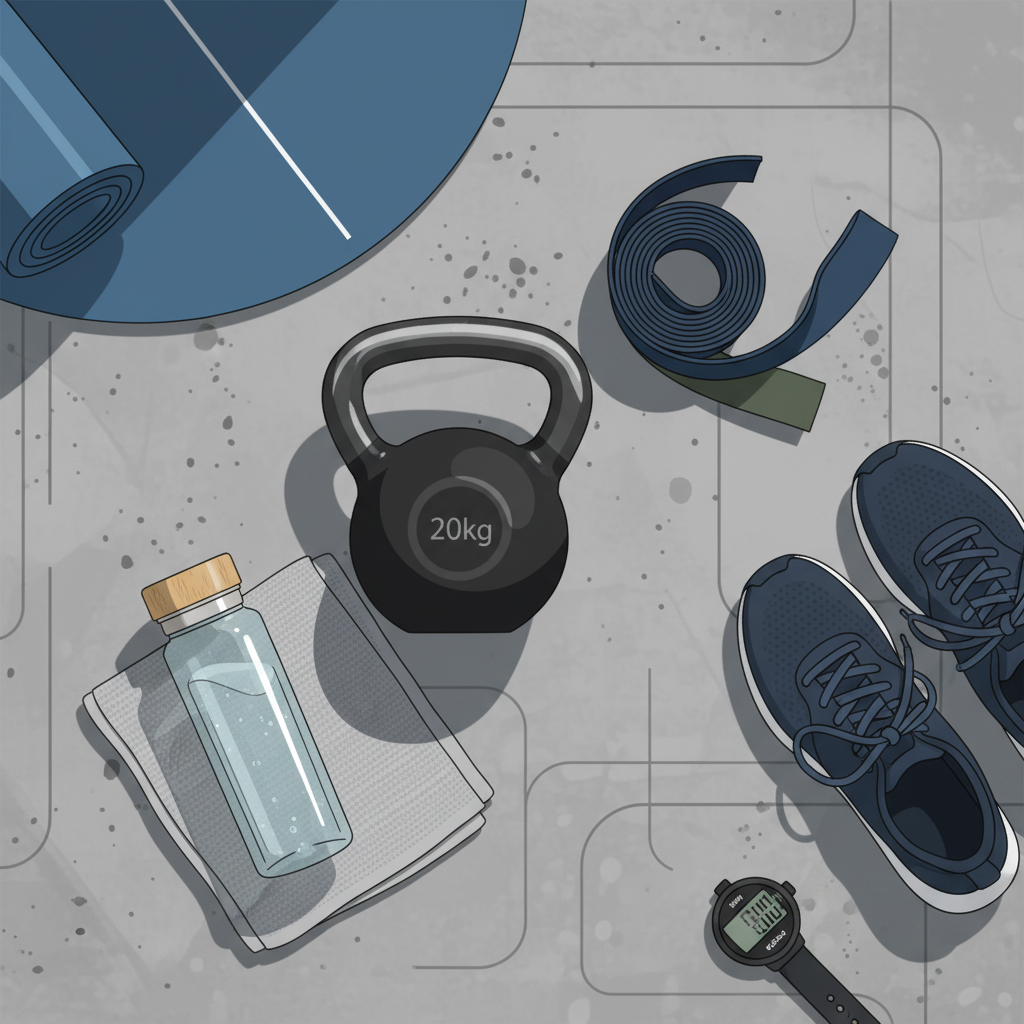
While the barbell is king for maximal loading, you can perform effective compound exercises with a variety of tools.
| Equipment | Cost | Pro | Con |
|---|---|---|---|
| Barbell & Plates | High | Highest potential for progressive overload; the standard for strength. | Requires space, a rack for safety, and is less beginner-friendly. |
| Dumbbells | Moderate | Excellent for unilateral work, improves stability, greater range of motion. | Can become unwieldy and hard to get into position at very heavy weights. |
| Kettlebells | Moderate | Great for dynamic movements like swings and cleans; develops explosive power. | The offset center of mass has a steeper learning curve for some lifts. |
| Resistance Bands | Low | Portable, cheap, and offers accommodating resistance (harder at the top). | Limited maximal load potential; difficult to quantify progress precisely. |
| Bodyweight | Free | Accessible anywhere, builds incredible relative strength and body control. | Progressive overload becomes difficult without learning advanced variations. |
Reading about form is one thing, but seeing it in action is another. Use these video resources to study the technique of the major lifts.
FAQ
Q: Can I build muscle with only compound exercises?
Absolutely. For most people, a routine built entirely on compound movements will build a fantastic, well-proportioned physique. Isolation exercises are best used as accessories to bring up lagging body parts or add extra volume after your main compound work is done.
Q: Are compound exercises safe for beginners?
Yes, when performed with proper form and appropriate weight. In fact, they are essential for beginners to build a strong foundation. Start with very light weight-or even just your bodyweight-and focus exclusively on mastering the technique before adding significant load.
Q: How heavy should I be lifting?
You should lift a weight that is challenging for your target rep range while allowing you to maintain perfect form. The last 1-2 reps of a set should be difficult, but not so hard that your technique breaks down. This is often described as leaving 1-3 Reps in Reserve (RIR).
Q: What's better: compound or isolation exercises?
Neither is "better"; they are tools for different jobs. Compound exercises are better for overall strength, efficiency, and hormonal response. Isolation exercises are better for targeting a specific, smaller muscle. A well-rounded program uses compound lifts as the main course and isolation lifts as the side dishes.
Q: Can I do heavy compound exercises every day?
This is not recommended. Heavy compound lifting places significant stress on your central nervous system (CNS), muscles, and joints. Most well-designed programs include 2-4 heavy lifting days per week with rest or lighter activity days in between to allow for adequate recovery.
Q: My lower back hurts during squats or deadlifts. What should I do?
Stop immediately. Pain (especially sharp pain in a joint or the lower back) is a signal to stop. Deload the bar, check your form (core bracing and neutral spine are key), and consider consulting a physical therapist or qualified coach. Do not train through lower back pain.
Q: How do I know if my form is correct?
Filming yourself from a side and front angle is the best way to self-assess. Compare your video to tutorials from reputable coaches. Even better, invest in a few sessions with a certified personal trainer to get hands-on feedback. It's an investment that pays dividends in safety and long-term progress.
Bottom line
Compound exercises are the most powerful tool in your fitness arsenal. They build functional strength, burn more calories, optimize your hormones, and do it all in less time. The principles are clear, but putting them into a balanced, progressive plan that adapts to your progress is where the real magic happens.
Stop guessing with your training. Let Fullbody AI do the heavy lifting for you by building a personalized, compound-focused workout plan that ensures you're always moving toward your goals in the smartest, most efficient way possible. It's time to train smarter, not just harder.