

Building a strong, well-defined chest is a cornerstone of nearly every fitness goal, from raw powerlifting strength to a balanced, aesthetic physique. But moving beyond beginner gains requires more than just showing up and pushing weight; it demands a smart, intentional approach. This guide is your complete blueprint for understanding, programming, and executing chest training that delivers real, lasting results, all guided by the same principles that power our Fullbody AI workout planner - slow, steady, and intelligent progress wins the race.
What "Chest" actually means - clear definition + why it matters
When we talk about training the "chest," we're primarily referring to the pectoral muscles, or "pecs." But for truly balanced development, it's crucial to understand the anatomy. The chest isn't one single block of muscle; it's a complex group that works together to push, press, and stabilize.
The main player is the Pectoralis Major, the large, fan-shaped muscle that makes up most of your chest mass. It has two primary heads - the clavicular head (upper chest), which originates from your collarbone, and the sternocostal head (mid and lower chest), which originates from your sternum and ribs. Understanding these two heads is the key to a complete physique, as different angles target them differently.
Beneath the Pec Major lies the Pectoralis Minor, a smaller, triangular muscle. While you can't see it, its role in scapular (shoulder blade) stability is vital for shoulder health and proper pressing mechanics. Finally, the Serratus Anterior, which wraps around your ribs, helps protract your shoulder blades. A well-developed serratus not only looks impressive but also locks your scapula in place during presses, creating a stronger, safer foundation.
Why does this matter? Because knowing this anatomy allows you to choose exercises intelligently. Incline presses for the upper head, flat presses for the sternocostal head, and dips for the lower portion ensure you're not just building a single part of your chest, but developing a complete, powerful, and injury-resistant upper body.
The science behind it - physiology / mechanics / energy systems
Effective chest training is applied science. The pectoral muscles are composed predominantly of Type II fast-twitch muscle fibers. These fibers are responsible for powerful, explosive movements but fatigue relatively quickly. This is why chest training responds so well to heavy loads in the 6-12 rep range-you're directly challenging the fibers with the most potential for growth (hypertrophy).
The primary biomechanical functions of the pecs are horizontal adduction (bringing your arms across your body, like in a dumbbell fly) and shoulder flexion (raising your arms in front of you, a key part of an incline press). Every chest exercise is simply a variation of these movements, loaded with resistance. Tucking your elbows to a 45-75 degree angle during presses places the load squarely on the pec fibers while protecting the delicate shoulder joint.
From an energy perspective, heavy chest pressing relies on the ATP-PC system. This system provides immediate, explosive energy for efforts lasting up to about 10 seconds, perfect for a heavy set of 5 reps. For longer sets in the hypertrophy range (8-12 reps), your body transitions to the glycolytic system, which breaks down stored glucose for fuel. This is why adequate rest between sets (60-180 seconds) and proper carbohydrate intake are critical for performance.
Key benefits - 5-8 specific, measurable benefits in a Markdown table
Training your chest goes far beyond aesthetics. The functional strength you build translates directly into daily life and athletic performance, while the physiological adaptations improve your overall health.
| Benefit | Mechanism | Realistic Timeline |
|---|---|---|
| Increased Pushing Strength | Neuromuscular adaptations and hypertrophy of Type II muscle fibers. | Strength gains in 4-8 weeks. |
| Improved Posture | Strong pecs help balance the pulling muscles of the back, preventing rounded shoulders. | Noticeable changes in 8-12 weeks. |
| Enhanced Athletic Performance | Greater force production for activities like throwing, swimming, and contact sports. | Performance improvements are ongoing. |
| Aesthetic Development | Hypertrophy of the clavicular and sternocostal heads creates a fuller, more defined torso. | Visible muscle growth in 3-6 months. |
| Increased Bone Density | The mechanical stress of heavy pressing signals the body to strengthen bones in the arms and torso. | 6+ months for significant change. |
| Boosted Metabolism | Adding muscle mass increases your Basal Metabolic Rate (BMR), burning more calories at rest. | Measurable BMR increase in 3+ months. |
| Shoulder Joint Stability | Strengthening the pecs and serratus provides a more stable foundation for the shoulder girdle. | Reduced instability in 2-4 months. |
Common mistakes to avoid - bulleted list of 6-10 mistakes with 1-line fix each
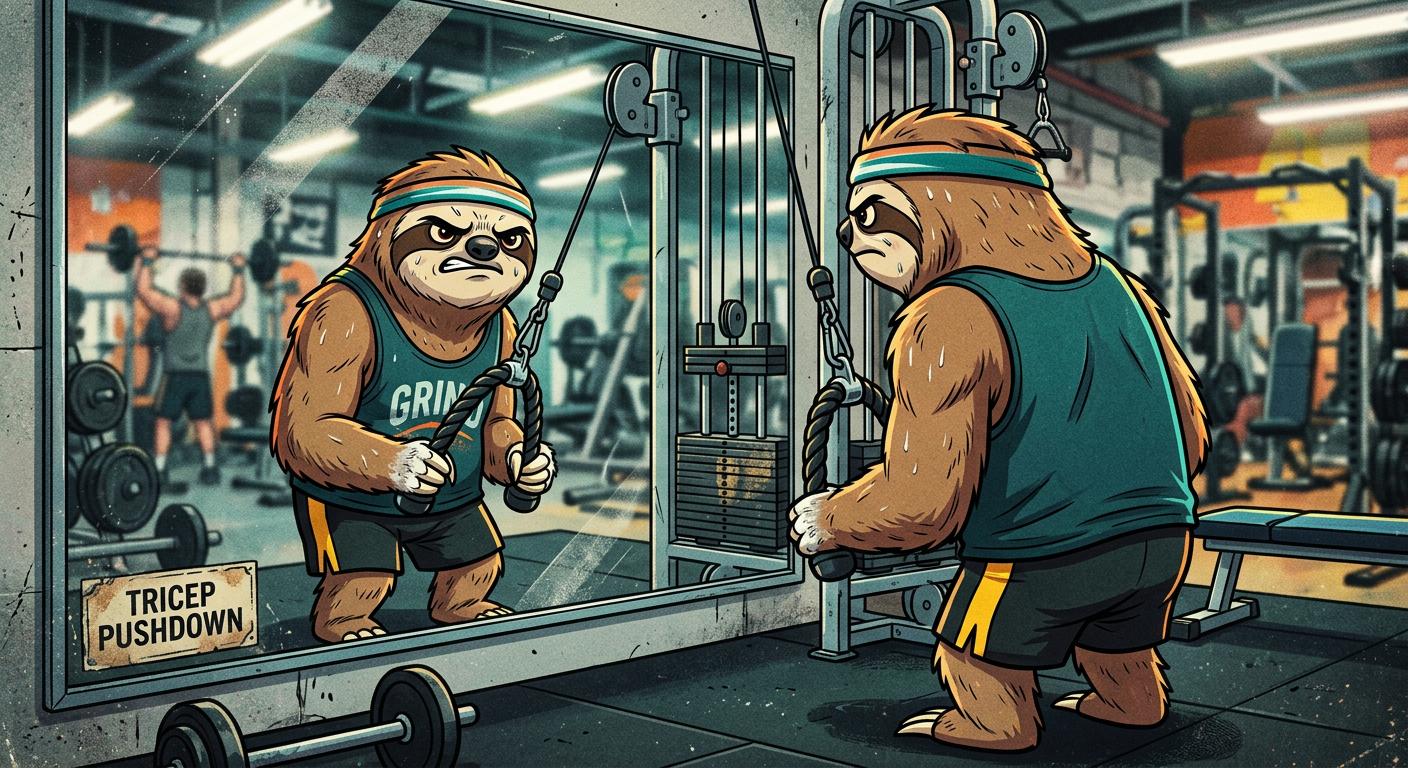
Progress can stall or lead to injury if you're making these common errors. A smart lifter focuses on form first, then load. Our sloth mascot would agree - slow and controlled is better than fast and sloppy.
- • Ego Lifting - using too much weight with poor form.
- • Fix - select a weight you can control with perfect technique for your target rep range (e.g., 8-12 reps).
- • Flaring Your Elbows - pressing with elbows at a 90-degree angle to your torso.
- • Fix - tuck your elbows to a 45-75 degree angle to protect your shoulder joints.
- • Bouncing the Bar - using momentum by bouncing the barbell off your chest.
- • Fix - control the descent (eccentric), pause for a split second, and then press explosively.
- • Not Retracting Your Scapula - pressing with a flat or rounded back.
- • Fix - before each set, pull your shoulder blades together and down, creating a stable arch.
- • Partial Range of Motion - performing half-reps that don't fully stretch the muscle.
- • Fix - lower the weight until your elbows reach at least a 90-degree angle or the bar lightly touches your chest.
- • Neglecting the Upper Chest - only performing flat bench presses.
- • Fix - start your workout with an incline movement (30-45 degree angle) to prioritize the upper pecs.
- • Letting Shoulders Dominate - feeling presses more in your deltoids than your chest.
- • Fix - focus on the mind-muscle connection and ensure your scapula is retracted and depressed.
- • Overtraining - hitting chest with high volume too many days per week.
- • Fix - allow at least 48 hours of recovery between intense chest workouts.
Programming guide - sets, reps, frequency, progression rules
Smart programming is the engine of progress. The key is applying progressive overload-systematically increasing the demand on your muscles over time. The most common way to do this is double progression: first, work on increasing the number of reps you can do with a certain weight. Once you hit the top of your target rep range (e.g., 12 reps), you then increase the weight and start again at the bottom of the range (e.g., 8 reps).
Your training frequency and volume should match your experience level. Beginners can grow from less volume, while advanced lifters need more stimulus to continue adapting.
| Experience Level | Frequency per Week | Total Sets per Week | Reps per Set | Rest Between Sets |
|---|---|---|---|---|
| Beginner | 1-2x | 8-12 | 8-12 | 90-120 seconds |
| Intermediate | 2x | 12-18 | 6-12 | 60-180 seconds |
| Advanced | 2-3x | 16-22+ | 5-15 | 60-180 seconds |
For strength focus, work in the 3-6 rep range with longer rest periods (3-5 minutes). For hypertrophy (muscle growth), the 6-12 rep range is your sweet spot. Aim to finish most sets with 1-2 Reps in Reserve (RIR) to ensure you're training close enough to failure to trigger growth without overtaxing your central nervous system.
Best exercises / techniques - list with 1–2 sentence "why" for each
A great chest workout includes a mix of compound and isolation movements targeting the muscle from different angles.
- • Incline Dumbbell Press - the king for upper chest development. Using dumbbells allows for a greater range of motion and forces each side to work independently.
- • Flat Barbell Bench Press - the gold standard for building raw upper body strength and overall chest mass. It allows for the heaviest loading.
- • Chest-Focused Dips - an excellent compound movement for the lower chest. Lean your torso forward to shift the emphasis from your triceps to your pecs.
- • Push-up Variations - the most versatile bodyweight exercise. Elevate your feet to increase difficulty, or bring your hands closer for more triceps and inner-chest activation.
- • Cable Crossover - a superior isolation exercise because it provides constant tension throughout the entire range of motion, especially at the peak contraction.
- • Dumbbell Fly - a classic isolation movement that puts a deep stretch on the pectoral fibers, which is a key mechanism for hypertrophy.
- • Machine Chest Press - a great option for beginners or for training safely to failure without a spotter. The fixed path helps isolate the chest.