
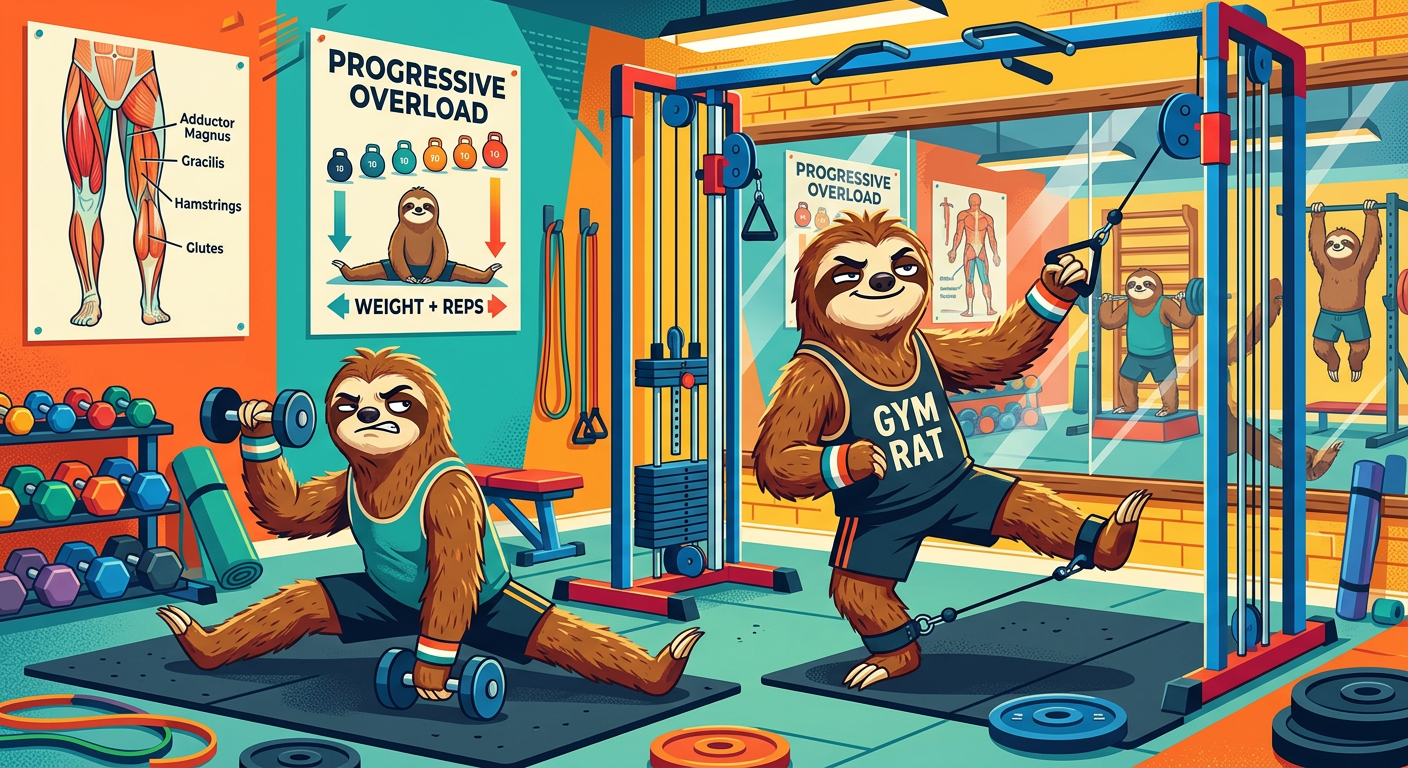
So, you’re hitting the gym consistently. You’ve got your split training routine dialed in- push day, pull day, leg day. You’re putting in the work, but when you look in the mirror, things feel… stagnant. The weights on the bar haven't budged in weeks. Sound familiar?
If you're nodding along, you might be missing the single most important ingredient for muscle growth: progressive overload.
It’s the secret sauce that turns effort into actual results. Without it, you're just spinning your wheels. Let's dig into why this principle is so crucial and how you can use it to maximize gains from your split.
What in the World is Progressive Overload?
In simple terms, progressive overload is the principle of continually increasing the demands on your musculoskeletal system to gain muscle size, strength, and endurance.
Think of it this way - your body is incredibly efficient. Its main goal is to adapt to stress and then get comfortable. If you lift the same weight for the same reps every single week, your body says, "Cool, I can handle this," and stops making changes. It has no reason to grow bigger or stronger.
To force change, you have to give your body a new challenge it hasn't seen before. You have to progressively overload it. This is the very foundation of getting stronger, as noted by fitness authorities like the American Council on Exercise.
The Perfect Partner: Progressive Overload Split Training
A progressive overload split training routine is a match made in heaven. Why? Because split routines allow you to focus all your energy on specific muscle groups on certain days. This focused intensity makes it way easier to track and apply overload.
When you're only training your chest and triceps on a push day, you can really zero in on your bench press or dumbbell flys. You have the mental and physical capacity to push for one more rep or five more pounds, which is much harder to do in a full-body workout where you're already gassed from squats and rows.
The Real-World Benefits of Progressive Overload
Okay, so it makes you stronger. But what does that really mean for you? The benefits of progressive overload go beyond just lifting heavier things.
More Muscle and Strength (Hypertrophy)
This is the big one for most of us. By constantly challenging your muscles, you create tiny micro-tears in the muscle fibers. Your body then repairs these fibers, making them thicker and stronger to handle the new stress. This repair and regrowth process is called muscular hypertrophy, and it's how you build visible muscle.