
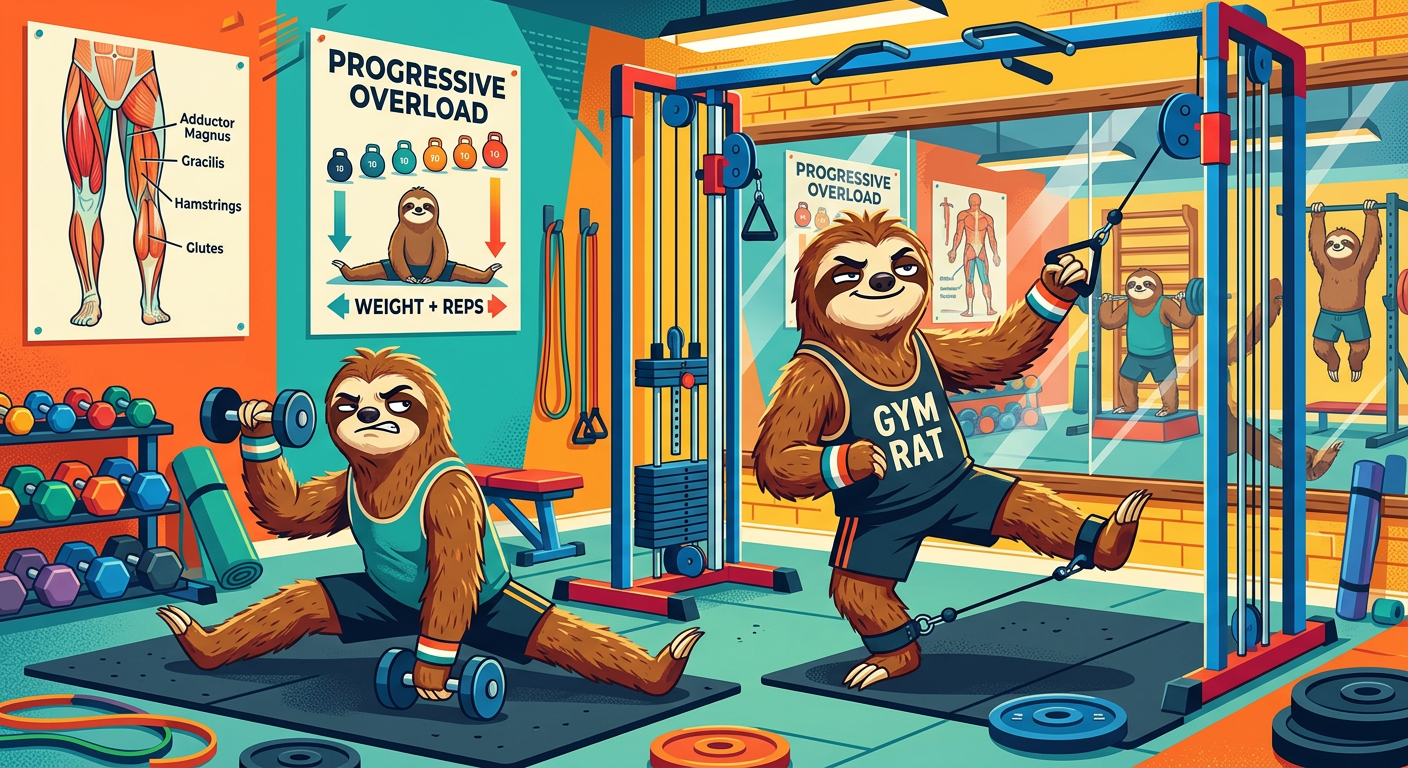
Progressive Overload for Splits: Maximize Your Gains

    Ready to transform your training?

    Get a personalized AI workout plan in 30 seconds. Free trial, no credit card.

    Progressive Overload for Splits: Maximize Your Gains

    So, you’re hitting the gym consistently. You’ve got your split training routine dialed in- push day, pull day, leg day. You’re putting in the work, but when you look in the mirror, things feel… stagnant. The weights on the bar haven't budged in weeks. Sound familiar?

    If you're nodding along, you might be missing the single most important ingredient for muscle growth: progressive overload.

    It’s the secret sauce that turns effort into actual results. Without it, you're just spinning your wheels. Let's dig into why this principle is so crucial and how you can use it to maximize gains from your split.

    What in the World is Progressive Overload?

    In simple terms, progressive overload is the principle of continually increasing the demands on your musculoskeletal system to gain muscle size, strength, and endurance.

    Think of it this way - your body is incredibly efficient. Its main goal is to adapt to stress and then get comfortable. If you lift the same weight for the same reps every single week, your body says, "Cool, I can handle this," and stops making changes. It has no reason to grow bigger or stronger.

    To force change, you have to give your body a new challenge it hasn't seen before. You have to progressively overload it. This is the very foundation of getting stronger, as noted by fitness authorities like the American Council on Exercise.

    The Perfect Partner: Progressive Overload Split Training

    A progressive overload split training routine is a match made in heaven. Why? Because split routines allow you to focus all your energy on specific muscle groups on certain days. This focused intensity makes it way easier to track and apply overload.

    When you're only training your chest and triceps on a push day, you can really zero in on your bench press or dumbbell flys. You have the mental and physical capacity to push for one more rep or five more pounds, which is much harder to do in a full-body workout where you're already gassed from squats and rows.

    The Real-World Benefits of Progressive Overload

    Okay, so it makes you stronger. But what does that really mean for you? The benefits of progressive overload go beyond just lifting heavier things.

    More Muscle and Strength (Hypertrophy)

    This is the big one for most of us. By constantly challenging your muscles, you create tiny micro-tears in the muscle fibers. Your body then repairs these fibers, making them thicker and stronger to handle the new stress. This repair and regrowth process is called muscular hypertrophy, and it's how you build visible muscle.

    Create Your Workout Plan by Voice - Free, No Signup

    Just tell our AI what you want - your goals, schedule, equipment - and get a personalized plan in seconds. No forms, no hassle. Just speak.

    Smashing Through Plateaus

    That frustrating feeling of being stuck at the same level is a plateau. Progressive overload is the ultimate plateau-buster. By changing the stimulus- more weight, more reps, less rest- you force your body out of its comfort zone and kickstart growth again.

    Building a More Resilient Body

    This principle doesn't just build muscle; it strengthens your tendons, ligaments, and bones. A stronger, more capable body is less prone to injury both inside and outside the gym. You're not just getting bigger; you're getting more robust.

    How to Apply Progressive Overload (The Actionable Part)

    This is where the magic happens. Many people think it's just about adding more weight, but there are several ways to progress. Variety is key!

    Here’s how to apply progressive overload in your next workout:

    • •Increase the Weight - the most common method. If you did 8 reps of bicep curls with 25-pound dumbbells last week, try for 30s this week, even if you only get 6 reps.
    • •Increase the Reps - using the same weight, try to squeeze out an extra rep or two. That 3x8 on the bench press? Push for 3x9 next time.
    • •Increase the Sets - if you normally do three sets of an exercise, try doing four sets with the same weight and rep scheme.
    • •Decrease Rest Time - give your muscles less time to recover between sets. If you usually rest 90 seconds, try cutting it to 75 or 60. This increases metabolic stress, another trigger for growth.
    • •Improve Your Form and Tempo - slow down the negative (eccentric) part of a lift. For example, take three full seconds to lower the weight on a squat. This increases the time your muscle is under tension.

    Keeping track of all this can feel like a chore, but it's essential. This is where logging your workouts is a game-changer. Using an app like FullBody AI can make tracking these variables practically automatic, so you know exactly what numbers you need to beat every time you step into the gym. No more guesswork.

    The Bottom Line

    Your split training routine is a fantastic tool, but it's only as effective as the principle driving it. Progressive overload is that engine. It’s not about huge, ego-driven jumps every week. It's about small, consistent, and intelligent increases over time.

    Focus on beating your own logbook, listen to your body, and stay consistent. Do that, and you'll finally unlock the continuous progress you've been working so hard for.

    Ready to transform your training?

    Get a personalized AI workout plan in 30 seconds. Free trial, no credit card.

    No card or signup required. Start in 30 seconds