
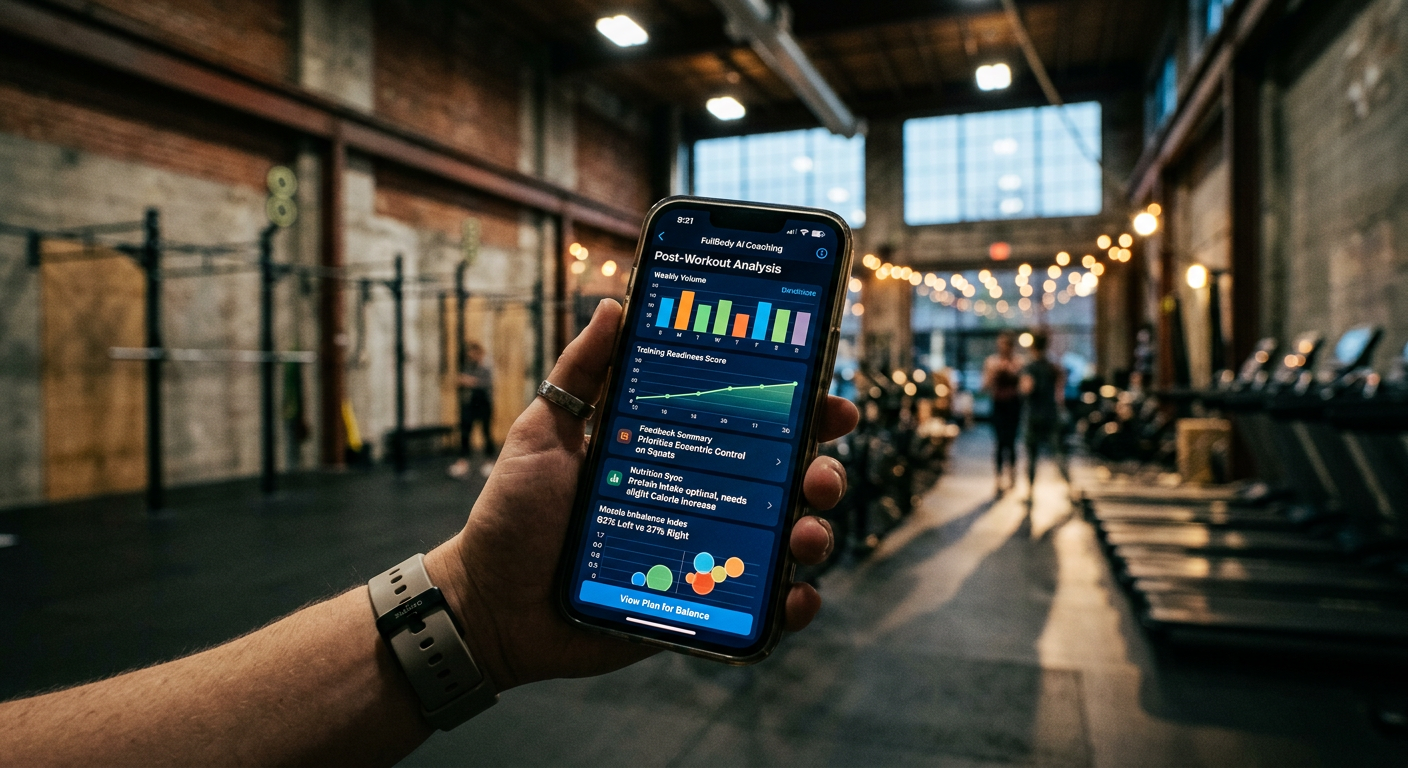
How to Use FullBody AI Feedback for Max Results

    Ready to transform your training?

    Get a personalized AI workout plan in 30 seconds. Free trial, no credit card.

    How to Use FullBody AI Feedback for Max Results

    It's funny, I've been lifting for years, and I always thought my form was pretty solid. You know, you watch some videos, you look in the mirror, and you think, 'Yeah, I've got this.' But let's be honest, you can't see everything. That's where having a coach is invaluable. For me, that coach has become the AI in FullBody AI.

    When I first started using the app, I'd see the little feedback notifications pop up after a set and just kind of... nod. 'Okay, knees caved a bit. Got it.' Then I'd jump right into the next set, and guess what? Same feedback. It wasn't until I changed my approach that I started seeing real, tangible improvements. The AI is an incredible tool, but it's only as good as how you use it. So, I wanted to share my personal process for turning that digital advice into real-world gains.

    Don't Just See the Feedback, *Feel* It

    This was the first big lightbulb moment for me. I was seeing the words on the screen, but I wasn't connecting them to the physical sensation in my body. Now, after every single set where I get a correction, I stop. I don't re-rack the weight and check my phone. I take a full 10 seconds to process the fullbody ai feedback.

    For example, if the app says, 'Hips rose too fast' on a deadlift, I'll close my eyes for a second and try to replay the rep in my head. Where in the lift did I feel that happen? Was it right off the floor? Did I feel my back take over? By connecting the AI's observation to my own feeling, the next rep becomes a conscious effort to correct that specific sensation. I'll actively think, 'Keep the chest up, drive with the legs' instead of just vaguely 'doing a deadlift.' It's a small pause, but it makes a huge difference.

    Understand the 'Why' Behind the 'What'

    FullBody AI is amazing at telling you what you did wrong. But the real secret to long-term progress is figuring out why. This is where the app transitions from a rep-counter to genuine ai workout coaching.

    If I'm consistently getting feedback about my knees caving in on squats, the 'what' is clear. The 'why' is probably a weakness in my gluteus medius or tight adductors. The AI's feedback is the symptom; it's my job to investigate the root cause.

    Create Your Workout Plan by Voice - Free, No Signup

    Just tell our AI what you want - your goals, schedule, equipment - and get a personalized plan in seconds. No forms, no hassle. Just speak.

    I've started keeping a little mental note of recurring feedback. If I see the same correction pop up across multiple workouts, I know it's not a one-off mistake-it's a pattern. That pattern tells me where I need to focus my accessory work or mobility. That 'arched back' feedback isn't just a squat problem; it's a 'me' problem, likely related to core stability. The feedback becomes a diagnostic tool for my entire training program.

    Turn Insights into an Action Plan

    Okay, so you're listening to the feedback and you're thinking about the 'why'. Now what? You have to build a plan. Here's how I do it. This is the key to optimize FullBody AI results.

    My Three-Step Correction Process:

    • •Focus on One Cue - if the AI gives me two or three points of feedback, I don't try to fix them all at once. That's a recipe for disaster. I pick the most critical one-usually the one that impacts safety the most-and focus solely on that for the next set. Master one thing, then move to the next.
    • •Drop the Ego, Drop the Weight - this one is tough, but it's essential. If I can't maintain proper form at a certain weight, then I have no business lifting it. If I'm trying to fix my squat depth, I'll lower the weight by 20% so I can focus completely on the movement pattern without struggling. Form first, weight second. Always.
    • •Add Corrective Drills - based on the 'why' I've identified, I now add specific drills to my warm-ups. Getting that 'knees caving' feedback? I'm adding banded glute bridges and monster walks before I even touch the squat rack. This proactively addresses the weakness before it can sabotage my main lifts.

    At the end of the day, the AI is your partner. It gives you the objective data you could never get on your own. But it's up to you to take that data, interpret it, and turn it into intentional action. For me, this shift in mindset has been a complete game-changer for my training. Give it a try. 💪

    Ready to transform your training?

    Get a personalized AI workout plan in 30 seconds. Free trial, no credit card.

    No card or signup required. Start in 30 seconds