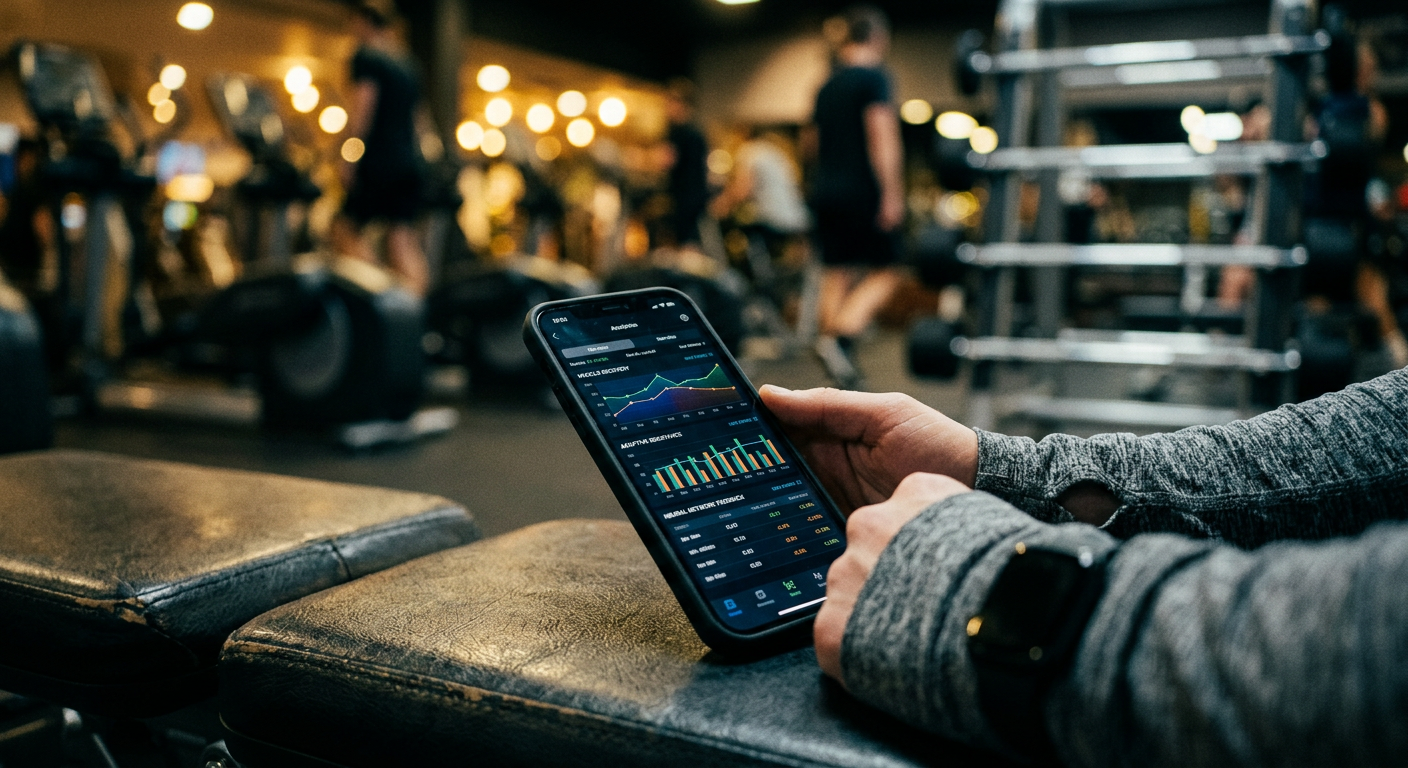
We have all been there. You download a generic 12-week workout PDF, follow it religiously for three weeks, and then real life kicks in. Maybe your sleep tanks, work gets brutal, or your shoulder feels cranky on bench press day. Yet that static spreadsheet still insists you add five pounds and hit four sets of eight. It does not know you are running on four hours of sleep.
That disconnect is why static training programs hit a wall. In this breakdown, we are getting into the personalized workout science driving FullBody AI, breaking down how dynamic inputs turn into smarter training days.
FullBody AI Algorithm Explained: How It Actually Works
At its core, getting stronger or building muscle relies on progressive overload - the idea that you need to gradually increase the stress placed on your body over time. But progressive overload is not a straight line up and to the right.
When we built the core logic, we focused on autoregulation. For anyone looking for the FullBody AI algorithm explained in simple terms - the engine treats every single session as a fresh data stream, not a rigid script.
Instead of blindly forcing more weight onto the bar, our system tracks your historical performance, rate of perceived exertion (RPE), velocity trends, and volume accumulation. If your warm-up sets move slower than normal, or your reported effort is significantly higher than baseline, the system adjusts downstream volume instantly.
Research published in the National Library of Medicine shows that autoregulated resistance training often yields better strength gains than fixed, non-adaptive loading schemes because it accounts for day-to-day readiness.
Static Plans vs. Adaptive Fitness Technology
Traditional templates assume your body recovers at the exact same rate week in and week out. Modern adaptive fitness technology treats recovery and adaptation as moving targets.
| Feature |
Static Workout Template |
FullBody AI Engine |
| Progression Rate |
Fixed increments (e.g. +5 lbs/wk) |
Dynamic, based on movement velocity & RPE |
| Fatigue Management |
Scheduled deloads every 4-6 weeks |
Real-time volume scaling when systemic fatigue spikes |
| Exercise Selection |
Fixed exercise list |
Intelligent swaps based on joint strain and equipment |
| Target Reps |
Strict rep numbers (e.g. 3x10) |
Flexible rep targets adjusted to your intra-set performance |
The Three Engines Behind the Calculations
To make training genuinely personalized, our system balances three main physiological mechanisms:
- •Mechanical Tension Tracking - the algorithm monitors effective reps (the reps close to failure that drive hypertrophy) rather than just counting empty sets. This keeps you from doing junk volume that just burns energy without building muscle.
- •Fatigue Indexing - by analyzing your session density and multi-day load, the system predicts when your central nervous system needs a breather before you actually burn out or pull a muscle.
- •Biomechanical Movement Profiles - no two lifters have identical limb lengths or leverage. According to data from the American College of Sports Medicine, exercise prescription should match individual movement mechanics. If your squats look unstable at parallel, the system tweaks auxiliary work to target the weak links.
How to Get the Most Out of It
An algorithm is only as good as the honesty of the data you feed it. To make the most of adaptive training:
- •Be honest with your RPE ratings. Do not rate a set an RPE 7 just to look tough on the screen if your eyes were popping out of your head. Rate it an 8.5 or 9 so the algorithm can protect your nervous system.
- •Log warm-ups consistently. The system uses early set pacing to calibrate your working sets.
- •Trust the auto-deloads. When the platform trims a set off your accessories, it is doing that so you can crush your compound lifts 48 hours later.
Training should challenge you, but it should also adapt when your body sends warning signals. That balance is what keeps you lifting for years without burning out.