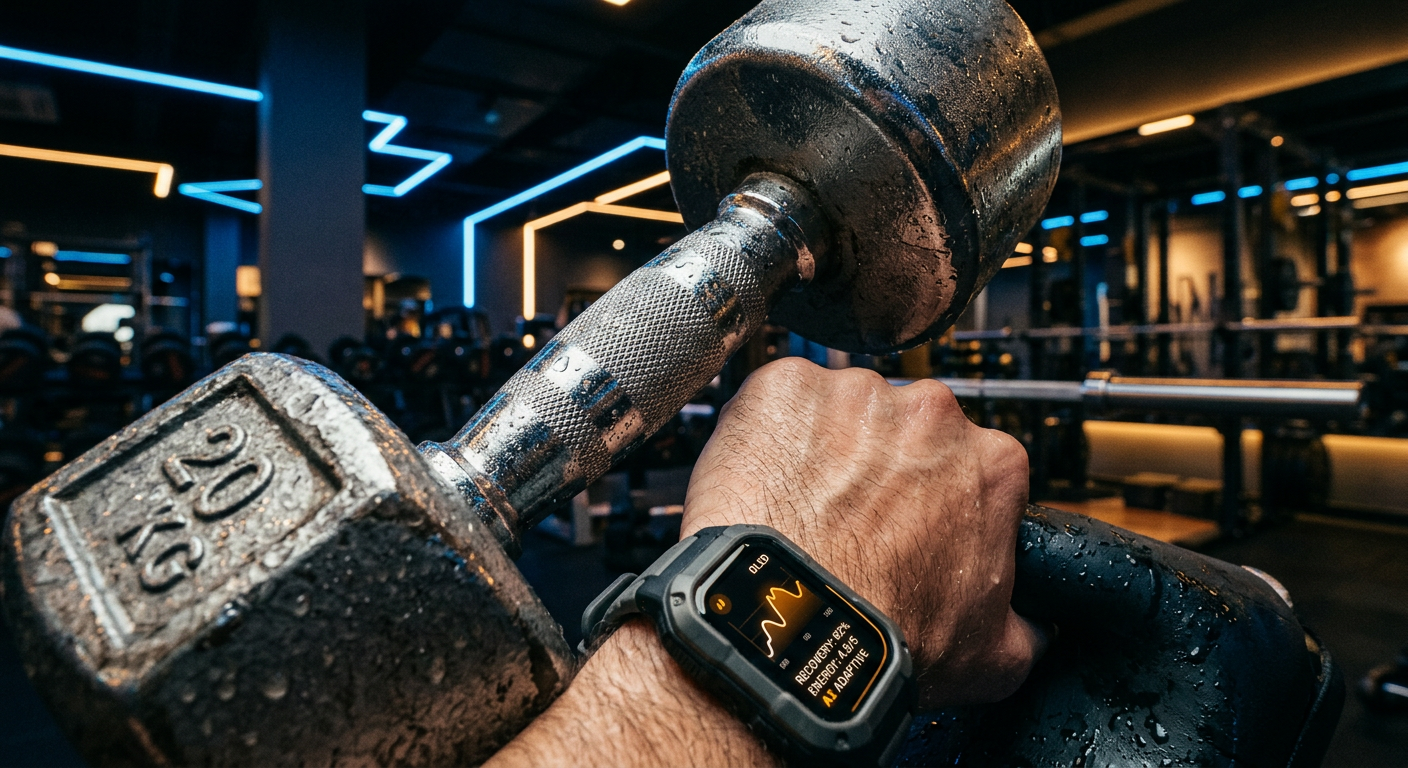
Okay, let's be real for a second. We've all been there. You have 'Heavy Leg Day' staring at you from your calendar, but you slept terribly, work was a nightmare, and the thought of even looking at a squat rack makes you want to crawl back into bed.
Or the opposite happens- you feel incredible on a scheduled rest day, full of energy and ready to hit some personal records. What do you do? Stick to the plan and potentially burn out? Or skip a workout and feel guilty?
For years, this was my dilemma. I’d follow rigid, printed-out programs that had no idea I was running on three hours of sleep and pure caffeine. This is where the game completely changes.
The Problem with Old-School, Static Plans
I used to be a big fan of the classic 12-week spreadsheet. It felt official, you know? But life isn't a spreadsheet. It's messy. Stress, nutrition, sleep quality, and just your general mood- they all have a massive impact on your ability to perform in the gym.
A static plan can't account for this. It assumes you're a robot who recovers perfectly every single night. Following it blindly can lead to a few not-so-great outcomes:
- •Overtraining - pushing your body hard when it hasn't recovered is a fast track to burnout, injury, and stalled progress.
- •Undertraining - on days you feel amazing, a pre-planned 'light' day means you're leaving potential gains on the table.
It’s a constant guessing game. But what if your workout plan could stop guessing and start knowing?
How AI Actually Listens to Your Body
This is where it gets really cool. Instead of just giving you a plan, AI-driven fitness platforms are designed to have a two-way conversation with your body. Here's how an ai adapts workout sessions in real-time.
Subjective Feedback: Your Energy Levels
The simplest and often most effective input is you. Many AI fitness apps, including our own FullBody AI, start with a simple question: "How are you feeling today?" or "What's your energy level?" on a scale of 1-5.
This is crucial. It’s your own perceived exertion and readiness. This simple check-in provides the AI with a baseline for your energy levels workout ai adjustments. If you report feeling sluggish, the system immediately knows that today might not be the day for a max-effort session.
Objective Data: The Recovery Metrics
This is where the 'science' part kicks in, using recovery data fitness ai systems love to analyze. By connecting to your wearable device (like a smartwatch or fitness ring), the AI can pull in hard data about your physical state:
- •Sleep Quality - not just how long you slept, but the quality. How much deep sleep and REM sleep did you get? Poor sleep is a massive red flag for your nervous system.
- •Heart Rate Variability (HRV): This is a big one. HRV measures the variation in time between your heartbeats. A high HRV generally means your body is well-rested and ready for stress (like a workout). A low HRV suggests your body is under strain and needs more recovery.
- •Resting Heart Rate (RHR): If your RHR is higher than your normal average, it can be a sign that your body is fighting something off or hasn't fully recovered from your last workout.
The Magic of an AI Personalized Daily Workout
So, the AI has your subjective feelings and the objective data. Now what? It synthesizes this information to build you a truly ai personalized daily workout.
Let’s say your plan was that 'Heavy Leg Day'.
Scenario 1 - bad Recovery. You report low energy, your HRV is in the tank, and you barely slept. The AI sees this and says, "Hold on. A heavy session today would do more harm than good." Instead, it might dynamically adjust your workout to:
- •A lighter, full-body session with reduced volume.
- •A mobility and stretching focused routine.
- •An active recovery day, like a 20-minute walk or light cycling.
Scenario 2 - great Recovery. You wake up feeling like a superhero, your HRV is high, and your sleep score is a 95. The AI recognizes this as a prime opportunity. It might adjust your workout to:
- •Increase the prescribed weights slightly.
- •Add an extra set to your main compound lifts.
- •Suggest a high-intensity finisher to capitalize on your energy.
This is the core of smart training. It’s not about killing yourself every day. It's about applying the right amount of stress at the right time to drive consistent, long-term progress.
I’ve found that using an app that really leans into this tech has removed so much of the mental load from my training. I don't have to second-guess myself anymore. I just show up, report how I feel, and trust that the workout I'm given is exactly what my body needs- and can handle- on that specific day. It's like having a personal trainer and a sports scientist in my pocket, ensuring I'm always moving forward without breaking down.