
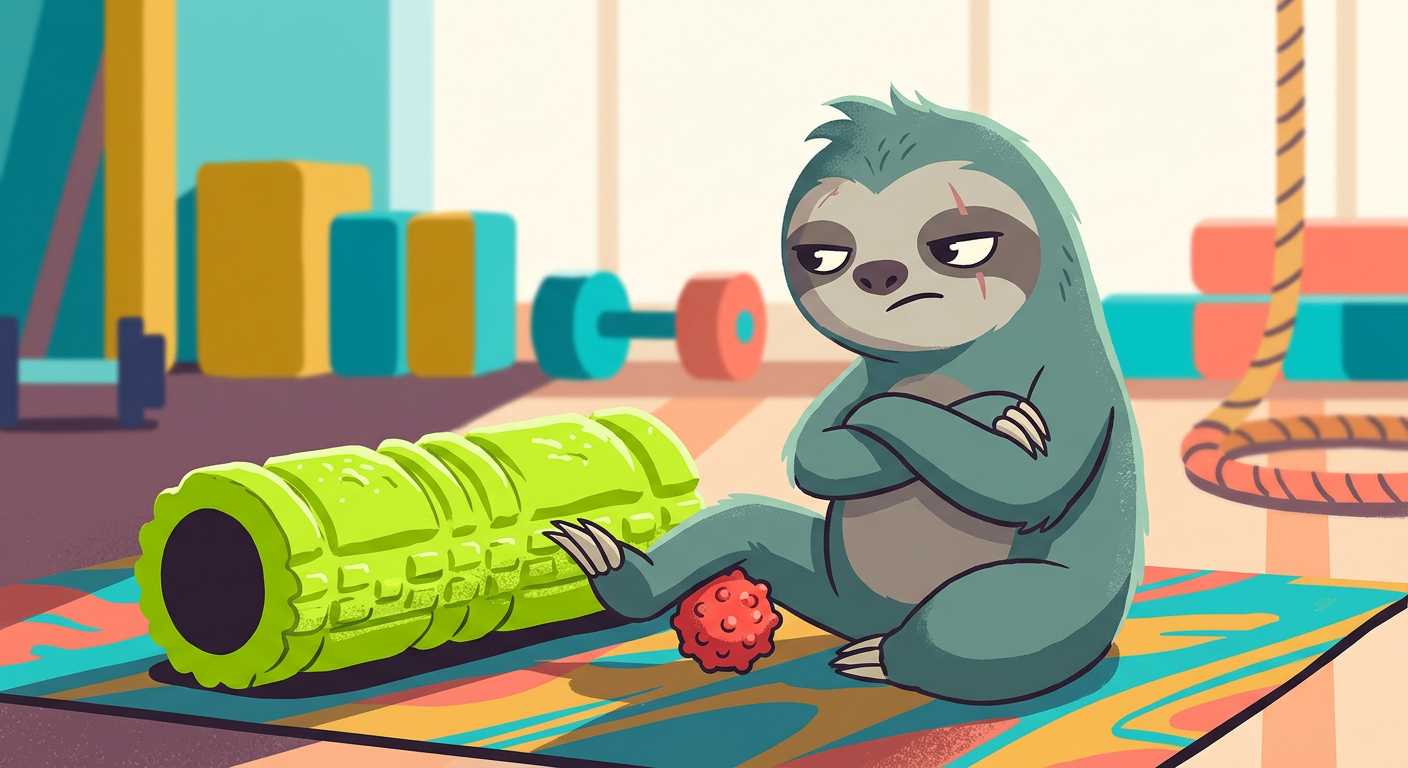
Let's be real. We've all been there. You finish a tough workout, spend too long hunched over a desk, or just sleep funny, and suddenly you have a golf ball-sized knot in your shoulder that just won't quit. You could book a professional massage, but who has the time- or budget- for that every week?
Enter your new best friend - the humble massage ball.
Seriously. This simple tool, whether it's a standard tennis ball or a specific therapy ball, is a game-changer for self massage for pain. It’s one of the best-kept secrets in the fitness world for affordable, effective recovery. Let's dive into how you can use massage ball techniques to work out those kinks yourself.
Why a Simple Ball is a Recovery Powerhouse
What we're doing here is a form of myofascial release. Think of fascia as a thin web of connective tissue that wraps around all your muscles. Sometimes, due to stress, overuse, or injury, this fascia can get tight and form adhesions or trigger points- what we usually call muscle knots.
Applying direct, sustained pressure to these knots with a massage ball helps to:
- •Break up these adhesions and release tension.
- •Increase blood flow to the area, which speeds up recovery.
- •Improve your range of motion and overall mobility.
It’s like giving yourself a targeted deep-tissue massage, right where you need it most.
Getting Started: Choose Your Weapon
You don't need a lot of fancy gear. Most of us have something lying around the house that will work perfectly.
Tennis Ball vs. Lacrosse Ball
- •Tennis Ball - this is your entry-level option. It's softer and has more give, making it perfect for beginners or for use on more sensitive areas like the upper back. A tennis ball muscle massage is a fantastic place to start.
- •Lacrosse Ball - this one is for when you're ready to level up. It’s solid, dense, and doesn't compress, allowing you to get much deeper into the muscle tissue. It's more intense, but incredibly effective on stubborn knots in the glutes or shoulders.
There are also specialty spiky balls or peanut-shaped rollers, but honestly, start with a tennis or lacrosse ball. It’s more than enough.
Core Massage Ball Techniques
The secret isn't to roll around like crazy. The magic is in sustained, targeted pressure. Here's the basic process:
- Hunt for the spot - gently roll the ball over a muscle group until you find a point that feels tender, tight, and maybe a little painful. That's your target.
- Apply pressure - once you've found the knot, stop rolling. Settle your weight onto the ball to apply pressure. It should feel like a “good hurt,” not a sharp or shooting pain.
- Breathe and hold - this is the most important part! Take long, deep, slow breaths. As you exhale, try to relax the muscle and sink deeper into the ball. Hold the pressure for about 30-90 seconds.
- Release and move on - you should feel the muscle start to release or “melt.” Once it does, you can gently roll off and find the next spot.
- •Post-Workout - spend 5-10 minutes targeting the muscle groups you just trained.
- •On Rest Days - dedicate 10-15 minutes to a full-body session, hunting down any lingering tight spots.
- •Before Bed - a quick roll-out can release tension from the day and help you relax.
- •Don't roll directly over bones, joints, or your spine.
- •Avoid areas with major nerves close to the surface, like the back of your knee or your armpit.
- •If you feel any sharp, shooting, or radiating pain, stop immediately.
- •A little goes a long way. Don't overdo it in one session.
Here’s a quick guide to keep in mind:
| Area/Goal | Ball Type | Pressure Level | Duration |
|---|---|---|---|
| General warm-up | Tennis Ball | Light-Medium | 15-20 sec per spot |
| Deep knot release | Lacrosse Ball | Medium-Intense | 30-90 sec per spot |
| Sensitive areas | Tennis Ball | Light | 30-60 sec per spot |
| Foot massage | Either | Your preference | 1-2 min per foot |
Create Your Workout Plan by Voice - Free, No Signup
Just tell our AI what you want - your goals, schedule, equipment - and get a personalized plan in seconds. No forms, no hassle. Just speak.
Targeting Common Problem Areas
Ready to give it a try? Here are a few key areas to get you started. These are the ones we see bothering people the most!
Shoulders and Upper Back
This is a life-saver for anyone who works at a desk. Place a ball between your upper back/shoulder blade area and a wall. Bend your knees slightly to control the pressure. Slowly move up, down, and side-to-side to find those tight spots between your shoulder blades. Once you find a knot, hold the pressure and breathe.
Glutes and Hips
Tight hips can lead to a host of other issues, including lower back pain. Sit on the floor and place the ball under one glute. Bend your knees with your feet flat on the floor. To get deeper, you can cross the ankle of the targeted side over your opposite knee (a figure-four position). Gently shift your weight around to find and release tension.
Feet
Your feet take a beating all day. For quick relief, especially if you deal with plantar fasciitis, sit in a chair and place a ball under one foot. Roll it from your heel to the ball of your foot, applying as much pressure as feels good. Don't forget the arch!
Putting It All Together
Recovery is just as important as the workout itself - something we constantly factor into the personalized workout plans on the FullBody AI app. Tossing in a few minutes of muscle knot release with a massage ball can make a world of difference.
A Few Quick Don'ts
Self-massage is awesome, but be smart about it.
So there you have it. That nagging knot doesn't stand a chance. Grab a ball, find a wall or a patch of floor, and give yourself the gift of release. Your body will thank you for it.