
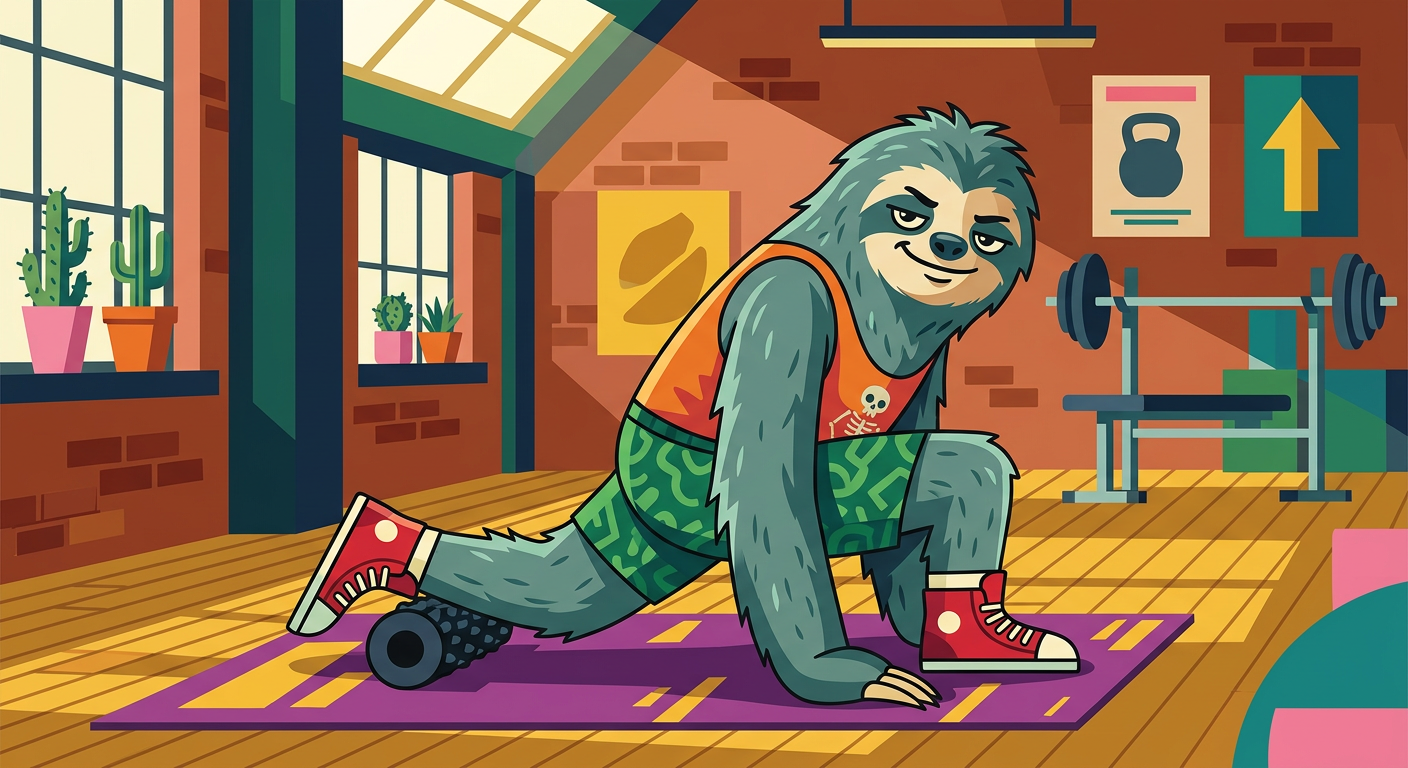
Let me paint a picture. You’ve been sitting at your desk for a few hours, you stand up, and... oof. There it is. That nagging, deep tightness at the front of your hips. Sound familiar?
For years, I just accepted this as a normal part of life. I’m a pretty active guy, but I also have a job that involves a lot of sitting. I figured it was just something I had to live with. It wasn't until my tight hips started causing lower back pain and messing with my squat form that I knew I had to do something about it.
Turns out, those pesky hip flexors were the main culprit. And learning how to release them was a total game-changer for my comfort, posture, and even my performance in the gym.
So, Why Are My Hip Flexors Always So Tight?
Your hip flexors are a group of muscles, with the major players being the psoas and the iliacus. Their main job is to, well, flex your hip-think lifting your knee towards your chest.
The biggest reason they get tight is simple: sitting. When you sit, your hip flexors are in a shortened, contracted position. If you spend hours like this every day, they basically get “stuck” in that short position.
But it’s not just desk jockeys who suffer. I’ve found that even activities like running and cycling, where you’re constantly repeating that hip flexion motion, can lead to overuse and tightness. It's a frustrating paradox-the very things we do to stay fit can sometimes create these imbalances.
The Real Problem with Tight Hips
This isn't just about feeling a little stiff. Chronically tight hip flexors can pull your pelvis forward into a position called an anterior pelvic tilt. This creates a bigger arch in your lower back, which is a major reason so many of us get that mysterious, dull lower back ache. It can make you look like you're sticking your butt out, even when you're not trying to.
In the gym, it can seriously limit your ability to improve hip mobility. Good luck hitting depth on your squat if your hips are locked up. Your body will compensate, often by putting more strain on your lower back or knees. Not good.
My Go-To Moves to Release Tight Hip Flexors
Okay, enough doom and gloom. The good news is that you can absolutely do something about this. A few minutes of targeted work each day goes a long, long way. Here are the staples I use to keep my hips happy.
It can be a little tricky to get the form right just from text, so here's a video that demonstrates some of these key movements:
Create Your Workout Plan by Voice - Free, No Signup
Just tell our AI what you want - your goals, schedule, equipment - and get a personalized plan in seconds. No forms, no hassle. Just speak.
The Classic Kneeling Hip Flexor Stretch
This is the one everyone knows, but most people do it wrong. Don't just lunge forward as far as you can.
- •Get into a half-kneeling position, like you’re proposing.
- •Instead of leaning your torso forward, keep it upright. Now, here's the secret sauce: tuck your tailbone under you and actively squeeze the glute of the leg that’s on the ground.
- •You should feel a deep stretch in the front of that hip. Hold it for 30-45 seconds. Don’t bounce.
The Couch Stretch (My Love-Hate Relationship)
This one is intense, but it is hands down one of the most effective hip flexor stretches I’ve ever done.
- •Find a wall or a sturdy couch. Place the knee of your back leg right into the corner where the floor meets the wall, with your shin running up the wall. Your other foot is planted on the floor in front of you.
- •The goal is to bring your torso upright. You will feel this. A lot. Breathe through it and hold for at least 30 seconds. Be gentle with yourself here.
Psoas Release with a Lacrosse Ball
Sometimes stretching isn't enough to get into the deep knots. That's where psoas release exercises come in.
- •I use a lacrosse ball for this. Lie on your stomach and place the ball just to the inside of your hip bone. Don't put it on the bone itself!
- •Gently lower your weight onto the ball until you find a tender spot. Don’t go crazy-just let your body weight do the work. Breathe deeply and try to relax into it for 30-60 seconds. Then, switch sides.
How to Improve Hip Mobility for Good
Stretching provides relief, but if you want a long-term fix, you need to address the root of the imbalance. For most of us, that means strengthening the muscles that oppose the hip flexors - the glutes and hamstrings.
Adding simple exercises like glute bridges, clamshells, and Romanian deadlifts to my routine made a massive difference. It's about teaching your body to use those powerful posterior chain muscles so your hip flexors don't have to do all the work.
Honestly, one thing that really helped me was paying closer attention to the form feedback in my workout log. The FullBody AI app's form analysis on my squats helped me realize I wasn't engaging my glutes properly. Correcting that took so much strain off the front of my hips.
Consistency is everything. You don't need to spend an hour on this. Just 5-10 minutes a day, maybe while you're watching TV, can completely change how your body feels. Your back will thank you, your posture will improve, and your workouts will feel stronger. Give it a shot!