
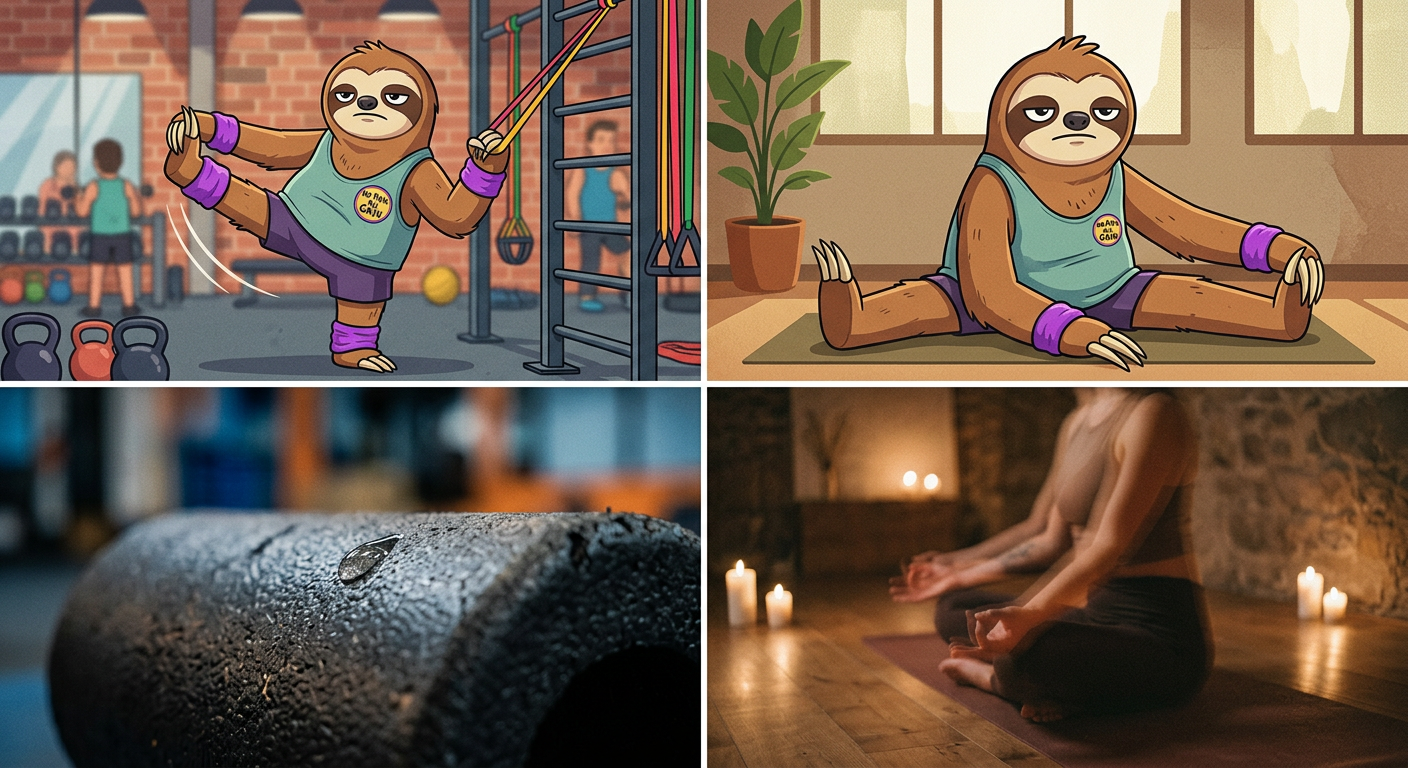
Mobility vs Flexibility: Key Differences for Your Training

    Ready to transform your training?

    Get a personalized AI workout plan in 30 seconds. Free trial, no credit card.

    Mobility vs Flexibility: Key Differences for Your Training

    In the fitness world, we toss around a lot of terms. Sometimes, we use them interchangeably when we really shouldn't. Two of the biggest culprits? Mobility and flexibility.

    Let’s be real, you've probably heard someone (or even yourself) say, "I need to get more flexible so I can squat deeper." While the intention is right, the terminology is a little off. What they likely mean is they need to improve their mobility.

    Understanding the mobility vs flexibility difference isn't just about sounding smart at the gym. It's about training smarter, moving better, and keeping injuries at bay. So let's clear it up.

    So, What is Flexibility Training?

    Let's start with the one most people know. Flexibility is the ability of your muscles and connective tissues to passively lengthen. The key word here is passively.

    Think of it like this - if you lie on your back and a friend slowly lifts your leg up to stretch your hamstring, the length your hamstring achieves is a measure of its flexibility. You aren't actively controlling the movement; your muscle is just being stretched.

    This is what is flexibility training is all about- we often call it static stretching. You get into a position, hold it for a period (usually 30 seconds or more), and feel the stretch.

    • •Hamstring stretches
    • •Quad stretches
    • •Holding a deep lunge

    Flexibility is important, no doubt. It helps alleviate muscle tightness and can feel great after a tough workout. But it’s only one piece of the puzzle.

    Okay, Then What is Mobility Training?

    Now for the star of the show: mobility. Mobility is the ability to actively move a joint through its entire range of motion with control.

    The key word here is actively. It’s not just about having pliable muscles; it's about having the strength, stability, and coordination to control your limbs through their full potential movement. Mobility is flexibility plus strength.

    Think about that deep squat again. To get down there without your form breaking down, you need:

    • •Ankle mobility to let your knees track over your toes.
    • •Hip mobility to sink your hips between your feet.
    • •Thoracic (upper back) mobility to keep your chest up and spine stable.

    Create Your Workout Plan by Voice - Free, No Signup

    Just tell our AI what you want - your goals, schedule, equipment - and get a personalized plan in seconds. No forms, no hassle. Just speak.

    What is mobility training, then? It involves dynamic movements that take your joints through their ranges of motion. Think less 'hold' and more 'move'. Examples include:

    • •Leg swings
    • •Cat-cows
    • •Hip circles
    • •Deep, controlled bodyweight squats

    The Big Difference: Active vs. Passive

    Here’s the simplest way to see the mobility vs flexibility difference: Flexibility is passive. Mobility is active and usable.

    You can be super flexible but have poor mobility. Ever see someone who can easily drop into the splits (amazing flexibility) but struggles to perform a deep, controlled lunge without wobbling? They have passive range, but not the active control (mobility) to use it functionally.

    Good mobility means you can access your body's full range of motion safely and effectively during a lift or any other activity. It’s what keeps your form tight and prevents your body from compensating in dangerous ways, like rounding your lower back in a deadlift because your hips are tight.

    How to Train Both for Better Performance

    So you don't have to choose one over the other. A great routine includes both.

    For Flexibility

    • •When - post-workout, during your cool-down.
    • •How - perform static stretches, holding each for 30-60 seconds. Focus on the muscles you just worked.

    For Mobility

    • •When - as part of your warm-up before every single workout.
    • •How - perform dynamic movements. Aim for 10-15 reps of exercises like leg swings, hip circles, arm circles, and spinal rotations.

    Working on your movement patterns is crucial. Sometimes you don't even realize your mobility is limited until you see it on video or have a spotter point it out. This is where an app like FullBody AI can be a game-changer. Its AI-powered form correction can instantly detect if your squat depth is shallow or if your chest is falling forward, giving you real-time cues. That feedback is gold for figuring out which joints need a little more mobility love.

    Ultimately, by incorporating both dedicated flexibility and mobility training into your routine, you’re not just chasing better lifts. You’re building a more resilient, capable, and pain-free body for the long haul. 💪

    Ready to transform your training?

    Get a personalized AI workout plan in 30 seconds. Free trial, no credit card.

    No card or signup required. Start in 30 seconds