
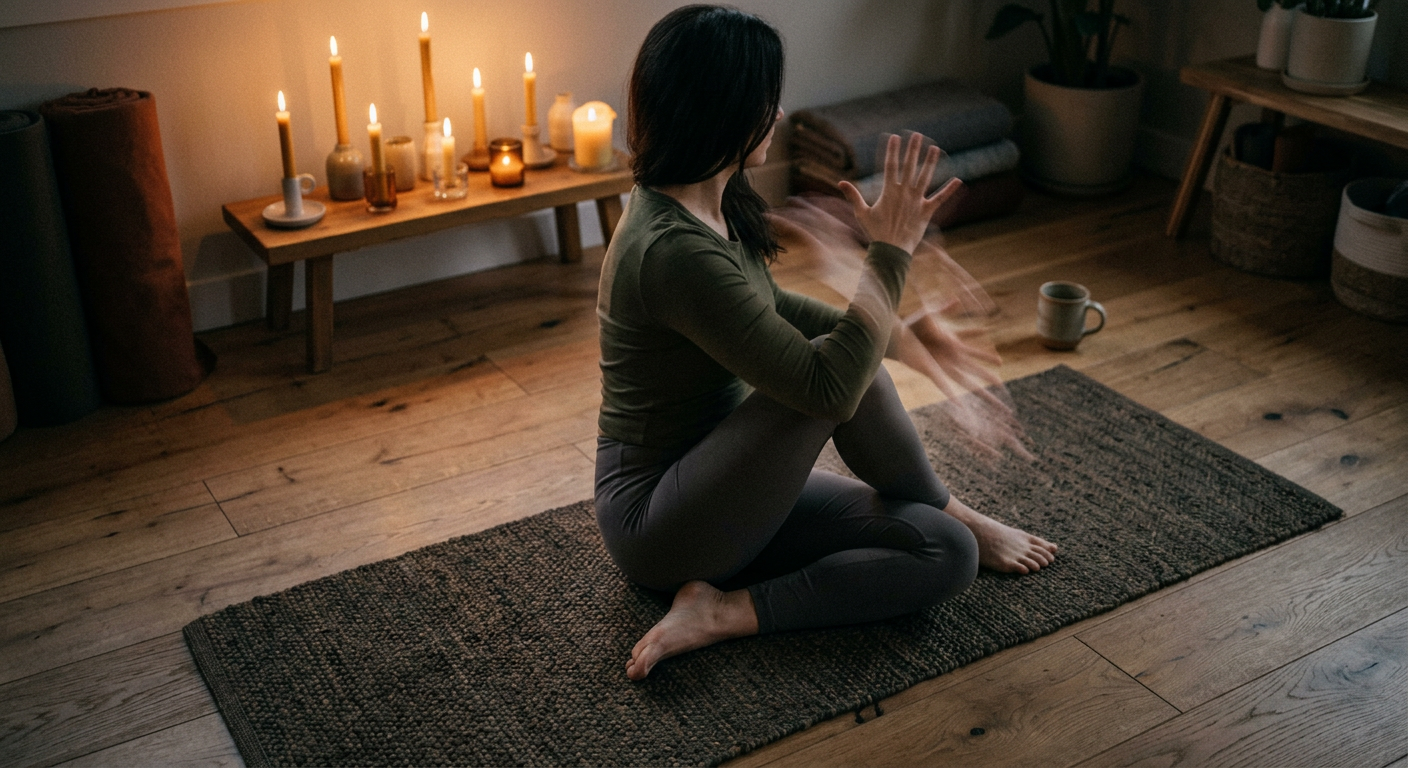
Improve Your Golf Swing with T-Spine Rotation Drills

    Ready to transform your training?

    Get a personalized AI workout plan in 30 seconds. Free trial, no credit card.

    Improve Your Golf Swing with T-Spine Rotation Drills

    The Secret Engine of Your Golf Swing (And Why It’s Probably Locked)

    Let's be real - there's nothing more frustrating than feeling like you're leaving power on the table with your golf swing. You try to swing harder, but the ball doesn't go any further. Your back starts to ache. Your consistency is all over the place. Sound familiar?

    Well, the culprit might not be your arms, your hips, or even your club. It’s often a little-known powerhouse in your mid-back - the thoracic spine, or T-spine for short. Think of it as the engine of your rotation. If that engine is seized up, your whole swing sputters. For most of us who spend time hunched over a desk or a phone, that engine is definitely running a little rough.

    What is T-Spine Rotation and Why Does it Matter for Golf?

    Your thoracic spine is the section of your back between your neck and your lower back. It's designed for rotation. In a good golf swing, this is where most of that beautiful, powerful coiling action comes from during your backswing.

    When you have good thoracic rotation for golf, you can create a big, smooth turn away from the ball. This stretches the muscles in your core like a rubber band. Then, as you unwind, that stored energy is released, creating effortless clubhead speed.

    The problem? When your T-spine is stiff, your body has to find that rotation somewhere else. This is where things go wrong:

    • Your lower back takes over - the lumbar spine isn't built for a lot of twisting. Forcing it to do the T-spine's job is a fast track to pain and injury.
    • You sway or slide - instead of rotating, your body moves side-to-side, killing your power and consistency.
    • Your shoulders get overworked - poor rotation often leads to a cramped, arms-only swing, which can strain your shoulders. Good shoulder mobility golf is nearly impossible without a mobile t-spine to support it.

    Improving your golf swing mobility starts here. It's not just about hitting the ball further- it's about playing pain-free for years to come.

    Let's Check: How's Your T-Spine Mobility?

    Curious about your own rotation? Try this quick test.

    Get on your hands and knees. Place one hand behind your head, with your elbow pointing out to the side. Now, keeping your hips and lower back as still as possible, try to rotate your chest and point that elbow up toward the ceiling. How far can you go? Does it feel stuck? Is one side way tighter than the other?

    If you can't get your chest opened up and that elbow pointing high, you've got some work to do. But don't worry, it's easier to fix than you think.

    Drills to Improve T-Spine Rotation

    The good news is you can unlock your T-spine with a few simple, targeted drills. Do these a few times a week, or even as part of your pre-round warm-up, to start feeling a difference.

    Create Your Workout Plan by Voice - Free, No Signup

    Just tell our AI what you want - your goals, schedule, equipment - and get a personalized plan in seconds. No forms, no hassle. Just speak.

    Quadruped T-Spine Rotations

    This is the same move as the test, but now we're turning it into an exercise.

    • Start on all fours, one hand behind your head.
    • First, bring your elbow down to touch your opposite wrist or forearm.
    • Then, exhale as you reverse the motion, rotating up and trying to point that elbow to the ceiling.
    • Really focus on the movement coming from your mid-back, not your hips. Let your eyes follow your elbow.
    • Do 8-10 reps on each side.

    Open Books

    This one is a fantastic stretch you can do lying down.

    • Lie on your side with your knees bent at 90 degrees and stacked on top of each other.
    • Extend both arms straight out in front of you, palms together.
    • Keeping your knees together, slowly lift your top arm up and over, trying to open your chest and bring your top shoulder blade toward the floor on the other side.
    • Go as far as you can without forcing it. Hold for a second, then slowly return to the start.
    • Do 8-10 reps on each side.

    Half-Kneeling Thoracic Rotation

    This variation adds a bit of stability and helps you feel the stretch in a different way.

    • Get into a half-kneeling position, like you're about to propose. Right knee down, left foot forward.
    • Place your right hand on the ground (or a yoga block) inside your left foot.
    • Now, take your left hand and reach up and back, rotating your torso open to the left side.
    • Follow your hand with your eyes. Feel that great stretch through your mid-back.
    • Hold for a breath, then return. Do 8-10 reps and then switch sides.

    Putting It All Together

    Just a few minutes of these drills can have a huge impact. You're not just doing random stretches- you're directly working to improve t-spine rotation and re-teaching your body how to move correctly for a better golf swing.

    This is where smart tech can really accelerate your progress. The FullBody AI app, for example, can guide you through these movements, using your phone's camera to provide real-time feedback on your form. It helps ensure you’re actually rotating from your T-spine and not cheating, making every rep more effective.

    So stop fighting your body. Give your thoracic spine the attention it deserves, and you'll unlock a smoother, more powerful, and pain-free golf swing. It's a total game-changer.

    Ready to transform your training?

    Get a personalized AI workout plan in 30 seconds. Free trial, no credit card.

    No card or signup required. Start in 30 seconds