When I first built out my garage gym, I spent nearly every dollar I had on a solid barbell, bumper plates, and a squat rack. Recovery? I figured a few toe touches and sitting on the couch would cover it.
Big mistake.
After a few months of heavy squats and overhead presses, my hips felt like concrete, and my shoulders clicked every time I reached for a glass in the kitchen cabinet. That was my wake-up call. If you want to lift heavy and stay active long-term, investing in solid home gym recovery tools isn't optional - it's mandatory.
Here are the five pieces of the best mobility equipment that completely changed how I move, without costing a fortune.
1. High-Density Foam Roller
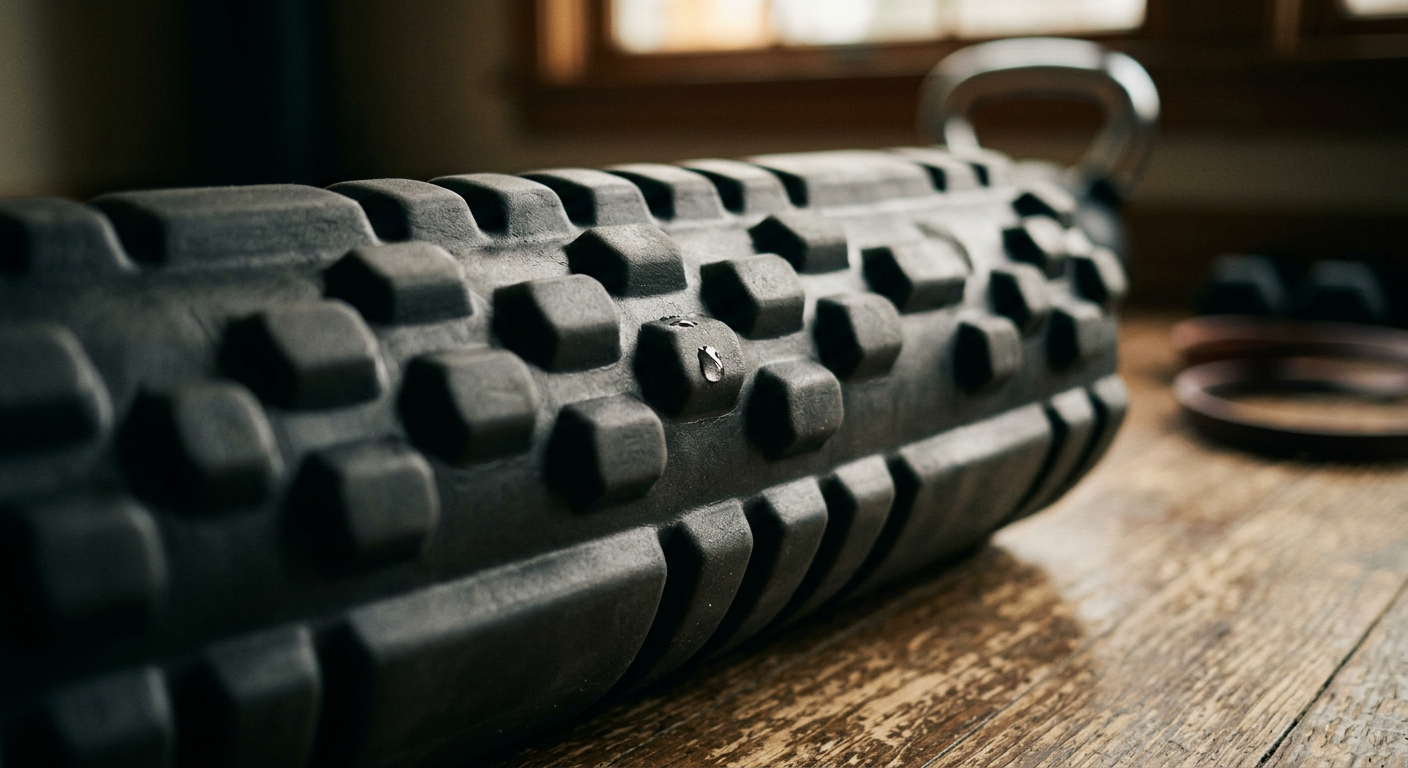
I know, foam rollers are basically a meme at this point. But there is a reason they remain a staple. A cheap, soft foam roller won't cut it though; you want a high-density molded roller that does not bend under your body weight.
I use mine daily for my upper back (thoracic extension) and rolling out my lats before benching. It creates quick blood flow and helps quiet down overactive muscles before you load them.
2. A Simple Lacrosse Ball (or Peanut)
A standard foam roller is great for big areas, but it is too broad when you have a pinpoint knot in your glutes, calves, or upper traps. That is where a dense rubber lacrosse ball becomes your ultimate mobility aid for fitness.
I like to lean against a wall with the ball tucked right into the side of my hip or between my shoulder blade and spine. If you tape two lacrosse balls together with athletic tape, you get a "peanut" roller, which is incredible for cradling your spine while releasing tight spinal erectors.
3. Monster Resistance Bands
If you only buy one thing from this list, make it a set of 1.5-inch to 2-inch looped resistance bands. Unlike static stretching on the floor, heavy bands allow for joint distraction.
By anchoring a thick band to your rack and looping the other end around your hip crease, you create traction in the joint capsule. It opens up hip flexors and ankles far better than traditional stretching ever could. Whenever I review stretching tools reviews online, heavy bands always take top marks for versatility.
4. Multi-Loop Stretching Strap
I used to use an old towel for hamstring stretches, but switching to a dedicated multi-loop stretching strap was night and day. The rigid nylon strap lets you pull your leg into gentle stretches without straining your neck or upper body to hold the position.
It is especially helpful for post-workout cool-downs when you want your nervous system to downshift and relax.
5. Slant Board or Calf Wedge
Tight ankles are the silent killer of deep, upright squats. Adding an adjustable slant board to my space was a revelation. Doing deep bodyweight squats or standing calf stretches on an incline opened up my dorsiflexion within weeks.
Quick Comparison: Which Tool Should You Grab First?
| Tool |
Best Used For |
Portability |
Budget Level |
| High-Density Foam Roller |
Large muscle groups, thoracic spine |
Medium |
Low |
| Lacrosse / Peanut Ball |
Deep trigger points, glute medius |
High |
Very Low |
| Looped Mobility Bands |
Joint distraction, hip capsule work |
High |
Low |
| Multi-Loop Strap |
Passive hamstring & shoulder stretches |
High |
Very Low |
| Slant Board |
Ankle dorsiflexion, patellar tendon health |
Low |
Moderate |
How to Actually Measure Progress
Buying tools is easy; using them systematically is the hard part. A huge issue I had was wondering whether all this rolling and banding was actually making a difference.
Lately, I have been using FullBody AI to track my joint angles and range of motion over time. Being able to see that my squat depth improved by a few extra degrees because my hip mobility increased keeps me accountable. It removes the guesswork from recovery.
Grab two or three of these tools, dedicate ten minutes before and after your sessions, and give your joints the love they deserve.