
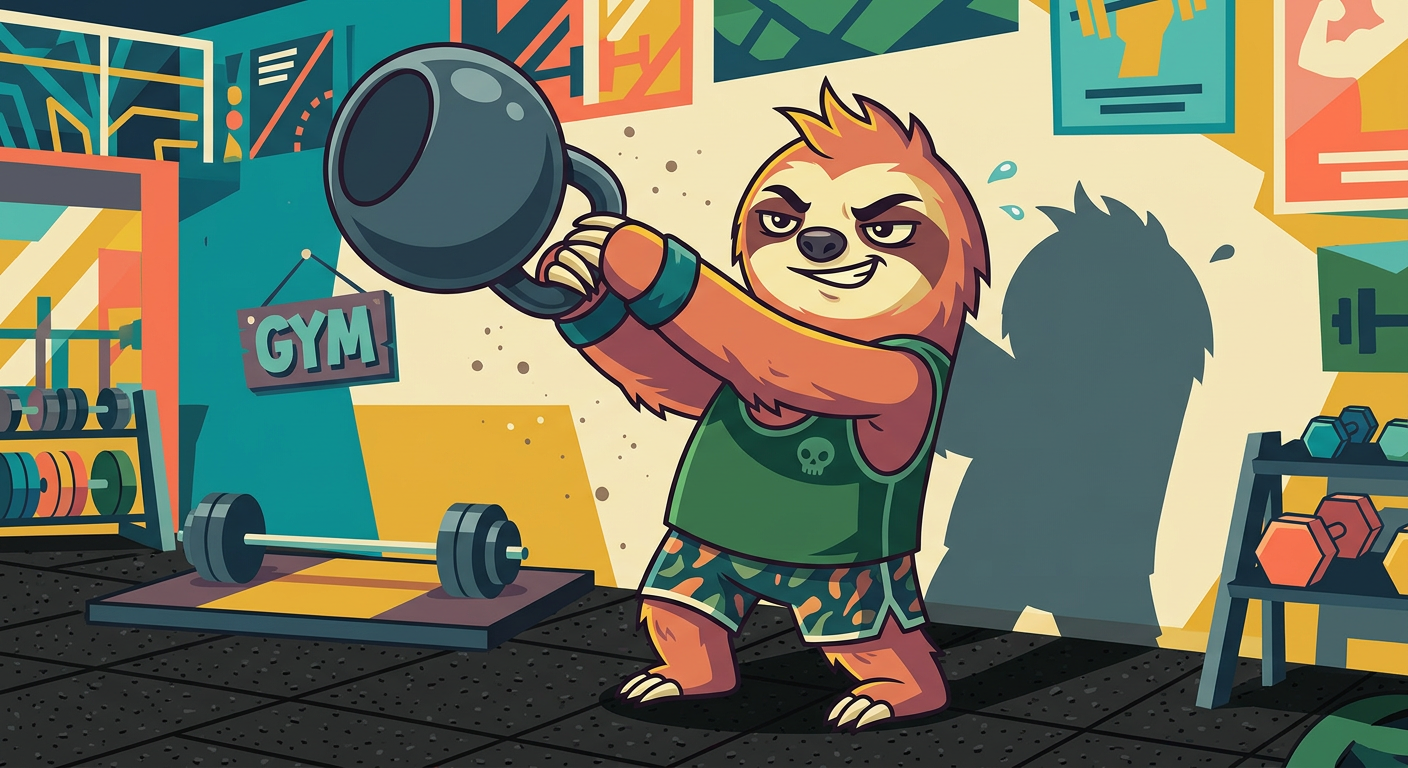
Let's talk about the kettlebell. If you've seen one sitting in the corner of the gym, you might've thought it looked like a cannonball with a handle. A little intimidating, right? I get it. But I'm here to tell you that this humble piece of iron is one of the best fitness tools you could ever own. And the king of all kettlebell exercises? The kettlebell swing.
I honestly can't overstate how much I love this single movement. When I first started, I was just looking for a quick and effective workout I could do at home. The kettlebell swing delivered- and then some. It's my go-to exercise when I'm short on time but still want to feel like I've accomplished something major.
The Awesome Kettlebell Workout Benefits
So why all the hype? It’s not just about swinging a weight around. The benefits are legit, and I noticed them pretty quickly myself.
First, it's a full-body workout. Seriously. Your glutes, hamstrings, hips, core, and back are all firing to power the movement. Your shoulders and grip get a workout just from stabilizing the bell. It's efficiency at its finest.
Second, it’s cardio and strength training combined. My heart rate gets jacked up during a good set of swings, just like a sprint. But at the same time, I'm building powerful, explosive strength in my posterior chain- that's the fancy term for all the muscles on the back of your body. This combo is amazing for fat loss and building lean muscle.
And one of the biggest things I've found? My posture has improved like crazy. Because you're strengthening your core and back, you naturally start to stand taller. It's a great antidote to all the time we spend hunched over desks and phones.
Getting the Form Right: The Hip Hinge is Everything
Okay, let's get to the most important part - the kettlebell swing beginner form. If you get this wrong, you risk injury and miss out on all the benefits. If you get it right, it's a game-changer.
The number one mistake I see people make is turning the swing into a squat. A kettlebell swing is NOT a squat. It's a hip hinge. It's an explosive, powerful movement that comes from your hips, not your arms or your quads.
Think about it this way:
- •A squat is an up-and-down movement, like sitting in a chair.
- •A hip hinge is a back-and-forth movement, like pushing your butt back to close a car door with your hands full.
Once you master the hip hinge, you’ve unlocked the secret to a perfect swing.
How to Do a Kettlebell Swing: Step-by-Step
Ready to try? Let's break it down. I recommend starting with a light weight- maybe 8kg for women or 12-16kg for men. You can always go up later. Form is way more important than weight.
Create Your Workout Plan by Voice - Free, No Signup
Just tell our AI what you want - your goals, schedule, equipment - and get a personalized plan in seconds. No forms, no hassle. Just speak.
Step 1: The Setup
Place the kettlebell on the floor about a foot in front of you. Stand with your feet slightly wider than your shoulders. Hinge at your hips- push your butt back- and grab the handle with both hands. Your back should be flat, like a tabletop. Your shins should be mostly vertical.
Step 2: The Hike
This is where the power starts. Hike the kettlebell back between your legs, high up into the groin area. Think like a quarterback hiking a football. This loads up your hamstrings and glutes with tension. Keep your arms relaxed and connected to your torso.
Step 3: The Thrust
Now, explode forward. Snap your hips through powerfully by squeezing your glutes as hard as you can. It's this violent hip thrust that propels the kettlebell forward and up. Your body should form a straight, rigid plank at the top of the swing- quads tight, glutes tight, abs braced.
Step 4: The Float
The kettlebell will float up to about chest height on its own. Your arms are just there to guide it- they are NOT lifting the bell. Let gravity do its work and guide the bell back down. As it swings back between your legs, absorb the momentum by hinging at your hips again, ready for the next rep.
That's one rep! The whole thing should be a smooth, pendulum-like motion, driven entirely by that powerful hip snap.
Beginner Kettlebell Exercises: Putting it to Work
So you've got the form down. Now what? You don't need a super complex routine to start seeing kettlebell workout benefits.
Here’s a simple workout to begin:
- •EMOM (Every Minute on the Minute) for 10 minutes:
- •At the start of each minute, do 10-15 kettlebell swings.
- •Rest for the remainder of the minute.
- •Repeat for 10 rounds.
This is just one of many beginner kettlebell exercises you can do. The swing is a foundation. Once you're comfortable, you can explore things like goblet squats and overhead presses.
I personally love using the FullBody AI app to build my routines. I can plug in my kettlebell workouts, track my reps and weight, and see my progress over time, which keeps me super motivated.
Start slow, focus obsessively on your form, and listen to your body. The kettlebell swing is a journey, but it's one of the most rewarding ones you can take in fitness. Happy swinging!