
Eat More, Weigh Less? Debunking Calorie Density Myths

    Ready to transform your training?

    Get a personalized AI workout plan in 30 seconds. Free trial, no credit card.

    Eat More, Weigh Less? Debunking Calorie Density Myths

    Let's be real - the worst part of any weight loss journey is feeling hungry. That gnawing feeling in your stomach that makes you want to raid the pantry for anything and everything. It's the number one reason people give up.

    But what if I told you the secret to sustainable weight loss isn't about eating less, but about eating more? Sounds like a scam, right? It’s not. It’s about understanding a simple but powerful concept: calorie density.

    What Exactly is Calorie Density?

    Don't let the science-y term scare you. Calorie density explained is simply the number of calories in a certain amount of food. It’s usually measured in calories per gram.

    • •High-calorie-dense foods pack a lot of calories into a small package. Think oils, nuts, cheese, and processed snacks.
    • •Low-calorie-dense foods have fewer calories for the same weight. Think fruits, vegetables, broth-based soups, and lean proteins.

    Imagine a pound of feathers and a pound of bricks. They weigh the same, but the feathers take up way more space. It’s the same with food. A handful of almonds (high density) can have the same number of calories as a giant bowl of strawberries (low density).

    Which one do you think will make you feel fuller?

    The "Eat More, Weigh Less" Myth… That’s Actually True?

    This brings us to the famous eat more lose weight myth. On the surface, it sounds impossible. We all know weight loss requires a calorie deficit. But the myth isn't about eating more calories-it's about eating more food volume.

    When you build your diet around low-calorie-dense foods, your plate can be literally overflowing with food. You get to eat big, satisfying portions that fill your stomach and trick your brain into thinking you're having a feast. But because the food is low in calorie density, your total calorie intake can still be low enough to create a deficit for weight loss. You're eating more, by volume and weight, but consuming fewer calories overall.

    Satiety: Your Secret Weapon for Weight Loss

    The key to all of this is satiety-the feeling of fullness and satisfaction that tells your brain to stop eating. The connection between satiety and calorie density is where the magic happens.

    Low-density foods are almost always high in two things - water and fiber.

    • •Water adds weight and volume without adding calories.
    • •Fiber slows down digestion and adds bulk to food.

    Together, they physically fill your stomach. This triggers stretch receptors in your stomach lining that send signals to your brain saying, “We’re full down here! Time to put the fork down.” High-density foods, which often lack water and fiber, are easy to over-consume because they don't trigger these fullness signals as effectively.

    Create Your Workout Plan by Voice - Free, No Signup

    Just tell our AI what you want - your goals, schedule, equipment - and get a personalized plan in seconds. No forms, no hassle. Just speak.

    Putting Volume Eating into Practice

    Okay, enough theory. How do you actually do this? This is where volume eating for weight loss becomes a practical strategy.

    Simple Swaps for Big Wins

    • •Instead of a handful of potato chips, have a huge bowl of air-popped popcorn.
    • •Instead of a creamy, cheesy pasta sauce, try a tomato-based sauce loaded with mushrooms, zucchini, and spinach.
    • •Instead of a small brownie for dessert, have a big bowl of Greek yogurt with a mountain of mixed berries.

    Seeing the difference is key. Check out this comparison:

    For ~200 Calories, You Could Have...
    High-Density Option Low-Density (Volume) Option
    ~2 Tbsp Peanut Butter ~4 cups of sliced Strawberries
    ~30g Potato Chips ~600g of raw Zucchini
    1/2 a Chocolate Croissant A large salad with lean chicken & light dressing
    A small handful of almonds A big bowl of vegetable soup

    How to Build a "Volume" Plate

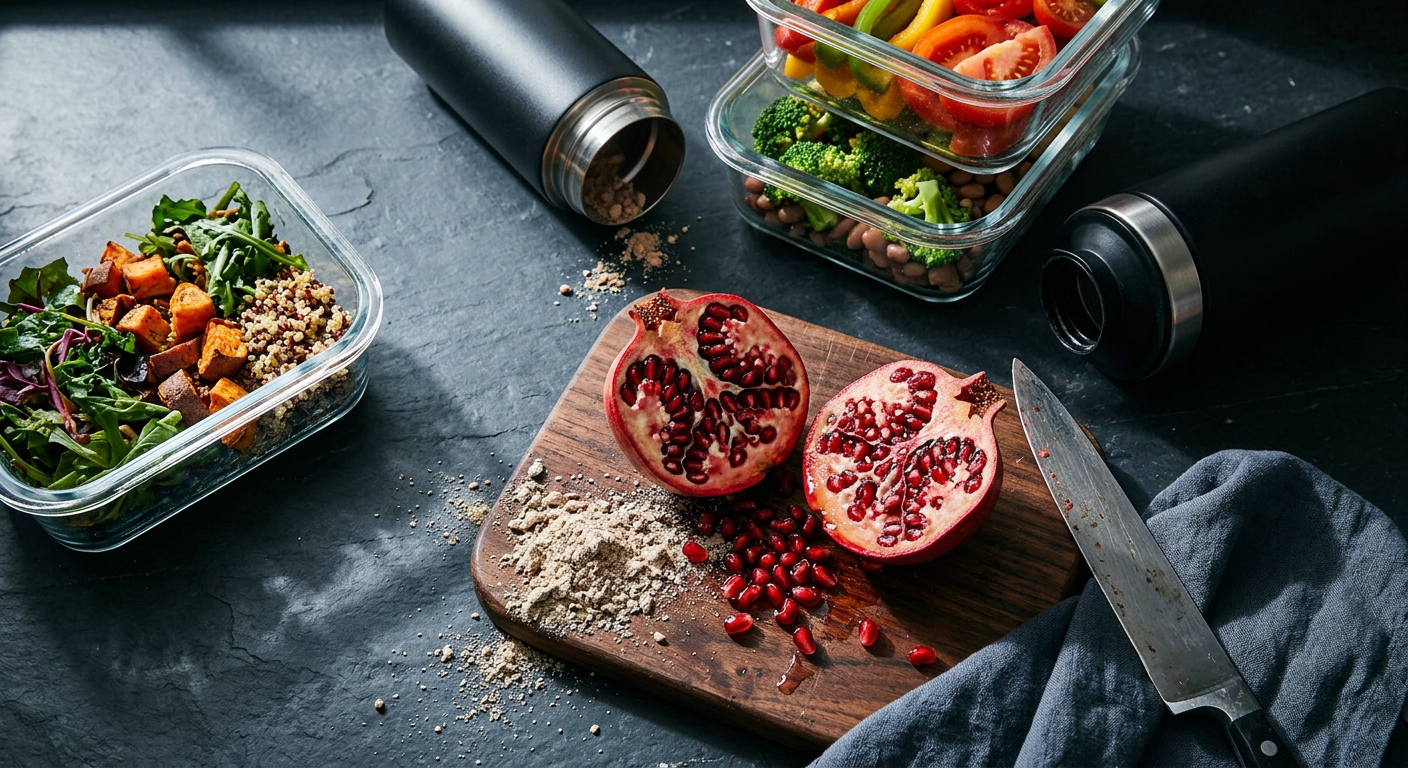
    1. Start with Veggies - fill at least half your plate with non-starchy vegetables first. Think leafy greens, broccoli, bell peppers, asparagus. They're your low-calorie base.
    2. Add Lean Protein - add a palm-sized portion of chicken breast, fish, tofu, or beans. Protein is also fantastic for satiety.
    3. Finish with Smart Carbs & Fats - use the remaining space for a smaller portion of whole grains (like quinoa or brown rice) and a sprinkle of healthy fats (like avocado or seeds).
    4. How FullBody AI Helps You Master This

      Trying to eyeball calorie density can be tricky. Is this salad really lower in calories than that sandwich?

      That's where an app like FullBody AI becomes your secret weapon. When you log your meals, you're not just tracking calories-you're learning. You start to see the data right in front of you. You can literally visualize how a giant, colorful salad has fewer calories than a small, beige pastry.

      It empowers you to make informed choices instead of just guessing. You can plan meals that are both satisfying in volume and perfectly aligned with your calorie goals, taking the guesswork out of effective weight loss.

      Ultimately, losing weight doesn't have to mean deprivation and constant hunger pangs. By understanding and using the principle of calorie density, you can eat generous, satisfying meals that keep you full while still hitting your goals.

      So go ahead, fill up your plate-the smart way. 👍

    Ready to transform your training?

    Get a personalized AI workout plan in 30 seconds. Free trial, no credit card.

    No card or signup required. Start in 30 seconds