
Eating for Endurance: A Guide to Fueling Your Long Runs

    Ready to transform your training?

    Get a personalized AI workout plan in 30 seconds. Free trial, no credit card.

    Eating for Endurance: A Guide to Fueling Your Long Runs

    Ever hit 'the wall' during a long run or workout? One minute you're cruising, and the next, your legs feel like cement and every step is a monumental effort. It’s a feeling most of us endurance junkies know all too well.

    The good news? It’s often preventable. The secret isn't some superhuman grit (though that helps). It's fuel. Proper nutrition is the unsung hero of endurance performance. Let's break down the science of eating for endurance sports so you can crush your next long workout.

    Carbs: Your High-Performance Fuel

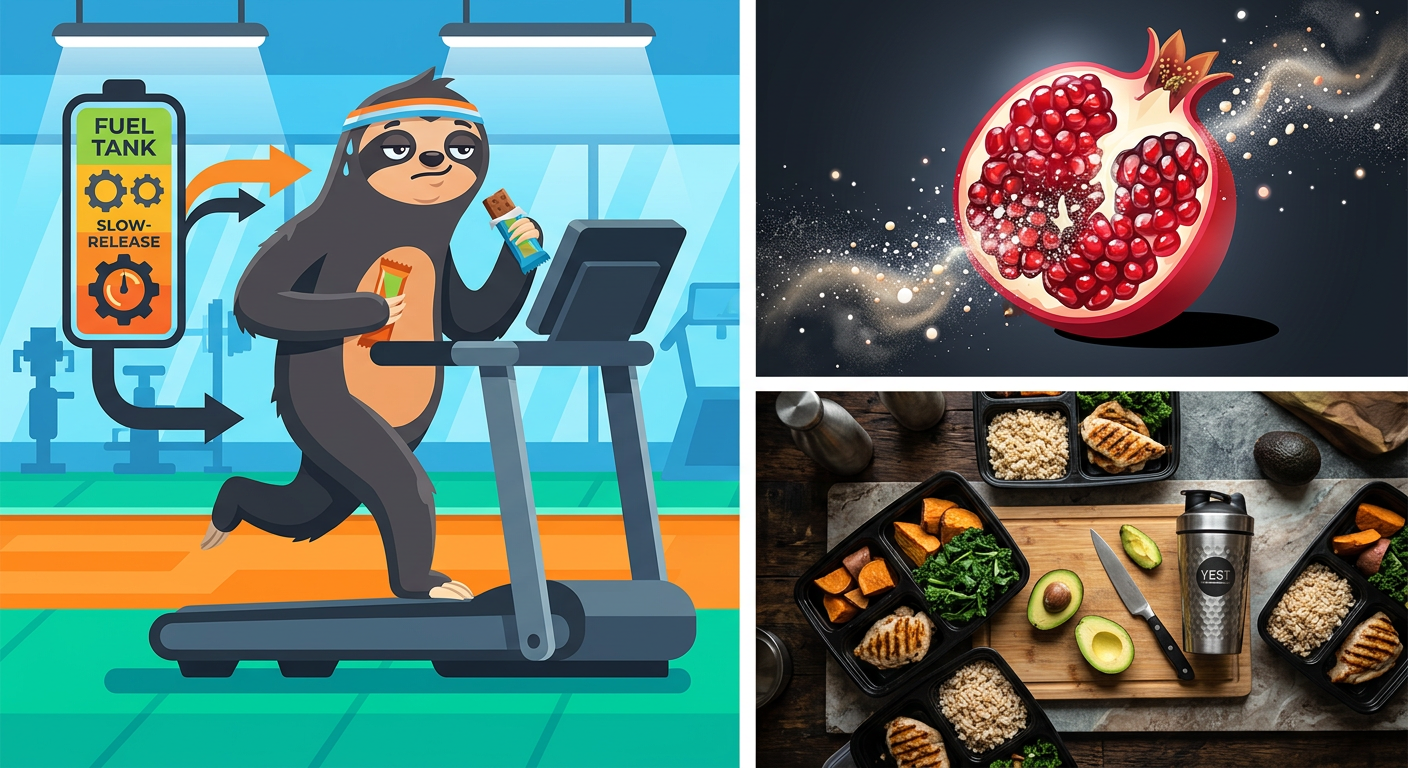
    Think of your body like a car. Fat is your big, efficient fuel tank for long, slow journeys- a.k.a., just living your life. But when you need to go fast or for a long time, you switch to high-octane fuel. For your body, that's carbohydrates.

    Your body breaks down carbs into glucose for immediate energy and stores the excess in your muscles and liver as glycogen. This glycogen is your most accessible energy source during high-intensity or long-duration exercise. When you run out of glycogen, you hit that dreaded wall. So, the main goal of fueling long runs is to make sure those glycogen stores are topped off and that you can replenish them on the go.

    Your Everyday Eating Plan

    Great pre-race nutrition doesn't start the morning of the race. It starts with what you eat every single day. A consistently well-fed athlete performs better, recovers faster, and is less prone to injury.

    • Complex Carbohydrates - these should be the star of your plate. Think oats, brown rice, quinoa, sweet potatoes, and whole-wheat pasta. They provide sustained energy.
    • Lean Protein - essential for muscle repair and recovery. Aim for sources like chicken, fish, tofu, beans, and lentils with your meals.
    • Healthy Fats - important for overall health, but keep them in moderation, especially right before a workout. Avocados, nuts, seeds, and olive oil are great choices.
    • Hydration - this is non-negotiable. Drink water consistently throughout the day, not just during your workouts.

    Pre-Race and Pre-Run Fueling

    What you eat right before a big effort can make or break your performance. The goal is to top off your glycogen stores without upsetting your stomach. This is the heart of good pre race nutrition.

    The Night Before

    Your last big meal should be 12-15 hours before your race or long run. Focus on a meal that's rich in carbohydrates, with some moderate protein. This is not the time to experiment! Stick to familiar foods that you know your stomach handles well.

    A classic plate of pasta with a simple tomato sauce and a side of grilled chicken, or a baked sweet potato with salmon and a side salad, are both great options.

    Create Your Workout Plan by Voice - Free, No Signup

    Just tell our AI what you want - your goals, schedule, equipment - and get a personalized plan in seconds. No forms, no hassle. Just speak.

    The Morning Of

    The pre-run breakfast is crucial. You want to eat something that's almost entirely easy-to-digest carbohydrates.

    • Timing is Key - aim to eat 2-4 hours before you start. This gives your body time to digest.
    • What to Eat - a small bowl of oatmeal, a banana, a plain bagel, or toast with jam are classic, effective choices.
    • What to Avoid - high-fat, high-fiber, and excessively spicy foods are a recipe for digestive distress. Save them for after your run.

    The Art of Carb Loading

    Carb loading for endurance is a term that gets thrown around a lot, often as an excuse to eat a giant pizza the night before a race. A true carb load is a bit more strategic. It’s a technique used to supersaturate your muscles with glycogen. According to the Australian Institute of Sport, this can improve endurance performance by 2-3%.

    It's most effective for events lasting over 90 minutes. A simple 3-day approach works well for most people:

    Day Relative to Event Training Carbohydrate Intake Example Focus
    3 Days Out Taper / Light Moderate-High Focus on quality carbs at each meal.
    2 Days Out Very Light / Rest High (7-10g/kg body weight) Carbs are the main event on your plate.
    1 Day Out Rest High (7-10g/kg body weight) Stick to simple, bland, easy-to-digest carbs.

    Fueling on the Move

    For any activity lasting longer than 75-90 minutes, you'll need to refuel during the event. The general rule is to consume 30-60 grams of carbohydrates per hour after that first hour.

    This is where sports gels, chews, and drinks come in. The key is to practice with them during your training runs to see what works for you- what flavors you like and what your stomach can tolerate. And don’t forget to drink water with them!

    Putting It All Together

    Mastering your nutrition strategy is a game-changer. It turns 'surviving' a long run into 'thriving'. It's about combining daily habits, a solid pre-race plan, and smart mid-run fueling.

    When you’re tracking your long runs in an app like FullBody AI, you're not just logging miles; you're gathering data. You can see how your pace holds up over time and correlate that with your fueling strategy. Did you feel strong at mile 10 after trying that new gel? Make a note of it! This data-driven approach, as outlined by sources like the Academy of Nutrition and Dietetics, turns guesswork into a solid performance plan.

    Ready to transform your training?

    Get a personalized AI workout plan in 30 seconds. Free trial, no credit card.

    No card or signup required. Start in 30 seconds