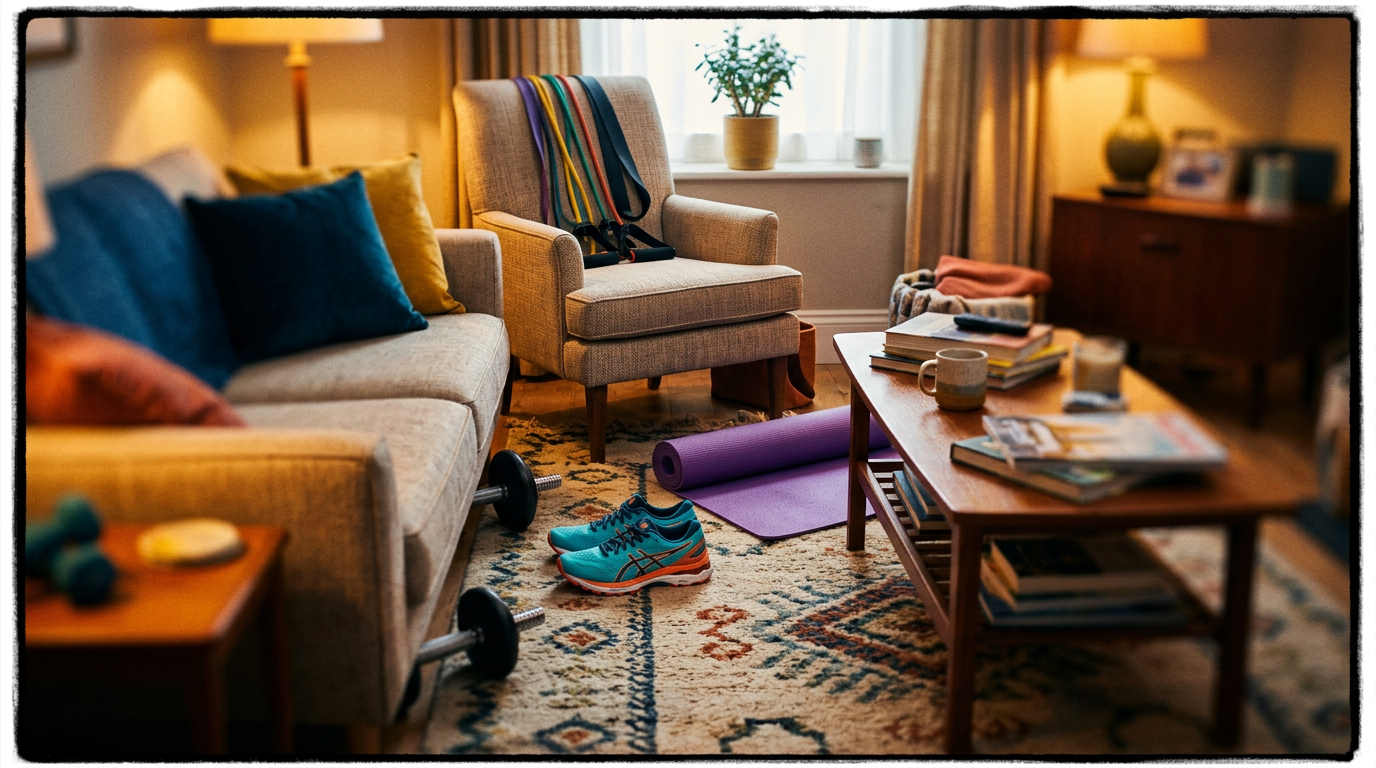
So, you’ve carved out a corner of your living room, rolled out the mat, and fired up your FullBody AI workout. You're ready to go. But wait- what’s on your feet? If the answer is “fuzzy socks” or “nothing,” we need to talk.
Working out at home offers amazing flexibility, but it often leads us to neglect one of the most crucial pieces of equipment - proper footwear. I get it, the temptation to just kick your slippers off and start is real. But investing in a good pair of shoes is an investment in your performance, safety, and long-term health.
Why Your Socks Aren't Enough
Let's be blunt- working out in just socks or bare feet on most home surfaces is a recipe for trouble. Your tile kitchen floor or polished hardwood is not a gym-grade surface. Here’s why you need more:
- •The Slip Factor - socks on a smooth surface during a burpee? Yeah, you see where this is going. A lack of grip leads to slips, falls, and potential injuries.
- •Zero Impact Protection - every time you jump, skip, or lunge, your joints absorb the impact. The best shoes for home workouts have cushioning designed to soak up that shock, protecting your ankles, knees, and hips.
- •Lack of Support - our feet are complex. Without proper arch and ankle support, you can put undue strain on your muscles and ligaments, leading to issues like plantar fasciitis or a twisted ankle.
The “Big Three” of Home Workout Shoes
When you're searching for supportive footwear for your home gym, don't just grab any old sneaker. You need to focus on three key elements. Think of this as your essential workout shoe guide for home training.
Step 1: Prioritize Comfort
If a shoe isn't comfortable, you won't wear it. Simple as that. Look for comfortable home exercise shoes with:
- •Breathable Materials - a mesh upper allows air to circulate, keeping your feet from turning into a sweaty mess mid-workout.
- •A Good Fit - your shoe shouldn't be too tight or too loose. You want a thumb's width of space between your longest toe and the end of the shoe. Your heel should feel locked in without slipping.
Step 2: Seek Out Support
Support is all about what’s happening in the middle and back of the shoe. It’s what keeps your foot in a neutral, stable position during movement.
- •Cushioning - this is the shock absorption we talked about. The amount you need depends on your workout. More for high-impact cardio, less for lifting.
- •Arch Support - a supportive midsole prevents your foot from collapsing inward, which is crucial for maintaining proper alignment all the way up to your hips and back.
Step 3: Test for Stability
Stability is your foundation. A stable shoe prevents your foot from rolling side-to-side, which is especially important during lateral movements and heavy lifts.
- •A Solid Base - look for a shoe with a relatively flat and wide sole. This gives you a bigger, more stable platform to push from during squats, deadlifts, and lunges.
- •Lateral Reinforcement - check the sides of the shoe. Extra structure there will help keep your foot centered during quick side-to-side movements common in HIIT routines.
Match Your Shoe to Your Workout
Not all workouts are created equal, and neither are all shoes. Here’s a quick breakdown.
- •For HIIT, Agility, and Cardio - you need a jack-of-all-trades shoe. Look for a cross-trainer that offers a good balance of cushioning for jumps and solid lateral support for shuffles and skaters. Your shoe should feel responsive and lightweight.
- •For Strength and Weight-Lifting - stability is king here. A flatter, more rigid sole is actually better. It allows you to feel the floor, generate more power, and maintain perfect form during squats and deadlifts. Some people prefer minimalist shoes for this, but a good, flat-soled trainer is fantastic.
- •For General Fitness & Mixed Workouts - if your routine is a mix of everything- a little cardio, some bodyweight strength, maybe a stretching session- you need a versatile shoe. Cross-trainers are your best friend here. In fact, for a program like FullBody AI that challenges you with varied exercises, a solid pair of cross-trainers will provide the support you need for almost any workout it throws at you.
Finding the right shoe is a game-changer for your home workouts. It's not about brand names or fancy colors; it’s about giving your body the foundation it needs to get stronger, fitter, and stay injury-free. Now go get 'em! 💪