
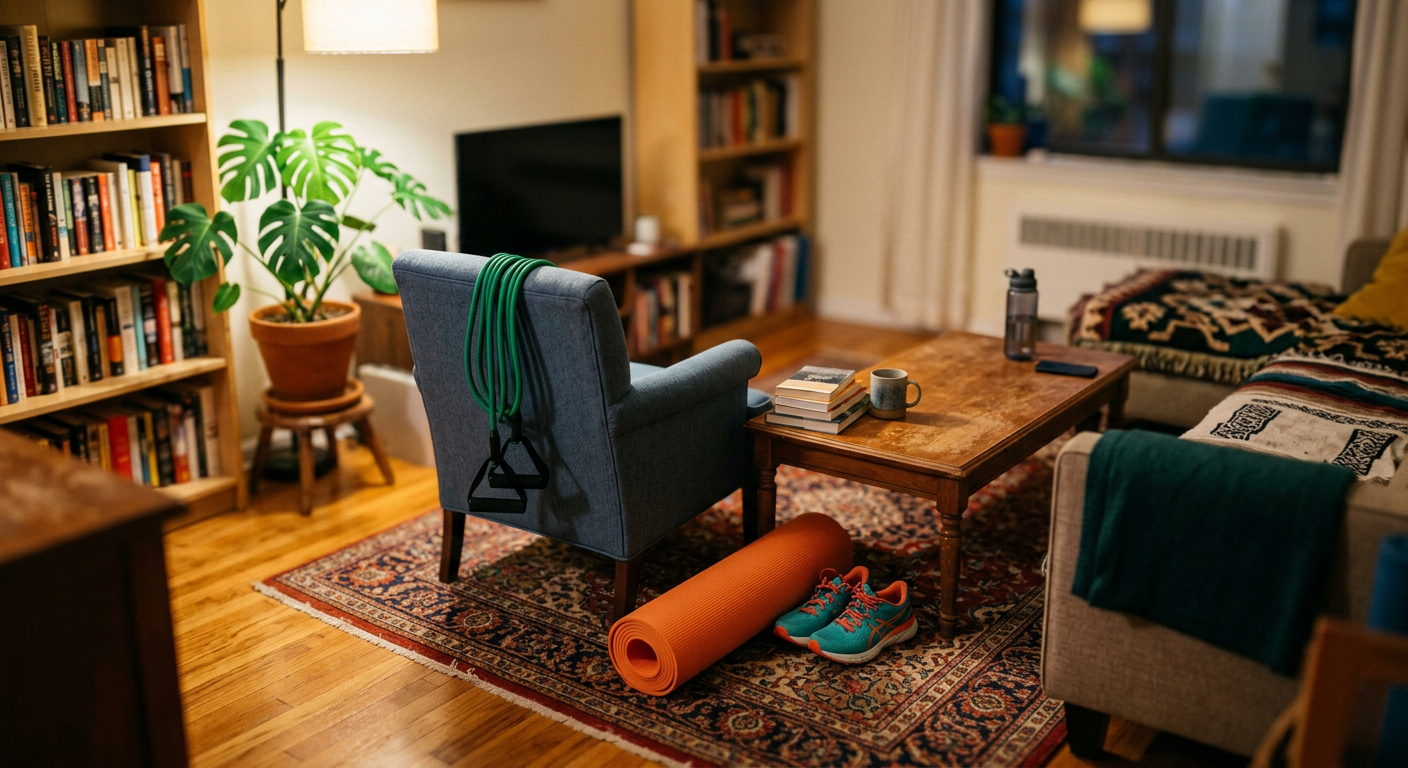
Sleep for Workout Recovery: The Missing Piece in Your Routine

    Ready to transform your training?

    Get a personalized AI workout plan in 30 seconds. Free trial, no credit card.

    Sleep for Workout Recovery: The Missing Piece in Your Routine

    Alright, let's talk. You're dedicated. You're clearing space in your living room, you're firing up your FullBody AI workout, and you're leaving it all on the mat. You're tracking your macros, you're drinking your water... but are you seeing the results you truly want?

    If you feel like you've hit a plateau, or you're constantly feeling sore and run-down, the culprit might not be in your workout or your kitchen. It might be in your bedroom.

    We love to glorify the grind, but we often forget that fitness isn't just built during the workout- it's built during the recovery. And the single most powerful tool for recovery is completely free: sleep.

    The Science of Gains Happen When You're Asleep

    Think of your workout as placing an order for a stronger, leaner body. Sleep is the overnight delivery service that actually brings it to you. When you exercise, especially with resistance training, you create tiny micro-tears in your muscle fibers. This is a good thing! It’s the stimulus for growth.

    But the actual repair and rebuilding process- known as protein synthesis- ramps up significantly when you’re in deep sleep. This is when your body gets to work patching up those muscle fibers, making them stronger and bigger than before.

    Here’s the key player: Human Growth Hormone (HGH). Your body's pituitary gland releases pulses of HGH throughout the day, but the most significant release happens during the early stages of deep sleep. HGH is critical for repairing tissues, building muscle, and metabolizing fat. Skimp on sleep, and you're directly limiting your body's most powerful natural steroid.

    The Dark Side: What Poor Sleep Does to Your Home Workouts

    Ignoring the importance of sleep for home exercise is like trying to build a house while someone is actively knocking down the walls. It just doesn't work.

    • •Sky-High Cortisol - lack of sleep sends your stress hormone, cortisol, through the roof. Chronically high cortisol can be catabolic, meaning it can actually break down muscle tissue for energy. Yes, you read that right- poor sleep can literally undo the hard work you put in during your workout.
    • •Tanked Performance - ever tried to do a tough workout after a bad night's sleep? It feels like you’re moving through mud. Your reaction time is slower, your strength is zapped, and the perceived effort is way higher. You're simply not going to push as hard or perform as well.
    • •Appetite Mayhem - poor sleep messes with the hormones that control your hunger. It increases ghrelin (the “I’m hungry” hormone) and decreases leptin (the “I’m full” hormone). This is a recipe for craving junk food and overeating, which can sabotage your body composition goals.

    Create Your Workout Plan by Voice - Free, No Signup

    Just tell our AI what you want - your goals, schedule, equipment - and get a personalized plan in seconds. No forms, no hassle. Just speak.

    How to Optimize Recovery at Home with Better Sleep

    Okay, so we know sleep is crucial. But how do you actually get more, higher-quality rest? Here's your action plan to turn your sleep into a performance-enhancing tool.

    Create a Sleep Sanctuary

    Your bedroom should be for sleep. That's it. Make it your cave:

    • •Go Dark - blackout curtains, an eye mask, covering little electronic lights. Darkness signals to your brain that it's time to produce melatonin.
    • •Stay Cool - a cooler room temperature (around 65°F or 18°C) is generally considered ideal for sleeping. Your body temperature naturally drops to initiate sleep.
    • •Keep it Quiet - earplugs or a white noise machine can be a lifesaver if you live in a noisy environment.

    Nail Your Routine

    Your body loves a schedule. A consistent sleep and wake time- even on weekends- helps regulate your internal body clock, or circadian rhythm.

    Also, consider your workout timing. A super intense HIIT session right before bed might leave you too wired to wind down. If you're an evening exerciser, consider saving the high-intensity stuff for earlier or finishing your workout at least 2-3 hours before you plan to hit the hay. A gentle stretching session is a perfect pre-bed activity, though!

    After you've crushed a personalized workout with FullBody AI, your body is primed for this crucial recovery phase. The app takes care of your progressive overload and exercise plan, so you can put your energy into mastering the other half of the fitness equation - optimal recovery.

    Wind Down Intentionally

    You can't go from 100 to 0. Give yourself a 30-60 minute “wind-down” period before bed.

    • •No Screens - the blue light from phones, tablets, and TVs can suppress melatonin production. Read a book, listen to a podcast, or do some light stretching instead. According to the Sleep Foundation, managing light exposure is one of the most effective ways to sync your internal clock.
    • •Avoid Stimulants - this is an obvious one, but avoid caffeine and large, heavy meals too close to bedtime. A small, carb/protein-rich snack like a banana with a spoonful of almond butter can actually be beneficial, as it can help promote sleep-inducing neurotransmitters.

    Ultimately, better sleep leads to enhanced workouts. You'll feel stronger, more focused, and less sore. This positive feedback loop is what creates sustainable, long-term results. Stop thinking of sleep as a luxury or lost time. It's the most productive recovery work you can possibly do- and it's essential for getting the most out of every single home workout. Sweet dreams and even sweeter gains. 💪

    Ready to transform your training?

    Get a personalized AI workout plan in 30 seconds. Free trial, no credit card.

    No card or signup required. Start in 30 seconds