
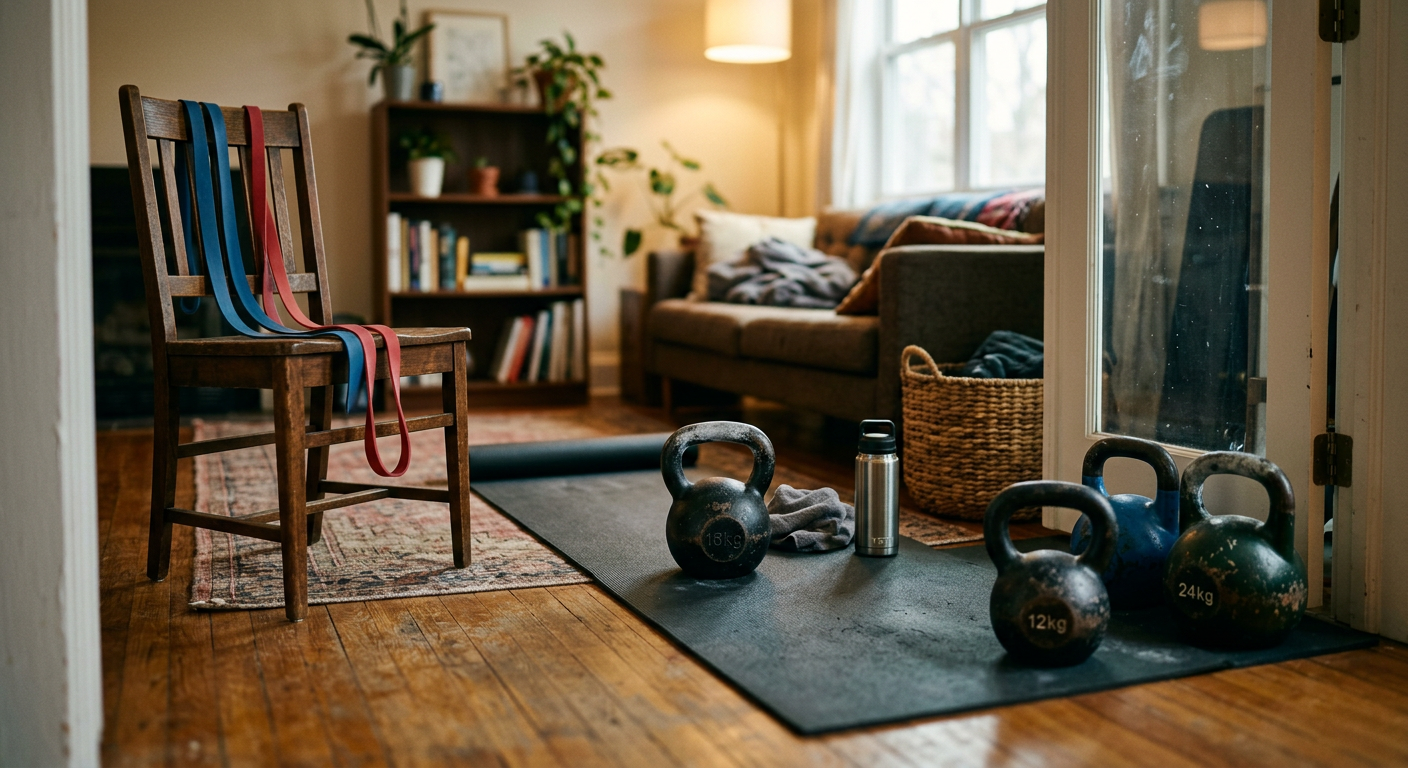
Kettlebell Flows for Full Body Conditioning at Home

    Ready to transform your training?

    Get a personalized AI workout plan in 30 seconds. Free trial, no credit card.

    Kettlebell Flows for Full Body Conditioning at Home

    Ditch the Rep Counting, Embrace the Flow

    Hey team. Let's talk about getting a killer workout at home. If you're bored of endlessly counting reps and doing the same 3 sets of 10 for everything, I've got something for you. It's time to talk about kettlebell flows.

    In my years of coaching, I've seen people get incredible results by moving away from rigid sets and embracing a more fluid, dynamic style of training. A kettlebell flow is a series of exercises strung together seamlessly, where the end of one movement becomes the start of the next. Think of it less like a checklist and more like a dance with weight. The result is a monster of a full body kettleettlebell conditioning session that taxes your muscles, skyrockets your heart rate, and hones your focus all at once.

    This is the secret sauce for building functional strength and serious endurance without ever leaving your living room. It's one of my favorite tools for a kettlebell flows home workout.

    The Building Blocks of Any Great Flow

    Before you can flow, you need to own the individual movements. As a trainer, I always recommend my clients master the basics with perfect form before trying to link them together. Rushing this step is a recipe for bad habits or injury. Let's focus on the absolute essentials.

    The Kettlebell Swing

    This isn't a squat and a front raise. The power comes from your hips. Stand with feet a bit wider than your shoulders, hinge at your hips (push your butt back), and explosively snap your hips forward to 'float' the bell up to chest height. It’s all in the hips.

    The Kettlebell Clean

    From the top of the swing, instead of letting the bell float away from you, you're going to tame it. As it comes up, pull your elbow back and allow the bell to roll gently around your forearm into the 'rack' position-resting comfortably against your bicep, forearm, and shoulder. Keep it close to your body!

    The Goblet Squat

    This is a squat while holding the bell in the rack position (or by the horns for a standard goblet squat). Keep your chest up, core tight, and sink your hips down between your heels. The weight acts as a natural counterbalance, helping you achieve great depth and posture.

    The Strict Press

    From the rack position, with your core and glutes braced tight, press the kettlebell straight overhead until your bicep is by your ear. Control it on the way back down. No leg drive here, just pure shoulder and core strength.

    Putting It All Together: The Foundational Kettlebell Flow

    Create Your Workout Plan by Voice - Free, No Signup

    Just tell our AI what you want - your goals, schedule, equipment - and get a personalized plan in seconds. No forms, no hassle. Just speak.

    Okay, you've practiced the pieces. Now let's connect them. We're going to create a simple but potent flow. Here’s the sequence per side:

    1. One Kettlebell Swing
    2. One Kettlebell Clean (bring it into the rack position)
    3. One Goblet Squat
    4. One Strict Press
    5. Once you press, you'll bring the bell back down to the rack position, then safely down into the starting position for the next swing. The magic is in making the transitions smooth. What I tell my clients is to feel the movement, don’t just execute it.

      Perform all the reps on one side (say, 5 in a row), then switch hands and repeat on the other side. That's one round.

      How to Structure Your Kettlebell Workout for Endurance at Home

      Now, how do you turn this into a full workout? You have a couple of great options.

      • •AMRAP (As Many Rounds As Possible): Set a timer for 10, 15, or 20 minutes and complete as many high-quality rounds of the flow as you can. Your goal is consistent movement, not frantic speed.
      • •For Time - decide on a set number of rounds (e.g., 10 total rounds, 5 per side) and work to complete them as efficiently as you can while maintaining perfect form.

      Here’s a simple way to structure it:

      Workout Style Time/Rounds Rest
      AMRAP 12 Minutes Rest only as needed, keep moving
      For Time 8 Rounds Rest 60 seconds between each full round

      Start with a lighter bell than you think you need. These fluid kettlebell exercises at home are deceptive, and your grip and core will be challenged in new ways. The goal is endurance and form, not just raw power.

      As you progress, you can add reps, add more complex movements, or increase the timer. Designing effective flows can get tricky, which is where a smart tool like FullBody AI becomes your personal digital coach. It can generate new custom flows for you and even use your phone’s camera to provide feedback on your form, ensuring you’re moving safely and effectively.

      So grab a bell, clear some space, and start flowing. You'll be amazed at how challenging and rewarding it can be. Happy training!

    Ready to transform your training?

    Get a personalized AI workout plan in 30 seconds. Free trial, no credit card.

    No card or signup required. Start in 30 seconds