
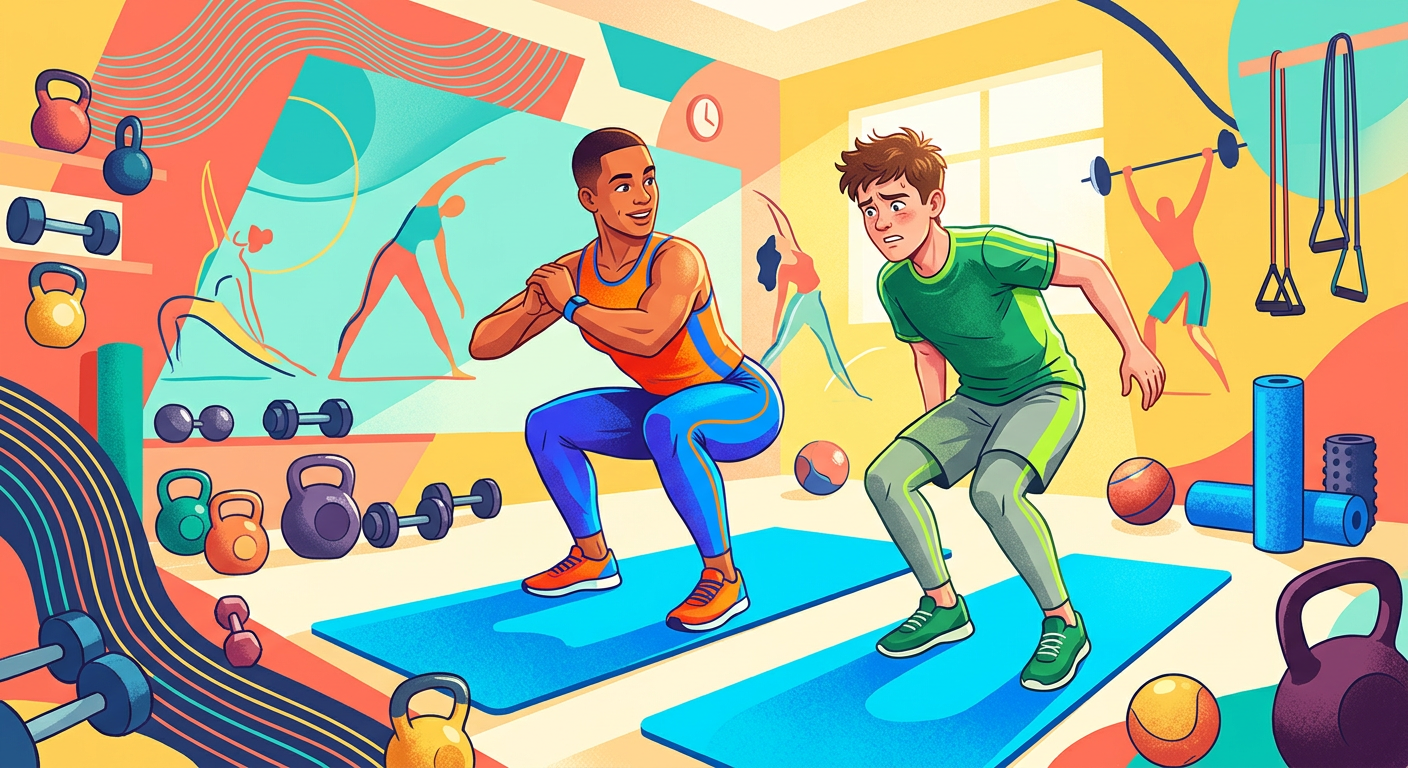
Ah, the squat. You've heard it's the king of all exercises... and you've also probably seen some pretty gnarly-looking ones at the gym. It's one of those foundational movements that works just about everything, but it's also super easy to get wrong.
Let's be honest, getting started can be intimidating. But don't worry. We're going to break down how to squat correctly so you can feel confident, stay safe, and get strong. No complex jargon, just straightforward advice.
Why Your Squat Form Actually Matters
Before we dive into the 'how', let's quickly cover the 'why'. Nailing your perfect squat technique isn't about looking cool (though that's a nice bonus). It's about two things - safety and results.
Good form ensures you're working the right muscles-your quads, hamstrings, glutes, and core-without putting unnecessary strain on your lower back or knees. Bad form? That's a fast track to injury and a slow track to seeing any real progress. So let's build a solid foundation from day one.
The Step-by-Step Guide to the Perfect Bodyweight Squat
Forget the heavy barbell for now. The first step for anyone squatting for beginners is to master the movement with just your body weight. Grab a bit of space and let's walk through it.
1. The Setup: Your Starting Stance
Everything starts with your feet. You can't build a strong house on a shaky foundation, right?
- •Stand with your feet about shoulder-width apart, maybe a little wider if that feels more comfortable.
- •Point your toes slightly outward, somewhere between 5 and 20 degrees. Think 11 and 1 on a clock face.
- •Stand tall. Pull your shoulders back and down, lift your chest, and engage your core. Imagine someone's about to gently poke you in the stomach.
2. The Descent: Going Down With Control
This is where most people get tripped up. The key is to initiate the movement with your hips, not your knees.
- •Take a deep breath in and start by pushing your hips back and down, like you're aiming to sit in a tiny chair that's just a bit too far behind you.
- •As your hips go back, your knees will naturally start to bend. Let them.
- •Keep your chest up the entire time. A great cue is to stare at a spot on the wall in front of you and don't look down.
- •Your knees should track in line with your feet. Don't let them collapse inward.
Create Your Workout Plan by Voice - Free, No Signup
Just tell our AI what you want - your goals, schedule, equipment - and get a personalized plan in seconds. No forms, no hassle. Just speak.
3. The Bottom: Hitting Your Depth
How low should you go? The gold standard is getting your hip crease just below the top of your knees (what's called 'parallel').
- •Only go as low as you can while maintaining good form. If your heels lift or your back starts to round, you've gone too far for now.
- •Your weight should feel evenly distributed across your feet, maybe even a little more towards your heels. Keep those feet flat on the floor!
4. The Ascent: Driving Back Up
You're in the hole, now it's time to power out.
- •Drive up by pushing the floor away through your entire foot. Imagine you're trying to press the ground down.
- •Exhale forcefully as you drive up.
- •Lead with your chest and keep your hips and shoulders rising at the same rate.
- •At the very top, squeeze your glutes to finish the movement and come back to a fully upright position. Congrats, that's one rep!
Common Beginner Squat Form Mistakes (and How to Fix 'Em)
Feeling a little wobbly? Totally normal. Here are a few of the most common hiccups we see with beginner squat form.
- •Knees Caving In - this is super common and usually means your glutes aren't quite firing yet. The Fix - actively think about pushing your knees outward during the entire movement. Imagine you're trying to spread the floor apart with your feet.
- •Lifting Your Heels - this often comes from a mobility issue or from initiating the squat by bending your knees first instead of your hips. The Fix - really focus on sitting your hips back first. You can also try placing a very small plate or book under your heels temporarily as you work on your ankle mobility.
- •Chest Falling Forward - if you find yourself looking at the floor at the bottom of your squat, your chest has likely dropped. The Fix - keep your gaze forward and think 'proud chest' the whole time. Strengthening your core will help with this a ton.
How FullBody AI Can Help
Nailing this on your own can feel like guesswork. This is where technology can be a massive help. The FullBody AI app acts like a personal trainer in your pocket. It uses your phone’s camera to analyze your form in real-time, giving you instant feedback on things like your squat depth and whether your knees are caving in. It's an incredible tool for anyone learning how to squat correctly because it spots the small issues before they become bad habits.
Mastering the squat is a journey. It takes practice, patience, and a focus on quality over quantity. Start with these fundamentals, be consistent, and you'll build the strength and confidence to make the squat a cornerstone of your fitness for years to come. 💪