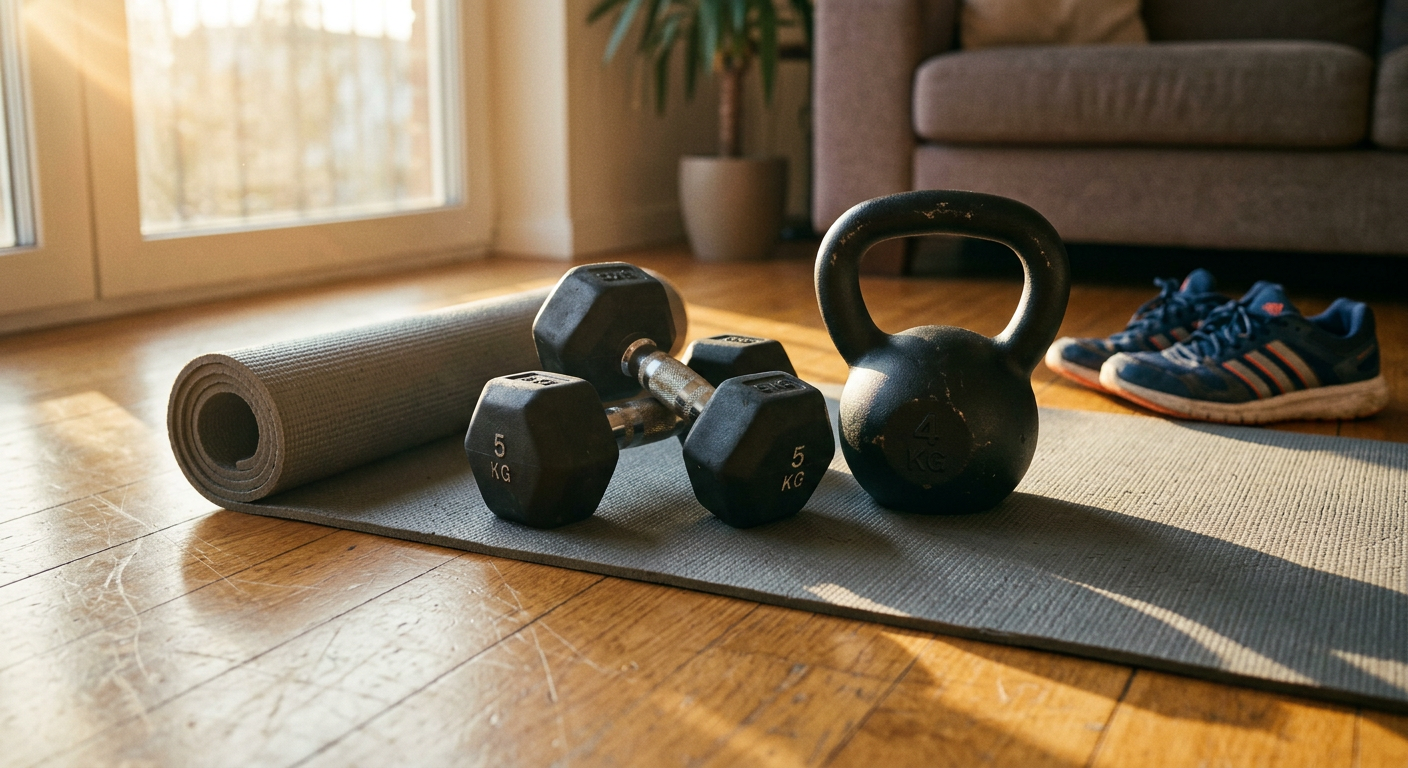
So you’ve decided to start strength training. Awesome. You walk into the gym (or browse online for your home setup) and are faced with the first big decision - the classic kettlebell vs dumbbell showdown.
They both look like… well, weights. But they feel totally different, and they're designed for different things. It's a common point of confusion for anyone starting out. Which one is going to give you the best results as a beginner?
Let’s be real, the answer isn’t as simple as “this one is better.” It depends on your goals. So let's break it down, no fluff, and figure out which tool is right for you.
Understanding the Tools: A Quick Breakdown
At a glance, they're just lumps of iron. But the secret is in their shape and how that affects your body.
The Humble Dumbbell
A dumbbell is what most people picture when they think of a 'weight'. It's simple - a handle in the middle with equal weight on each side. The center of gravity is right in your hand.
This balanced design makes dumbbells the king of isolation exercises. Think bicep curls, overhead presses, and chest presses. They’re fantastic for targeting specific muscles in a very controlled way. You can easily focus on one muscle group at a time, which is super helpful for building that initial mind-muscle connection.
The Cannonball with a Handle: The Kettlebell
The kettlebell is a different beast entirely. It's essentially a ball of iron with a handle on top. This means its center of gravity is offset, sitting several inches below your grip.
This unique design is what makes the kettlebell a powerhouse for dynamic, full-body movements. Exercises like the kettlebell swing, the clean, and the snatch use momentum and your entire body working as one unit. It builds explosive strength, stability, and cardiovascular endurance all at once.
Kettlebell vs Dumbbell for a Beginner: The Showdown
Okay, so they're different. But which one should you pick up first on your strength journey?
For Ease of Learning
Winner - dumbbells
For a total beginner, dumbbells are generally more intuitive. A bicep curl or a chest press with dumbbells feels pretty natural. The movements are often straightforward, and since the weight is balanced, you can focus purely on lifting and lowering without worrying too much about controlling an awkward object.
Kettlebells have a steeper learning curve. The most famous kettlebell exercise, the swing, requires coordination and proper hip-hinge mechanics. Getting the form wrong can be ineffective at best and lead to injury at worst. It takes a bit more dedicated practice.
For Building Foundational Strength
Winner - dumbbells
When you're starting, one of the best things you can do is build a solid base of strength in all your major muscle groups. Dumbbells are fantastic for this. You can easily perform exercises for your chest, back, shoulders, biceps, and triceps.
Progressive overload-the key to getting stronger-is also simpler with dumbbells. If your 15 lb press gets too easy, you just pick up the 20 lb dumbbells. It's a very linear and easy-to-track process.
For a Full-Body “Bang for Your Buck” Workout
Winner - kettlebells
If you're short on time and want a workout that ticks the strength and cardio boxes, a single kettlebell is tough to beat. Because kettlebell movements are so dynamic, they elevate your heart rate in a way that traditional dumbbell lifting doesn't. A 20-minute kettlebell session can leave you feeling like you just did an hour of work.
What Starting Weights for Kettlebells and Dumbbells?
This is a crucial question. Starting too heavy is a recipe for bad form and potential injury. Always err on the side of lighter and perfect your technique first.
Dumbbell Starting Weights
- •Because you'll be using them for various exercises (you can lift more with your legs than your arms), it's ideal to have access to a few pairs.
- •Generally, a good starting range for women is between 5 lbs and 15 lbs (2-7 kg) per dumbbell.
- •For men, a starting range of 15 lbs to 25 lbs (7-12 kg) is a solid place to begin.
Kettlebell Starting Weights
- •Kettlebell movements often use the powerful muscles of your legs and hips, so you can start a bit heavier than you'd think.
- •A good starting weight for women is often between 18 and 26 lbs (8-12 kg).
- •For men, a 35 lb (16 kg) kettlebell is the standard starting point for learning swings.
Getting the form right on foundational moves is everything. A video can be a huge help here to see how a dumbbell press differs from a powerful kettlebell swing.
The Verdict: Which is Best for a Beginner?
So, after all that, what’s the final word in the best for beginners kettlebell dumbbell debate?
- •Choose Dumbbells if - your primary goal is building muscle size and pure strength in a controlled way. You want to learn the classic, foundational lifts and prefer to isolate muscle groups.
- •Choose Kettlebells if - you want to build functional, athletic strength, improve your cardio, and you enjoy dynamic, full-body movements. You're willing to invest a little more time upfront to learn proper technique.
The truth is, you don't have to choose. The best approach is often a hybrid one! Use dumbbells for your presses and rows, and a kettlebell for goblet squats and swings.
No matter which tool you pick, the most important thing is consistency. Tracking your workouts is the best way to ensure you're making progress. The FullBody AI app is perfect for this-you can log every set and rep, whether it's with a dumbbell or a kettlebell. It helps you stay on track and takes the guesswork out of getting stronger.
Bottom line - don't get paralyzed by the choice. Pick the one that sounds more fun and aligns with your goals. The best tool is the one you'll actually use. Now go lift something!