
So you’ve decided you want to get stronger. Awesome. That’s probably the biggest step. But then comes the next thought… the gym. The crowds, the confusing machines, the feeling that everyone else knows what they’re doing. It can be a lot.
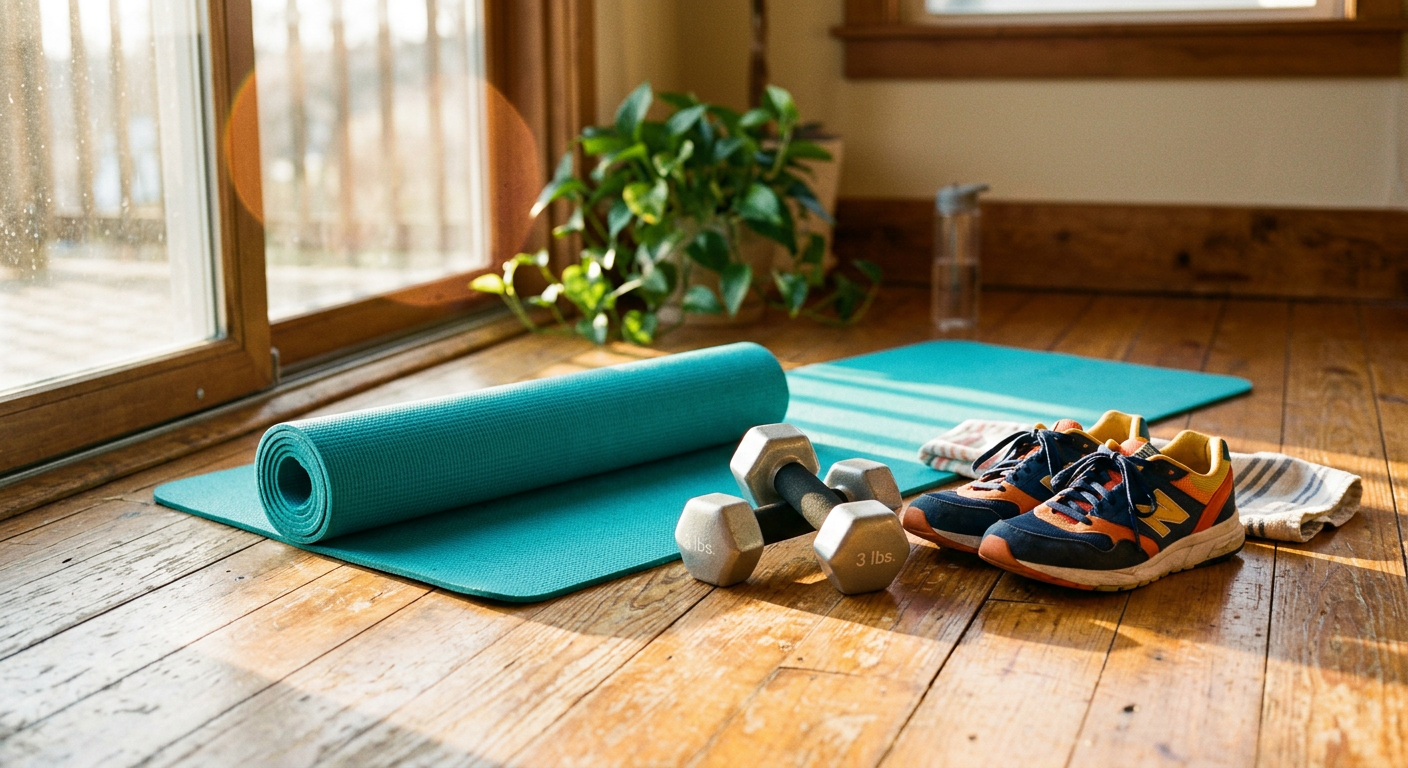
But what if I told you that you could build a solid foundation of muscle and strength right in your own living room? All you need is a little bit of space and a trusty pair of dumbbells. Seriously, that’s it.
As a fitness coach, I've seen dumbbells transform bodies and build confidence time and time again. Forget the complicated stuff for now. Let's get back to basics with an effective full body dumbbell workout at home that’s perfect for anyone just starting out.
Why Dumbbells Are Your Best Friend
Before we get into the workout, let’s talk about why dumbbells are so great for beginner strength training with dumbbells.
First, they're versatile. You can work every single muscle group with just one pair. Second, they force your body to learn balance and stability. Unlike a machine that locks you into a specific path, dumbbells make your smaller stabilizing muscles work overtime, which is amazing for building real-world, functional strength. Plus, they’re relatively cheap and don’t take up much space.
Picking Your First Pair of Dumbbells
Walking into the fitness aisle can be overwhelming. Hexagonal, round, adjustable, neoprene… what do you choose?
Keep it simple. For a beginner, a standard pair of hexagonal dumbbells is perfect - they won't roll away. The most important thing is the weight. You want a weight that’s challenging by the last couple of reps, but not so heavy you can’t maintain good form.
A good starting point:
- •For women - start with a pair of 5-15 lb dumbbells (that’s 2-7 kg).
- •For men - a pair of 15-25 lb dumbbells (that’s 7-12 kg) is a great place to begin.
Remember, this is a starting point! It’s better to start a little lighter and master the movement than to go too heavy and risk injury.
The Beginner Dumbbell Workout Routine
Okay, time for the main event. Here’s a simple yet incredibly effective dumbbell workout routine a beginner can do. We’re going to hit the whole body. Aim for 3 sets of 10-12 repetitions for each exercise. Rest for about 60-90 seconds between sets.
Proper form is everything. It's the difference between building muscle and getting hurt. It might feel a bit awkward at first, but focusing on a slow, controlled movement is key. It can be super helpful to watch a demonstration to make sure you're getting it right.
Create Your Workout Plan by Voice - Free, No Signup
Just tell our AI what you want - your goals, schedule, equipment - and get a personalized plan in seconds. No forms, no hassle. Just speak.
1. Goblet Squats (Legs & Core)
Hold one dumbbell vertically against your chest with both hands, like you’re holding a giant goblet. Stand with your feet slightly wider than your shoulders. Keeping your chest up and back straight, push your hips back and bend your knees to lower yourself down as if sitting in a chair. Go as low as you comfortably can, then push through your heels to return to the starting position.
2. Dumbbell Bent-Over Row (Back & Biceps)
Hold a dumbbell in each hand with your palms facing your body. Hinge at your hips, keeping your back straight, until your torso is nearly parallel to the floor. Let the dumbbells hang down. Now, squeeze your back muscles to pull the dumbbells up towards your chest. Keep your elbows tucked in close to your body. Pause at the top, then slowly lower the weights back down.
3. Dumbbell Floor Press (Chest, Shoulders & Triceps)
This is like a bench press but done on the floor, which is safer for beginners. Lie on your back with your knees bent and feet flat on the floor. Hold a dumbbell in each hand directly over your shoulders with your arms extended. Slowly lower the weights down until your upper arms (triceps) touch the floor. Pause, then press the dumbbells back up to the starting position.
4. Standing Dumbbell Overhead Press (Shoulders)
Stand with your feet shoulder-width apart, holding a dumbbell in each hand at shoulder height, palms facing forward. Brace your core. Press the dumbbells straight overhead until your arms are fully extended but not locked. Don't lean back! Slowly lower the weights back to your shoulders.
5. Dumbbell Bicep Curls (Arms)
The classic! Stand or sit, holding a dumbbell in each hand at your sides with your palms facing forward. Keeping your elbows pinned to your sides, curl the weights up towards your shoulders. Squeeze your biceps at the top, then slowly lower the dumbbells back to the start. No swinging!
Your Weekly Plan
So, how often should you do this workout?
Aim to perform this full body dumbbell workout at home 2-3 times per week. The key is to have at least one day of rest in between sessions to let your muscles recover and grow. A schedule like Monday-Wednesday-Friday works perfectly.
Quick Tips for Success
- •Always warm-up - spend 5 minutes doing some light cardio (like jumping jacks) and dynamic stretches to get your blood flowing.
- •Focus on the mind-muscle connection - don't just go through the motions. Really think about the muscle you're trying to work with each rep.
- •Progressive overload is key - once 12 reps feel easy, it’s time to challenge yourself. You can add more reps, add a set, or (ideally) move up to a slightly heavier dumbbell. This is how you get stronger.
- •Track your workouts - jot down your sets, reps, and the weight you used. Seeing your numbers go up over time is hugely motivating. This is where an app like FullBody AI can be a great partner, helping you log your progress and suggesting when to level up. 👍
And that's it! You have a complete blueprint for beginner strength training with dumbbells. The hardest part is starting, and you've already read this far. So grab those dumbbells, clear some space, and get ready to feel amazing. You've got this.