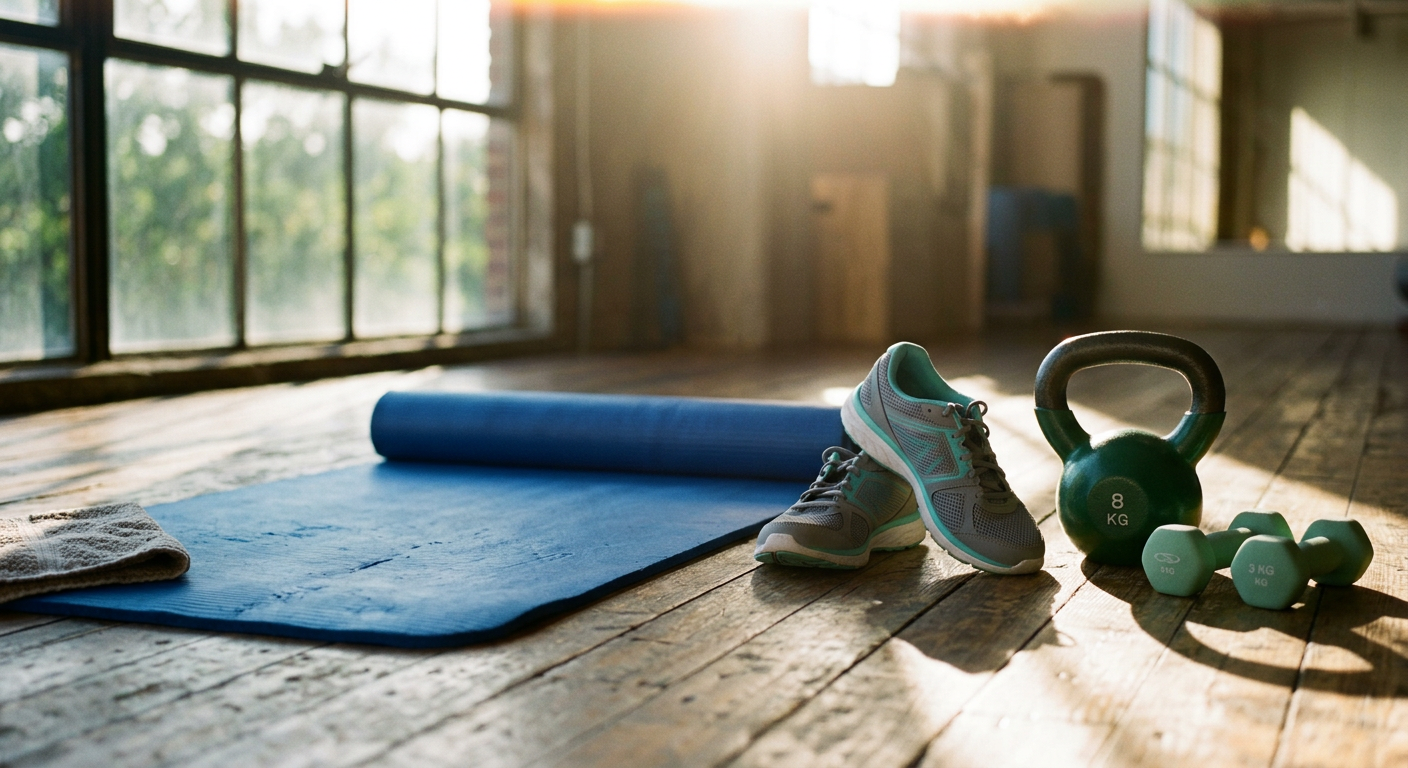
I still remember the first time I picked up a kettlebell. It looked like a cannonball with a handle, and frankly, I was a little intimidated. What was I supposed to do with this thing? Fast forward a few years, and that single piece of equipment has become one of my absolute favorite tools for a killer workout.
If you're just starting, let me tell you - you've made a great choice. Kettlebells are amazing for getting a full body workout that builds real, functional strength. They're perfect for doing kettlebell exercises at home since you only need one or two to get started.
So let's get into it. Here's my guide to a simple, effective beginner kettlebell workout full body style.
First Things First: Picking Your Kettlebell
This is where most people get stuck. My advice? Start lighter than you think you need. Seriously. Form is EVERYTHING. You can always go heavier later.
As a general guideline:
- •Women - i'd suggest starting with an 8kg (18 lbs) or 12kg (26 lbs) kettlebell.
- •Men - try a 12kg (26 lbs) or 16kg (35 lbs) to start.
Remember, this isn't about ego. It's about learning the moves correctly and safely. I've found that nailing the form with a lighter weight pays off big time down the road.
The Quick Warm-Up
Don't skip this! A 5-minute warm-up gets your muscles ready and helps prevent injury. Just do a few minutes of light cardio (like jogging in place) followed by:
- •Bodyweight Squats (10-15 reps)
- •Arm Circles (10 forward, 10 back)
- •Leg Swings (10 each leg)
The Beginner Kettlebell Workout
We're going to focus on four foundational movements. These exercises will work your entire body - legs, glutes, back, core, and shoulders. This is the easy kettlebell routine for new lifters I wish I had when I started.
1. Kettlebell Goblet Squat
This is the king of squats for beginners. Holding the weight in front of you forces you to keep your chest up and core tight.
Hold the kettlebell by the 'horns' (the sides of the handle) against your chest. Keep your feet shoulder-width apart. Squat down as if you're sitting in a chair, keeping your back straight and chest up. Go as low as you comfortably can, then drive back up through your heels to the starting position.
2. Kettlebell Deadlift
This is not a squat! This move teaches the hip hinge, which is the basis for so many kettlebell exercises.
Place the kettlebell on the floor between your feet. Hinge at your hips, pushing your butt back while keeping your back perfectly flat. Grab the handle with both hands. Drive your hips forward to stand up, lifting the kettlebell. Your arms just act like hooks. Squeeze your glutes at the top. Reverse the motion to lower the bell back down with control.
3. Overhead Press
Time for some shoulder work. Start by cleaning the kettlebell to the 'rack position' - that means resting it on your forearm with your elbow tucked into your body. From there, keep your core tight, and press the kettlebell straight overhead. Lower it back down with control. Do all your reps on one side before switching.
4. Two-Handed Kettlebell Swing
Okay, this is the one you've probably seen. It's an explosive, powerful movement that is amazing for cardio and power development. But the form is crucial.
The swing is a hip hinge, not a squat. It's all about hip power, not arm strength. Your arms are just ropes guiding the bell.
Start with the kettlebell about a foot in front of you. Hinge at your hips to grab it. Hike it back between your legs like a football snapper. Then, explosively drive your hips forward, and let that momentum swing the kettlebell up to chest height. Let gravity bring it back down and guide it between your legs for the next rep. It's a rhythm!
Your Full-Body Routine
Here’s how to put it all together. Do this workout 2-3 times per week, with at least one day of rest in between.
| Exercise |
Sets |
Reps |
Rest |
| Goblet Squat |
3 |
8-12 |
60 sec |
| Kettlebell Deadlift |
3 |
10-12 |
60 sec |
| Overhead Press (each side) |
3 |
6-10 |
60 sec |
| Two-Handed Swing |
4 |
15 |
60 sec |
As it gets easier, you can try to add a rep or two. Once you can complete all the sets and reps with good form, it might be time for a heavier kettlebell.
This is also where tracking comes in handy. I've been using the FullBody AI app lately to log my workouts. It’s super helpful for seeing my progress and knowing when to push myself to increase the weight or add more reps. It takes the guesswork out of getting stronger.
So there you have it. A straightforward, no-fluff beginner kettlebell workout to get you started on your fitness journey. Take your time, focus on form, and have fun with it!