
Kettlebells: Your Best Friend or Your Worst Enemy?
Let's be real- the kettlebell is one of the most brutally effective fitness tools ever invented. It's a cannonball with a handle that can build explosive power, torch fat, and improve your cardio all at once. But there's a catch. With great power comes great potential for- well, throwing your back out.
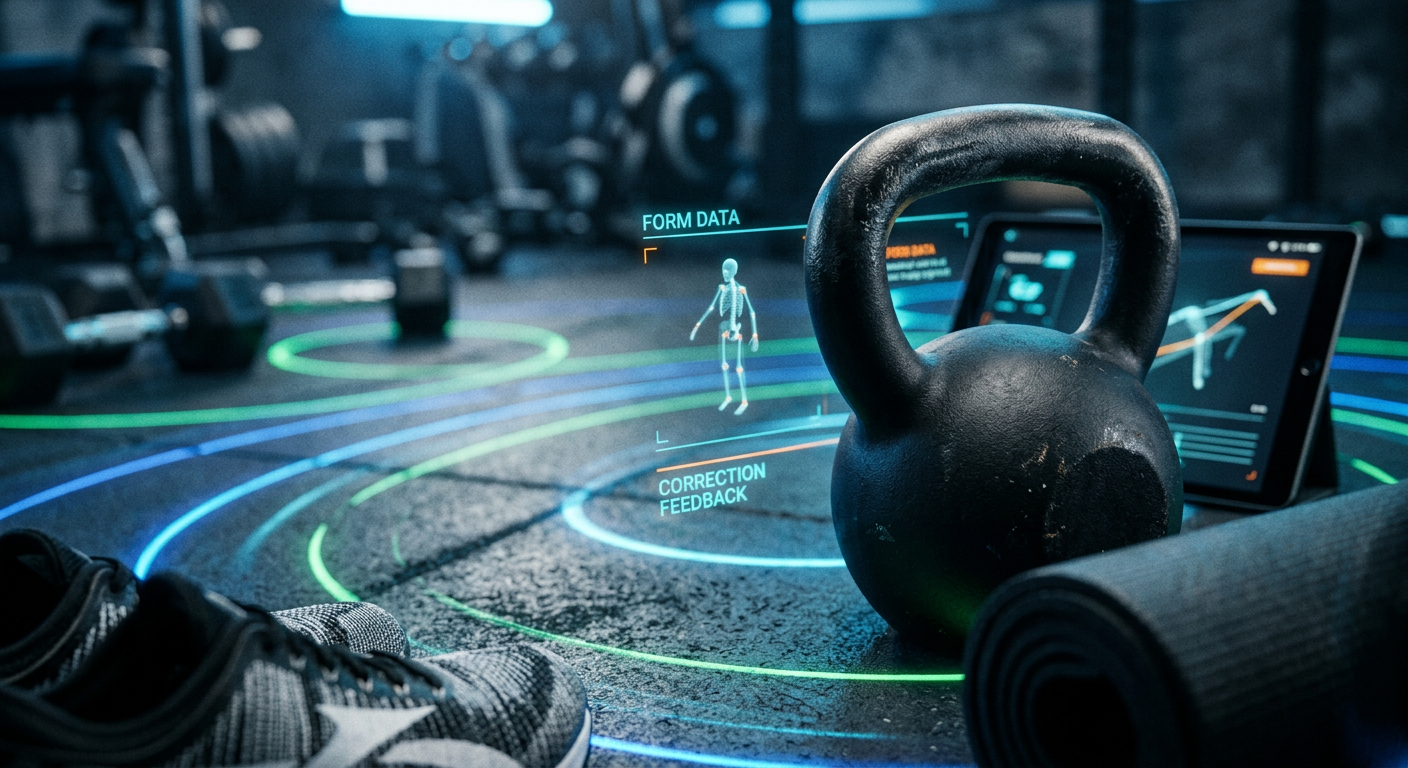
Bad form is the enemy of progress, especially with dynamic movements like the kettlebell swing. We've all seen "that guy" at the gym, doing a weird squat-front-raise hybrid that's a one-way ticket to Injury Town. This is where fitness tech, specifically AI, is changing the game. Think of it as a world-class coach in your pocket, watching every single rep.
Fixing the Most Infamous Kettlebell Move: The Swing
The kettlebell swing is all about a powerful hip hinge, not a squat. It's an explosive "snap" of the hips that propels the bell forward. The arms are just there to guide it. So many people get this wrong, using their shoulders and lower back to lift the weight.
This is a prime example of where kettlebell swing correction ai becomes your secret weapon. Using your phone's camera, an app like FullBody AI can analyze your movement in real time.
How AI Sees Your Swing
- •Hip Hinge vs. Squat - the AI tracks the angle of your hips and knees. If you're bending your knees too much, it knows you're squatting the weight up instead of hinging. You'll get an instant cue like "Hinge more at the hips."
- •Back Position - a rounded lower back during a swing is a major red flag. The AI analyzes your spinal alignment and will immediately warn you to keep your back flat.
- •Power Generation - it can even assess the explosiveness of your hip thrust, ensuring you're generating power from your glutes and hamstrings, not your arms.
Create Your Workout Plan by Voice - Free, No Signup
Just tell our AI what you want - your goals, schedule, equipment - and get a personalized plan in seconds. No forms, no hassle. Just speak.
With this instant feedback, you're not just guessing anymore. You're actively refining your ai kettlebell form with every single rep.
Nailing the Goblet Squat with a Digital Eye
The goblet squat is a fantastic fundamental movement. It builds leg strength, improves mobility, and reinforces a good squat pattern that translates to everything else. But again, form is everything.
Common mistakes include letting your chest fall forward, not hitting proper depth, or allowing your knees to cave inward- a big no-no. The right goblet squat ai technique powered by a smart app can fix this.
An AI coach can track key points on your body to ensure:
- •Upright Torso - it monitors your chest position, prompting you to stay upright and engage your core if you start to lean too far forward.
- •Knee Tracking - it watches to see if your knees are tracking safely over your feet, not collapsing inward. You might get a cue like "Push your knees out."
- •Squat Depth - no more cheating your reps! The AI can tell if you're hitting parallel or below, ensuring you get the full benefit of the exercise.
Actionable AI Kettlebell Training Tips
Ready to give it a try? Here are a few simple tips to get the most out of your AI-powered kettlebell sessions.
- •Set Up for Success - make sure you have good lighting and place your phone where it can see your entire body, from head to toe. A side view is usually best for swings and squats.
- •Start Light - leave your ego at the door. Grab a lighter kettlebell than you normally would. The goal here is to focus on the technical feedback and groove the perfect pattern.
- •Listen and Adjust - the AI cues are your coach. Don't ignore them. If it tells you to keep your chest up, focus on that cue for the next few reps. This is how you build muscle memory.
- •Trust the Process - using a platform like FullBody AI removes the guesswork. You get the objective feedback you need to build a solid, safe foundation for your kettlebell training, helping you get stronger, faster.
Ultimately, training smarter is just as important as training harder. By integrating AI into your routine, you're not replacing the work- you're making the work you do count for more. You're building a body that's not only strong, but resilient.